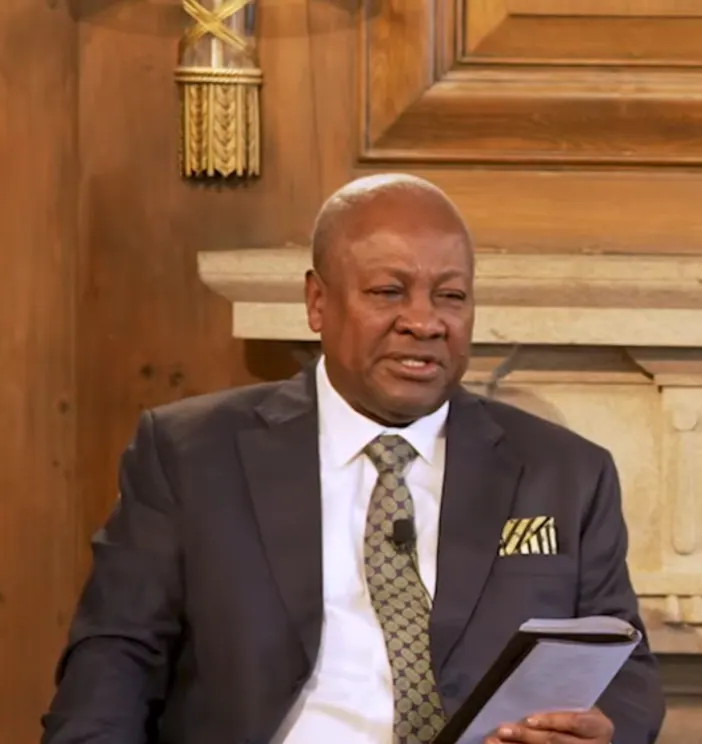
On September 24, President John Dramani Mahama of Ghana delivered a speech at the 81st United Nations General Assembly, emphasizing that no civilization deserves to be annihilated. This statement was seen as a rebuke to US President Donald Trump's threat to destroy Iran. Mahama's address came two days after Trump's speech at the same assembly, where Trump mentioned the possibility of dealing with Iran or destroying the Islamic Republic.
Mahama's remarks were carefully worded to avoid direct confrontation, but the context made the rebuke clear. The Ghanaian president stated that his words were simple and could be understood, emphasizing that no human civilization deserves annihilation, particularly not a UN member state. This stance aligns with Ghana's diplomatic approach of balance and principle.
The issue gained traction due to Trump's previous statements on Iran. On April 7, Trump gave Iran an ultimatum to reopen the Strait of Hormuz or face strikes on its power plants and bridges, posting that "a whole civilization will die tonight." This threat sparked concerns among legal scholars, who argued that targeting civilian infrastructure would breach international law.
The Strait of Hormuz is a critical chokepoint for the world's energy supply, and its closure by Iran led to a surge in fuel prices globally. As a result, Ghana and other African countries felt the economic impact, making the issue relevant to Accra. Mahama's statement carries significant weight, as Africa often bears the consequences of great-power escalation without being consulted on the resolution.
In his UN speech, Mahama also emphasized the need for permanent African representation on the Security Council, reform of the global financial system, reparatory justice, and greater African control over critical-minerals processing. These demands are interconnected, forming a broader argument for a continent that absorbs the consequences of great-power actions to have a greater say in global decision-making.
Mahama's decision not to personalize his rebuke was seen as a diplomatic move. By not directly referencing Trump, Mahama maintained a balance between firmness on principle and openness to dialogue. This approach is consistent with Ghana's diplomatic tradition, which prioritizes dialogue and cooperation.
The incident highlights the importance of African voices in global affairs, particularly on issues that affect the continent. Mahama's statement serves as a reminder that the language of erasure can have severe consequences, as seen in regions like the Sahel, the Horn, and the Great Lakes.
Key points
- President Mahama's UN speech emphasized that no civilization deserves annihilation, a stance seen as a rebuke to US President Trump's threats against Iran.
- The Strait of Hormuz is a critical chokepoint for the world's energy supply, and its closure impacts African countries like Ghana.
- Mahama's statement is part of a broader call for African representation and reform in global decision-making.