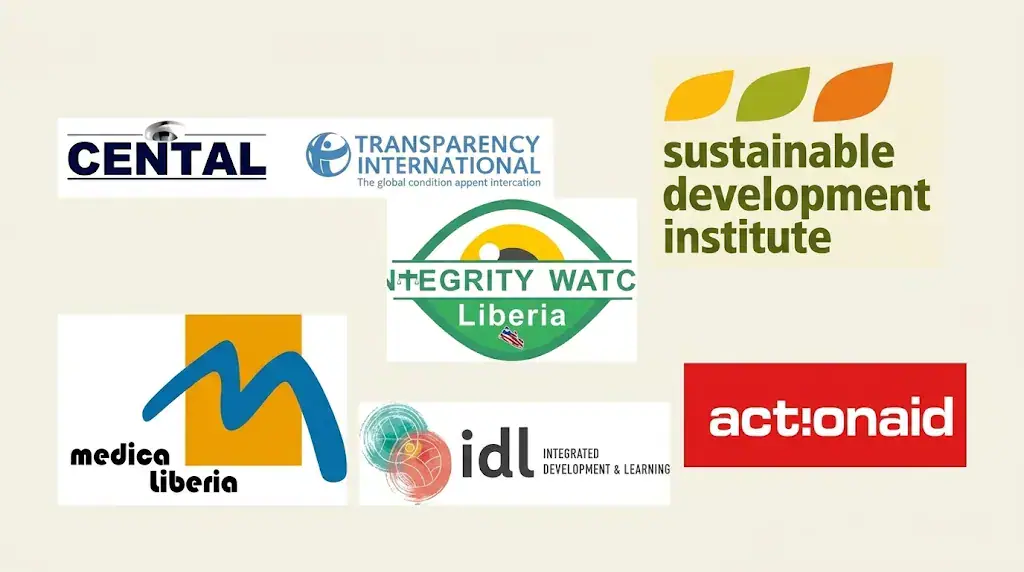
A coalition of civil society organizations in Liberia has called on the government to stop signing and ratifying new long-term mining contracts until the West African nation replaces its 26-year-old mining law. The CSO Consortium on Minerals, Mining, and Inclusive Sustainable Development made the appeal on Monday, October 26, at a press conference in the capital. The coalition's members include the Center for Transparency and Accountability in Liberia, Integrity Watch Liberia, and the Sustainable Development Institute.
The coalition believes that entering into new or additional long-term mineral development agreements under an outdated legal framework risks perpetuating existing governance weaknesses. Mining is central to Liberia's economy, accounting for about a fifth of gross domestic product and dominating exports. However, decades of extraction have not delivered matching jobs, public services, or development for the communities that host mines. The coalition blames weak enforcement, corruption, the export of unprocessed ore, poor transparency, environmental damage, and the exclusion of local people from decisions.
A recent assessment by the Washington-based research group Forest Trends found that the government may be losing millions of dollars a year in uncollected mining revenue. Mining companies paid just over $844 million to the state between 2007 and 2023, according to figures from the Liberia Extractive Industries Transparency Initiative. The Forest Trends report also found that mining licenses now overlap more than two million hectares of forest in a country that holds about half of what remains of the Upper Guinean rainforest biodiversity hotspot.
The call for a moratorium on new mining contracts follows a year in which government inspectors repeatedly found companies mining outside the limits of their permits, or with no permit at all. In March, a committee of the House of Representatives suspended Hurine Mining Company in central Bong County after investigators found it had exceeded the limits of its Class B license. In April, the Ministry of Mines and Energy closed JinXin Mining Company in Rivercess County for mining without a valid license on ground licensed to another firm.
Mines and Energy Minister R. Matenokay Tingban has acknowledged that many small commercial license holders fail to account for the minerals they extract. The problems are not new, and in 2024, the then-minister sought legal advice on revoking licenses issued since 2018, citing letters from the presidency directing that license applications be routed through the Office of the President. In 2025, a ministry investigation found that two companies, Hamak Mining and its successor 79 Resources, had misrepresented their license status and owed the government more than $400,000 in fees.
Concerns extend to the largest operators, with an investigation by The Associated Press and The Gecko Project published this year finding that Bea Mountain Mining Corporation, Liberia's biggest gold producer, repeatedly leaked cyanide, arsenic, and copper at levels the country's Environmental Protection Agency said exceeded legal limits. The investigation found the company failed to report a 2022 spill on time and had earlier blocked government inspectors from its laboratory. Bea Mountain exported more than $576 million worth of gold between July 2021 and December 2022.
The coalition has drawn up 10 recommendations for a new mining law, including binding transparency rules for licensing, contracts, and revenue, clear penalties for violations by companies and officials, and enforceable benefit-sharing for communities. The coalition also wants requirements to process more ore locally and to prioritize Liberian workers and suppliers, as well as binding obligations for mine closure and land restoration.
Key points
- The Liberian government is urged to impose a moratorium on new Mineral Development Agreements.
- The country's 2000 mining law is considered outdated and in need of rewriting.
- Decades of mining have not delivered matching jobs, public services, or development for host communities.