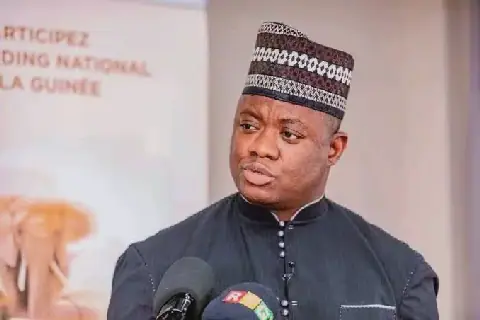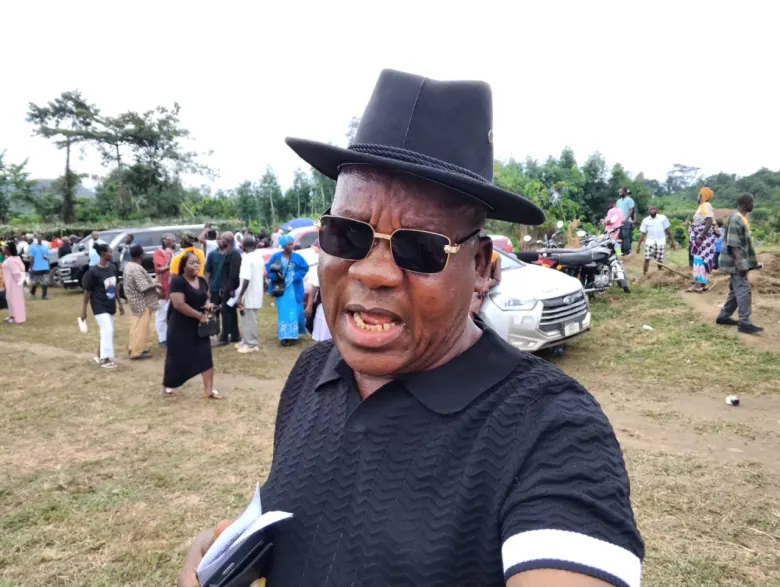
Liberia's National Traditional Liaison Officer, William B. S. Kollie, a native of Bong County, believes the opposition Coalition for Democratic Change (CDC) has a realistic chance of winning the county in the next presidential election. He attributes this to divisions within the governing Unity Party (UP), which could prevent it from consolidating support. Kollie stated that the CDC cannot be written off in Bong, particularly if it keeps its own house in order and strengthens ties with local political actors.
Bong County has a history of changing allegiance in presidential elections. In 2005, former President Ellen Johnson-Sirleaf defeated former President George Weah decisively in Bong in the runoff. In 2011, she won 83.45 percent of the county's runoff vote. However, in 2017, Weah took about 64.2 percent against Joseph Boakai's 35.8 percent. In 2023, Weah carried Bong again, but by a much smaller margin, receiving 72,159 votes (52.92 percent) to Boakai's 64,194 (47.08 percent).
Kollie argues that the 2023 result should not be seen as the CDC losing relevance in Bong. Instead, it shows the party retains a substantial base that could prove decisive if the Unity Party fails to resolve its differences. He stated that Bong politics is not permanently owned by any political party and that the party that organizes its people and builds stronger local relationships will have an advantage.
Kollie cited the political importance of former Vice President Jewel Howard-Taylor, a Bong native, saying that having a major county figure on the CDC ticket had given the party an important link to voters there. He also pointed to the funeral of Philip Taylor, son of Mrs. Howard-Taylor, as evidence of continuing ties between the CDC, the National Patriotic Party (NPP), and parts of the Bong population.
Kollie claimed that the Unity Party faces serious internal divisions in Bong, which could open political space for the CDC. He attributed part of the division to disagreements among party actors over political influence and access to county leadership. There are also allegations involving Bong County Superintendent Lorleyah Hawa Norris, who some claim has been empowering or giving political space to individuals associated with the opposition CDC.
Kollie stated that the controversy could deepen disagreements within the UP if members believe individuals or institutions linked to the government are creating opportunities for opposition actors. He argued that a governing party needs a cohesive county-level structure to defend its support, particularly where presidential elections have produced large swings.
Kollie believes that the CDC could benefit from uncertainty within the Unity Party's Bong structure, as the county's electorate has shown it will change allegiance when it perceives weakness in a dominant organization. He said the UP cannot assume its 2023 national victory automatically gives it a lasting advantage in the county.
Key points
- The CDC has a realistic chance of winning Bong County in the next presidential election due to divisions within the governing Unity Party.
- Bong County has a history of changing allegiance in presidential elections, with the CDC and Unity Party alternating wins.
- The Unity Party faces serious internal divisions in Bong, which could open political space for the CDC.