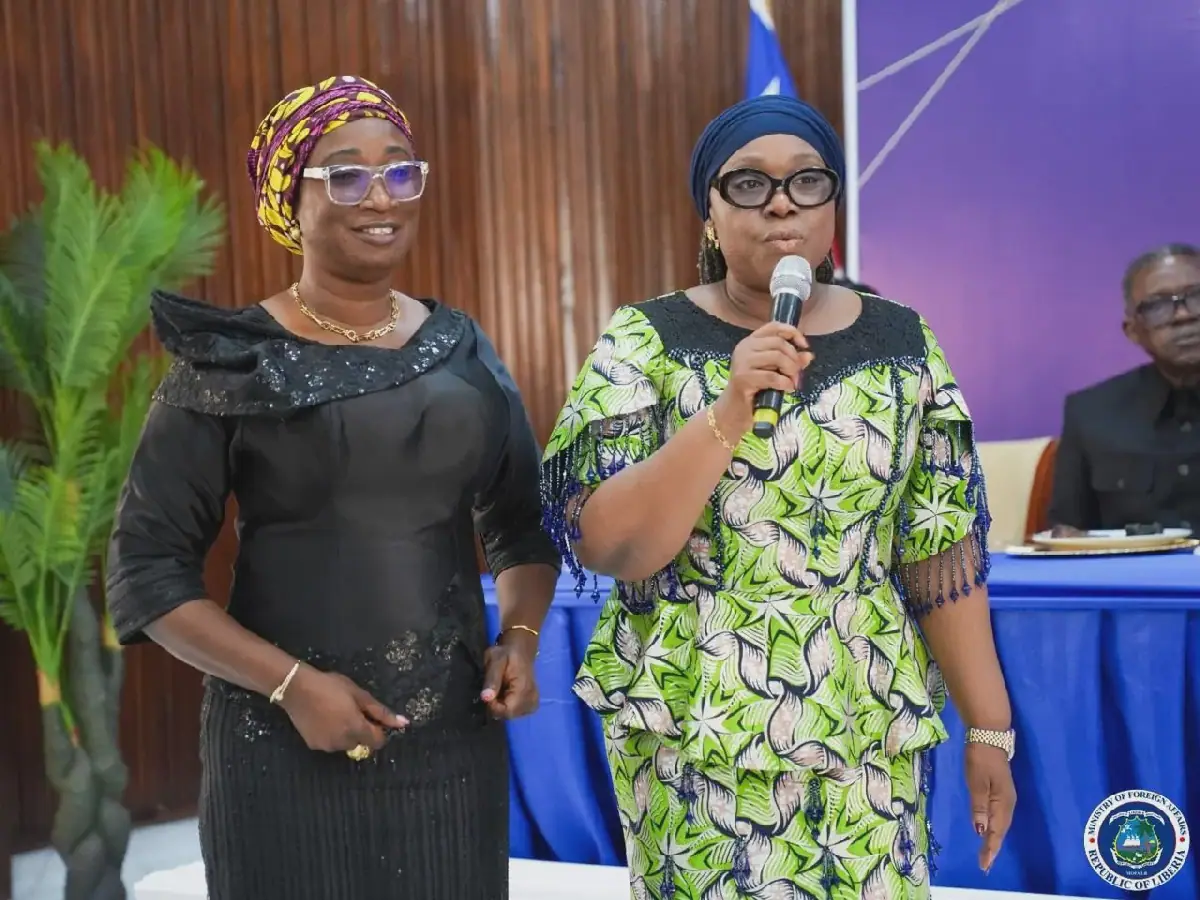
Liberia has taken a significant step in its diplomatic history by launching its first written foreign policy document. This development marks a shift from the country's previous approach, where foreign policy was primarily guided by presidential statements rather than a formal document. The new policy, introduced by the Ministry of Foreign Affairs, includes a Gender-Responsive Foreign Policy, which the government claims is a first for Africa. The launch event drew high-profile attendees, including foreign ministers and Nobel Laureate Leymah Gbowee.
The new foreign policy is built around six priorities: economic diplomacy, national sovereignty, regional integration, peace and security, citizen protection, and international cooperation. The gender-responsive component of the policy focuses on five key areas: women's rights, women's economic empowerment and inclusive trade, women, peace and security, climate justice and natural resource governance, and women's political representation and leadership. This policy aims to address the gaps between Liberia's gender-equality commitments and the actual presence of women in foreign policy and diplomatic leadership.
The development of the policy involved a review that identified areas for improvement, and it was validated by the Ministry of Gender, with support from UN Women. The process included stakeholder dialogues and concrete promises, such as quarterly gender audits at the Foreign Ministry, a Women in Diplomacy Fund, and plans to revise the Foreign Service Manual to require gender parity in training and promotions. However, the policy's success will depend on its implementation and the allocation of resources.
Despite the government's claims that Liberia is the first African country to adopt a feminist foreign policy, some questions arise. In 2021, Libya's then Foreign Minister Najla Mangoush announced a commitment to a feminist foreign policy, but it never materialized. Liberia's defensible claim is that it is the first African country to formally adopt and launch a written gender-responsive foreign policy. The policy's launch coincides with Liberia's upcoming presidency of the United Nations Security Council, providing an opportunity to prioritize women's issues on the international stage.
The adoption of a feminist foreign policy by Liberia is significant, especially at a time when several countries that pioneered this approach are reevaluating their commitments. Sweden, the Netherlands, Argentina, and Germany have all introduced and then abandoned feminist foreign policies. Liberia's policy, which carries the stamp of President Joseph Boakai and Minister Sara Beysolow Nyanti, may face challenges in the future, particularly if it is not written into law, funded in the national budget, and built into the Foreign Service.
The policy's implementation will be closely watched, particularly in terms of its impact on women's representation and empowerment in Liberia and abroad. The Ministry of Foreign Affairs has pledged to prioritize women's issues during Liberia's term as president of the UN Security Council in December. The policy's success will also depend on its ability to address the country's own challenges, including the representation of women in the Legislature and the diplomatic corps.
As Liberia begins to implement its new foreign policy, several questions remain unanswered. The policy lacks a clear budget, timeline, and targets, and it does not provide details on how Liberia will manage relations with key partners, such as the United States and China. Additionally, the policy's commitment to citizen protection will be tested by the government's agreement to accept third-country deportees from the United States, a deal currently under scrutiny in the US Senate.
Key points
- The policy's focus on women's rights and empowerment marks a significant shift in Liberia's diplomatic approach.
- The implementation of the policy will depend on its allocation of resources and the government's commitment to prioritizing women's issues.
- The policy's success will be closely watched, particularly in terms of its impact on women's representation and empowerment in Liberia and abroad.
Reporting sources
- Liberia’s First Foreign Policy:A Feminist Bet in a Retreating World · FrontPage Africa