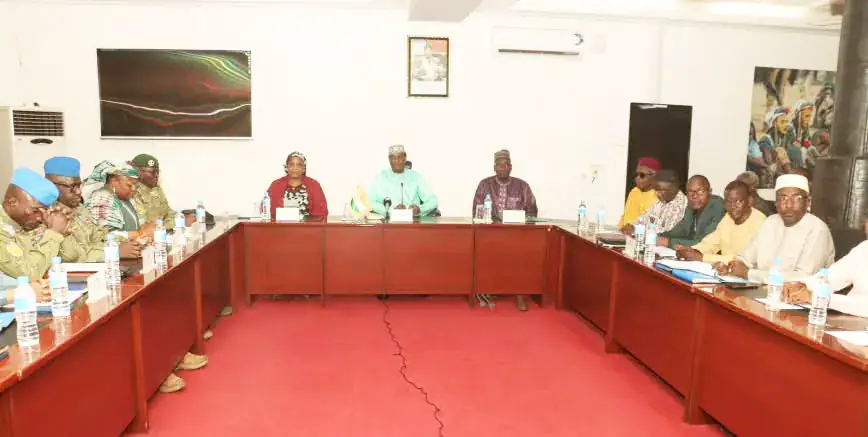
The Niger Council of Labor (CNT) has opened its first ordinary session of the year in Niamey, with a key agenda item being the proposed increase of the retirement age to 62 for workers in the private and parapublic sectors. This move aims to align their retirement age with that of state employees, who already benefit from this limit. The session was inaugurated by Prime Minister Ali Mahamane Lamine Zeine.
The proposed reform, if implemented, would require workers in the private and parapublic sectors to work two additional years before retirement. Labor Minister Aïssatou Abdoulaye Tondi emphasized that this change would ensure equity among different categories of workers. Currently, state employees enjoy a retirement age of 62, following a change from 60 years with the adoption of the new general public service statute.
The retirement age for state employees was increased from 60 to 62 years, and auxiliary administrative personnel were subsequently aligned with this rule. However, employees in private enterprises and parapublic companies are still not covered by this provision. The proposed change has raised concerns, particularly among young people, who fear it could impact recruitment opportunities.
In addition to the retirement age, the Council will discuss three other key issues. These include the functioning of social dialogue organs, the representativeness of trade unions, and the law on competition in Niger. The minister stressed the importance of ensuring the proper functioning of social dialogue to prevent tensions and promote a harmonious work environment.
The issue of trade union representativeness has become crucial, given the proliferation of central trade unions. Minister Tondi called for an evaluation based on clear, transparent, and consensual criteria to assess their real representativeness and ability to effectively defend workers' rights. The Council will also examine the 2019 law on the organization of competition in Niger.
Prime Minister Ali Mahamane Lamine Zeine, speaking on behalf of President General Abdourahamane Tiani, urged Council members to work in a spirit of serenity and to ensure that their conclusions support the country's progress while preserving national interests. The minister reaffirmed the government's commitment to maintaining frank and constructive dialogue with social partners.
The Council's recommendations will be submitted to the government, which will make the final decisions, particularly regarding the retirement age. This change could affect thousands of employees in the private and parapublic sectors. The government has emphasized the need for realistic proposals, given the country's budget constraints.
Key points
- The proposed retirement age increase aims to align private and parapublic sector workers with state employees.
Reporting sources
- Niger : vers une retraite à 62 ans pour les salariés du privé et du parapublic · Nigerdiaspora - Niger