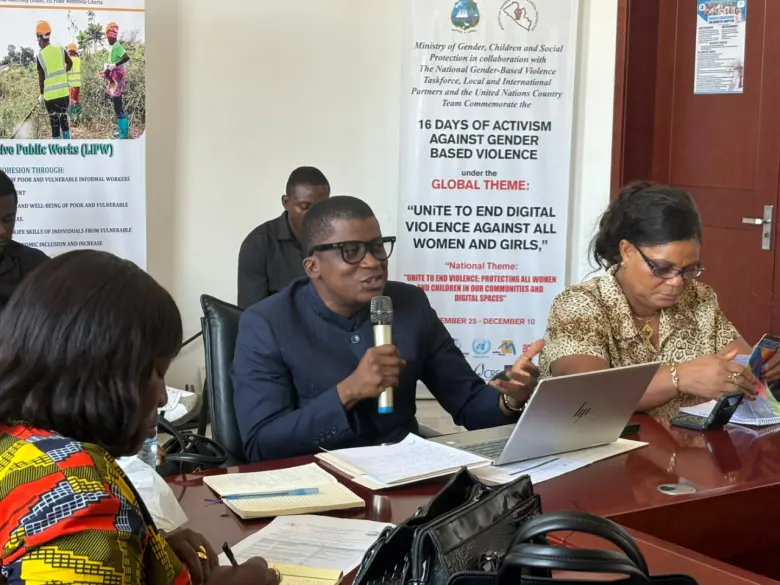
Gender advocates in Liberia are calling for the introduction of a gender inclusion scorecard to assess the performance of government institutions. The proposed scorecard aims to identify gaps and hold institutional leaders accountable for promoting women's participation in governance and decision-making. This call was made during a Sector Coordination Meeting in Monrovia, which brought together representatives of government ministries, agencies, and commissions.
The meeting was intended to strengthen coordination among government institutions and promote a holistic approach to gender equality and development outcomes. The push comes after President Joseph Boakai endorsed the National Gender Policy and the inclusion of gender considerations across government institutions under the administration's ARREST Agenda. However, participants raised concerns about gaps between government's policy commitments and implementation within some institutions.
Some participants alleged that women and gender focal persons are excluded from managerial meetings and are sometimes engaged primarily when institutions need gender-related data for reporting to development partners. Agatha Thompson-Venn, Gender Specialist and Communications Director at the Ministry of Information, said some government institutions are not giving gender issues the attention they deserve. She called for the publication of institutional scorecards to make the performance of ministries, agencies, and commissions on gender inclusion more visible.
According to Thompson-Venn, publicly reporting the scorecards would create greater accountability for officials responsible for implementing the policy. The approach could also identify institutions that are falling short of their gender commitments and encourage corrective action. Thompson-Venn cited the Civil Service Agency and the Ministry of Commerce and Industry as institutions that have demonstrated efforts toward gender inclusion.
Assistant Minister Olivia Swen urged women to take advantage of opportunities that allow them to participate in meetings and decision-making processes. Swen said women who are empowered and actively involved in decision-making are better positioned to speak confidently and advocate for issues affecting their communities. She encouraged women to be proactive in seeking opportunities rather than waiting to be invited.
Deputy Minister of Research, Policy and Planning at the Ministry of Gender, Children and Social Protection, Dorley, called for stronger institutional reforms and improved coordination among government institutions to address governance and policy challenges. Dorley emphasized that government institutions must work together rather than address national issues in isolation. He said effective governance requires collaboration across ministries, agencies, and sectors.
The proposed gender inclusion scorecard is expected to form part of broader efforts to strengthen accountability and ensure that gender commitments translate from policy documents into measurable action across government. Recommendations emerging from the ongoing discussions are expected to be submitted to President Boakai and relevant government institutions for consideration. The scorecard will help to review existing policies and regulations to ensure they reflect current realities and contribute to meaningful institutional reform.
Key points
- The proposed scorecard aims to identify gaps and hold institutional leaders accountable for promoting women's participation in governance and decision-making.
- Some government institutions are cited for progress, including the Civil Service Agency and the Ministry of Commerce and Industry.
- The scorecard will help to review existing policies and regulations to ensure they reflect current realities and contribute to meaningful institutional reform.