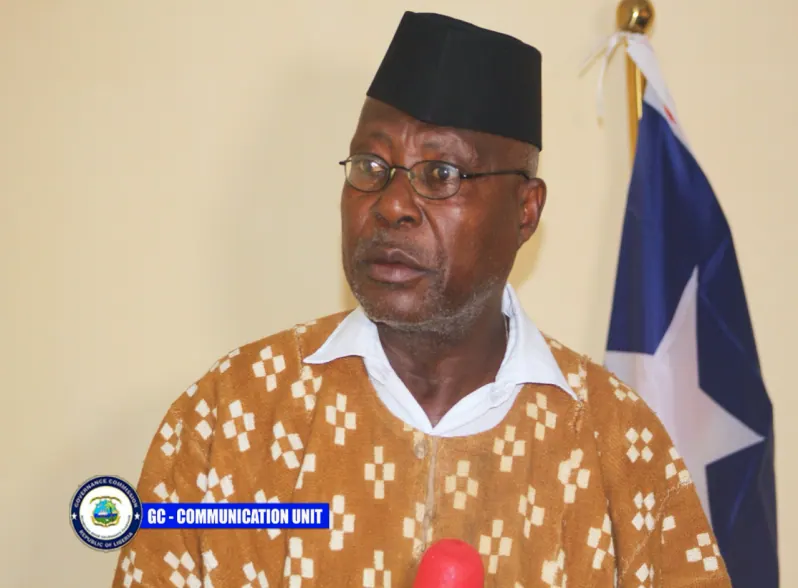
President Joseph Nyuma Boakai of Liberia has proclaimed October 2026 as "Month of Good Governance," focusing on transparency, accountability, institutional performance, and citizen participation. The proclamation, dated September 16, 2026, was presented at a press conference at the Governance Commission in Monrovia. This initiative is considered one of the most significant moments in the Commission's current work.
The observance aims to move Liberia beyond simply discussing good governance to measuring public institutions' performance and citizens' experiences with government. Acting Chairperson Prof. Alaric K. Tokpa emphasized that good governance is about integrity, transparency, accountability, effectiveness, and efficiency. He also highlighted inclusiveness, participation, the rule of law, and equity as essential components.
The presidential proclamation calls on government institutions, civil society organizations, educational institutions, traditional leaders, private-sector actors, the media, and citizens across Liberia's 15 counties to participate in activities throughout October. The Governance Barometer will be deployed to support the compilation of the Annual State of Governance and Integrity Report.
The proclamation directs the Governance Commission, working with integrity institutions, to publish the maiden National Integrity Index (NII) during the observance. The NII assesses public institutions against governance and integrity indicators, examining areas such as transparency, accountability, and citizen engagement. This move provides a structured basis for evaluating public institutions' performance.
Citizen Scorecards will be institutionalized, gathering citizens' views about public institutions through town hall meetings, public dialogues, and digital feedback mechanisms. The information gathered will feed directly into institutional evaluations. Prof. Tokpa stressed that citizens' involvement is central to the governance process, and their participation is crucial in decisions affecting their lives.
Prof. Tokpa connected Liberia's governance challenges to the country's history of conflict, stating that the absence of good governance practices contributed to the conditions preceding Liberia's civil war. He emphasized that the Governance Commission's role is to help prevent governance failures that could lead to future national crises.
The Governance Commission's mandate includes advising the state on governance, institutional development, integrity, and related reforms. The Commission will convene independent review panels involving civil society organizations, educational institutions, the private sector, and the media to review and validate governance-related metrics.
Key points
- President Boakai's proclamation aims to promote transparency and accountability in public institutions.
- The National Integrity Index will assess public institutions against governance and integrity indicators.
- Citizen participation is crucial in the governance process, with citizens' views being gathered through various mechanisms.