Liberia is preparing a new bid for American development funding through the Millennium Challenge Corporation (MCC). A technical team led by Alieu Fuad Nyei is currently in Washington for talks with MCC officials. The team comprises experts in economics, finance, energy, and environmental development. Their mission is to advance the analytical and strategic framework for Liberia's proposed new MCC compact. This compact aims to stimulate economic growth, strengthen institutional capacity, and improve livelihoods for Liberians.
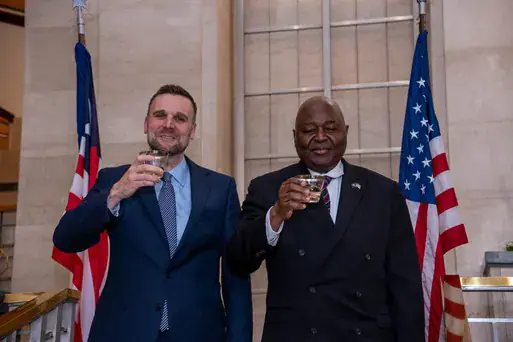
Ambassador Al-Hassan Conteh, Liberia's envoy to the US, welcomed the high-level technical delegation at an MCC reception. He emphasized that reliable and affordable electricity is crucial for Liberia's growth, as it is a binding constraint on factories, farms, and public services. Conteh listed five additional priorities, including roads and practical skills for women and young people. He stressed that each priority must undergo rigorous economic analysis, as required by the MCC. This approach ensures that investments are evidence-based and sustainable.
The Liberian delegation's technical engagements with MCC aim to contribute to an evidence-based development framework. This framework will inform the identification, prioritization, and design of potential investments under Liberia's proposed compact. MCC's Vice President for Compact Development, Jason Small, emphasized the corporation's commitment to a rigorous, collaborative, and country-led approach. Small highlighted the importance of sound economic analysis, institutional coordination, and sustainable development outcomes.
The reception, hosted by MCC, brought together senior officials, private sector representatives, and members of the Liberian diaspora. Sebastian Teclar, President of the Liberian Community Association of the DMV, conveyed greetings from the diaspora. He underscored the community's interest in development initiatives that expand economic opportunities and create lasting benefits for Liberians. The event reflected the growing cooperation between Liberia and the US in advancing development priorities.
Conteh expressed satisfaction with the collaborative approach adopted by MCC and Liberia's Compact Development Team. He described the process as an opportunity for Liberian and American experts to jointly identify pressing economic constraints and develop practical responses. The Ambassador emphasized that the compact-development process should be a strategic instrument for accelerating Liberia's long-term economic transformation.
Electricity remains a critical priority for Liberia. Conteh identified reliable, affordable, and accessible electricity as fundamental to economic growth. He noted that high electricity costs and inadequate generation capacity constrain business competitiveness and discourage investment. The Ambassador encouraged technical teams to focus on investments that strengthen electricity generation, transmission, and distribution. He also highlighted the importance of exploring private-sector participation and renewable energy development.
Beyond electricity, Conteh identified five complementary areas for MCC investment, including roads and skills development for women and young people. These priorities must be economically justified, technically feasible, and environmentally sustainable. The proposed compact's success depends on the quality of underlying economic analysis, careful selection of investment priorities, and effective institutional coordination.
Key points
- Liberia seeks MCC funding to address its electricity constraints and stimulate economic growth.
- The proposed MCC compact will focus on evidence-based investments in areas such as electricity, roads, and skills development.
- Liberia's Ambassador to the US, Al-Hassan Conteh, emphasizes the importance of rigorous economic analysis and sustainable development outcomes.