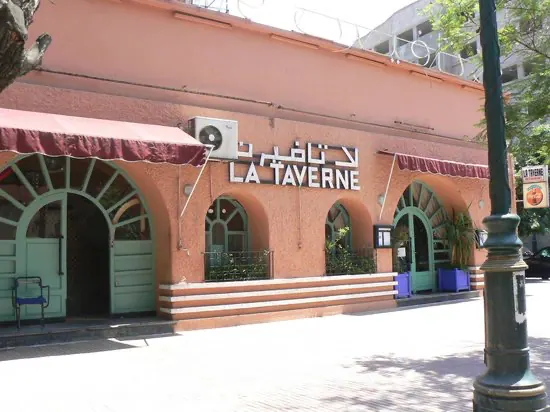
La Tavern, located near the Colisee cinema on Mohamed Zerqtouni Street, has been a staple in Marrakech's Killes neighborhood for years. Before Killes became a hub of modern buildings, hotels, and cafes, it was a different space. The area was once home to spacious villas, gardens, wide streets, and residences that brought together French and European expats with Moroccan residents. La Tavern was part of this new way of living, offering a unique blend of French and Moroccan cuisine in a cozy setting with an internal garden.
The restaurant and bar was a popular spot for both locals and foreigners, particularly French expats who had made Marrakech their home. What made La Tavern special was its dual identity: it was both a restaurant and a bar, catering to different crowds. While the restaurant offered a full dining experience, the bar was a more casual, affordable space for people to grab a drink and socialize. This dual identity allowed La Tavern to bring together people from different walks of life, including a wealthy client who continued to visit even after losing his fortune.
The story of La Tavern is closely tied to the transformation of the Killes neighborhood. As the area evolved, the villas with gardens began to disappear, replaced by high-rise buildings and concrete facades. The construction of new buildings and infrastructure has significantly altered the landscape of Killes, raising concerns about the future of historic establishments like La Tavern. Despite its rich history and cultural significance, the restaurant's existence is now uncertain.
La Tavern's proximity to the Colisee cinema, a vintage movie theater, adds to its nostalgic charm. The two establishments have witnessed the evolution of Killes and now stand as testaments to a bygone era. As urban development continues to shape the city, La Tavern and the Colisee cinema remain as reminders of Marrakech's past, struggling to find their place in the present.
The potential loss of La Tavern has sparked concerns about the erasure of Marrakech's history and cultural heritage. The city's transformation is not just about physical changes but also about preserving the stories and memories associated with its landmarks. La Tavern's history, though seemingly insignificant to some, is a vital part of Marrakech's narrative, and its disappearance could leave a void in the city's collective memory.
As Marrakech continues to grow and modernize, its residents are faced with the challenge of balancing progress with preservation. The story of La Tavern serves as a poignant reminder of the importance of preserving the city's cultural identity and the memories that make it unique. While the future of La Tavern remains uncertain, its legacy as a symbol of Marrakech's rich history and cultural heritage will endure.
The potential demolition of La Tavern has raised questions about the role of urban development in shaping the city's cultural landscape. As Marrakech continues to evolve, it is essential to strike a balance between progress and preservation, ensuring that the city's history and cultural heritage are protected for future generations. The story of La Tavern will continue to be told, serving as a reminder of the importance of preserving the city's unique identity.
Key points
- The historic restaurant and bar La Tavern in Marrakech's Killes neighborhood is struggling to stay alive amidst rapid urban development.
- La Tavern has been a staple in the community, offering a unique blend of French and Moroccan cuisine and serving as a social hub for locals and foreigners.
- The potential loss of La Tavern has sparked concerns about the erasure of Marrakech's history and cultural heritage.