Lagos, Nigeria's largest city, has made significant progress in environmental management over the years, including improvements in drainage, waste management, and climate planning. However, despite these efforts, the city's environmental journey is far from over. The city's administration has implemented various initiatives aimed at addressing environmental challenges, but much work remains to be done to ensure a sustainable future for its residents. According to a systematic review of flood-resilience measures published in 2025, existing resilience strategies in Lagos remain insufficient for the scale of the challenge.
The review identified several challenges, including inadequate infrastructure, poor waste-disposal practices, weak enforcement of planning regulations, limited community engagement, and shortcomings in early-warning systems. These gaps point directly to what Lagos must address in the years ahead to achieve its environmental goals. The city's administration must prioritize the integration of physical planning and environmental policy to prevent inappropriate development and ensure that environmental considerations are embedded in planning decisions. This includes ensuring that development is sustainable and does not obstruct drainage channels or encroach on environmentally sensitive land.
To address its environmental challenges, Lagos must modernize its drainage infrastructure, which is critical to mitigating the impact of flooding. The state has continued with dredging, channelization, and maintenance, including the approval of interventions on 28 additional primary channels following extreme rainfall in June 2026. However, climate change is altering the assumptions on which much of the city's infrastructure was designed, and drainage capacity must be reassessed periodically against changing rainfall intensity, land-use patterns, tidal conditions, and projected climate risks. This will ensure that the city's drainage infrastructure remains effective in the face of climate change.
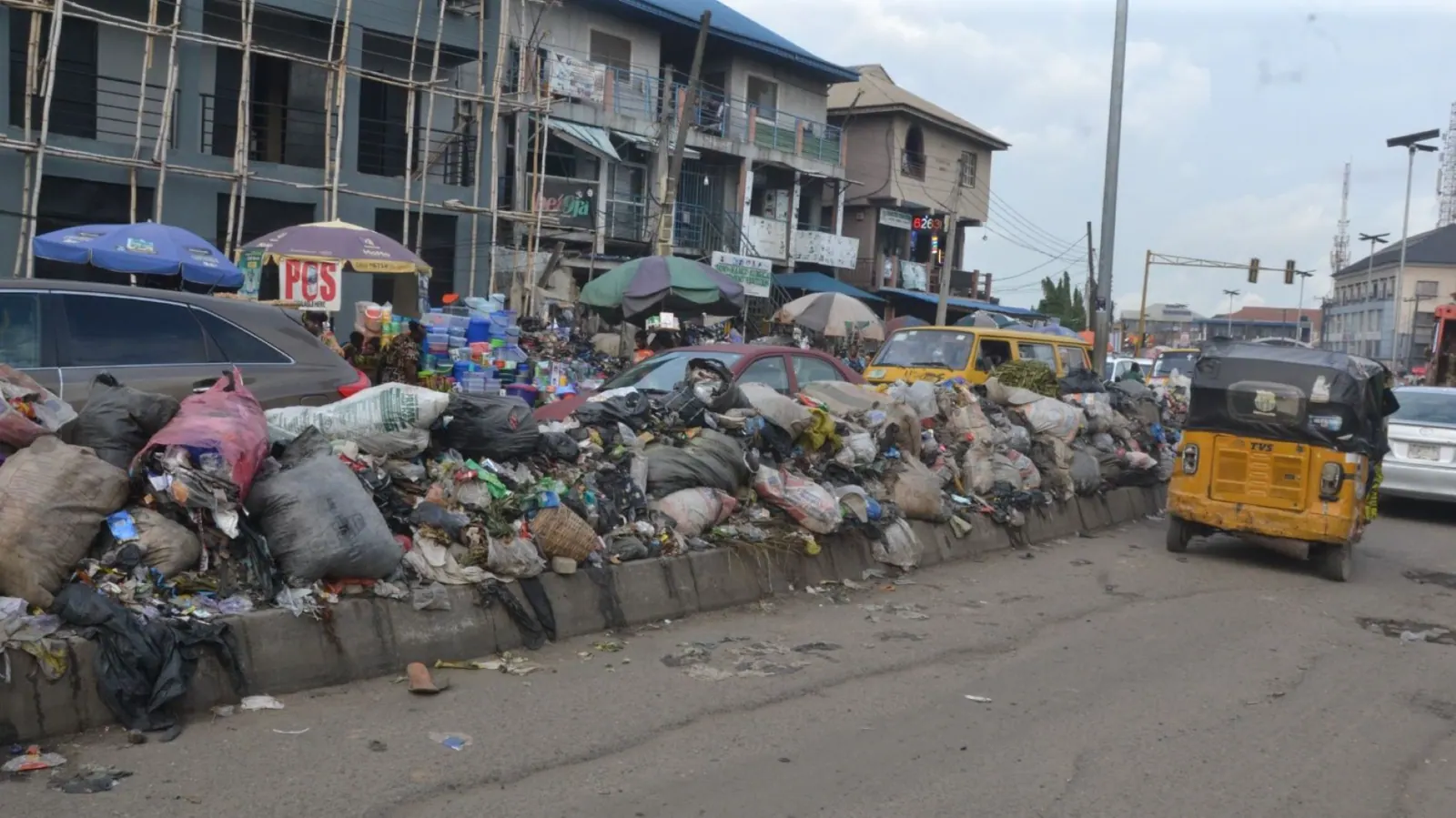
Another critical area that requires attention is waste collection. Lagos cannot build an effective circular economy on a weak primary-collection system. The government has acknowledged gaps in formal waste collection, as well as widespread illegal disposal. To address this, private sector participation operators should be assessed against measurable service standards, and residents should have predictable collection schedules. Technology should also be deployed to monitor performance, and operators that consistently fail to meet agreed standards should not remain in the system indefinitely.
Environmental data should become increasingly accessible to the public to ensure accountability and transparency. This includes data on drainage channel maintenance, waste recycling, and tree planting. Reliable public data would improve accountability while allowing researchers, civil society organizations, and residents to assess whether policies are achieving their intended results. This is critical to ensuring that the city's environmental policies are effective and sustainable in the long term.
Enforcement must also be consistent and transparent to ensure that environmental regulations are effective. A few things can undermine public confidence in environmental regulation more than the perception that rules are applied differently depending on who is involved. Environmental laws gain legitimacy when citizens believe that the same rules apply regardless of status or influence. This principle should become institutional rather than dependent on the personalities occupying public offices.
Finally, Lagos must accelerate climate adaptation to address the exceptional nature of its flood exposure compared with other coastal cities in sub-Saharan Africa. The state's Climate Adaptation and Resilience Plan identifies long-term risks associated with extreme rainfall, rising temperatures, and sea-level rise. To address these risks, Lagos must prioritize resilient infrastructure, coastal protection, wetlands conservation, heat-management strategies, urban greenery, and stronger protection for vulnerable communities. This will ensure that the city is prepared for the challenges of climate change and can achieve a sustainable future for its residents.
Key points
- Lagos' environmental journey is far from over, with challenges persisting despite progress.
- The city must prioritize the integration of physical planning and environmental policy to prevent inappropriate development.
- Lagos must modernize its drainage infrastructure and waste collection systems to address its environmental challenges.