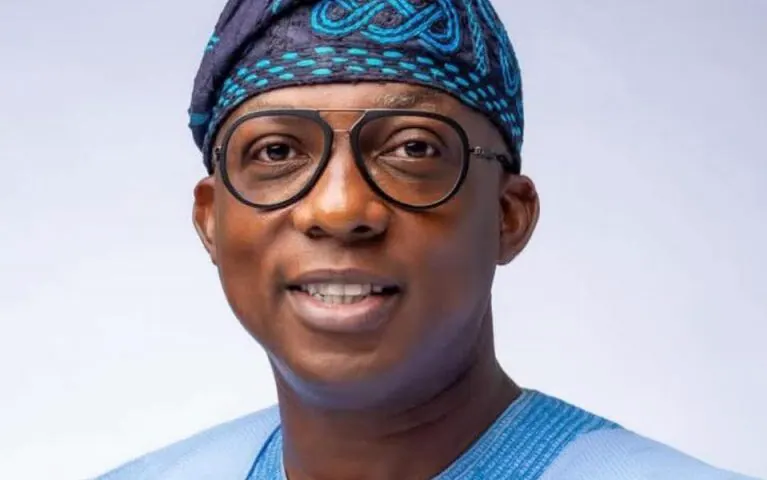
Lagos State Commissioner for the Environment and Water Resources, Tokunbo Wahab, has come under public scrutiny after revealing that his two wristwatches are worth at least $160,000, or about ₦212 million. The disclosure was made during an exchange with Babatunde Gbadamosi, the African Democratic Congress (ADC) deputy governorship candidate in Lagos, regarding the state government's handling of flooding and waste management. The conversation began on 29 September after Mr Wahab responded to criticism of the state government's flood-management efforts.
The exchange between Mr Wahab and Mr Gbadamosi started with a debate about blocked drains, refuse collection, and recurrent flooding in Lagos. Mr Wahab argued that conversations about flooding in Lagos must account for its coastal geography, tidal locks, and the growing effects of climate change. He claimed that the state had invested in drainage infrastructure and pump stations, maintained drainage channels year-round, and carried out flood-abatement measures, resulting in a reduction of flooding incidents by between 75 and 80 per cent.
Mr Gbadamosi rejected Mr Wahab's explanation, arguing that the government had not adequately addressed the accumulation of refuse and the limitations of the existing drainage network. He proposed immediate desilting of drains and major channels, expanding the road and drainage networks, and constructing boardwalks and embankments around lagoon and river corridors. The disagreement later descended into personal attacks and allegations between the two men, with Mr Gbadamosi questioning the cost of Mr Wahab's wristwatches.
The value of Mr Wahab's wristwatches is estimated to be at least $160,000, which translates to about ₦212.7 million using the Central Bank of Nigeria's official foreign exchange rate. This figure is equivalent to approximately 208 years of earnings for a Lagos civil servant receiving the state's ₦85,000 monthly minimum wage. A report by Encomium NG put a Lagos commissioner's monthly emolument at ₦520,878, which would mean that a commissioner earning that amount would need to save every naira for about 34 years to raise ₦212.7 million.
Mr Wahab described the questioning of his wristwatches as a "poverty mentality," arguing that appointment to public office did not mean an individual had no assets, career, or financial standing before joining the government. However, he did not provide details about his professional earnings or assets before his appointment as Commissioner for the Environment and Water Resources in 2023. Before becoming commissioner, he served as Special Adviser on Education to Governor Babajide Sanwo-Olu from 2019.
The debate over Mr Wahab's wristwatches comes amid economic pressure on Nigerian households, with the World Bank's April 2026 Nigeria Development Update saying household incomes had not yet fully recovered and poverty remained high despite improvements in some macroeconomic indicators. This is not the first time a Nigerian public official's luxury wristwatch has attracted attention, with Governor Sanwo-Olu and President Bola Tinubu facing criticism for wearing luxury watches valued at millions of naira.
The scrutiny of Mr Wahab's wristwatches reflects the growing attention to displays of wealth by Nigerian politicians amid rising living costs and declining purchasing power. The incident has sparked a wider conversation about the lifestyle and accountability of public officials in Nigeria. Mr Wahab's watches are among the finest collections from the Swiss watchmaker Patek Philippe, but it is unclear when he acquired them or whether he bought them before his appointment as commissioner.
Key points
- The Lagos State Commissioner for Environment and Water Resources, Tokunbo Wahab, faces scrutiny over his luxury wristwatches valued at ₦212 million.
- The debate over Mr Wahab's wristwatches comes amid economic pressure on Nigerian households and growing attention to displays of wealth by Nigerian politicians.
- The incident has sparked a wider conversation about the lifestyle and accountability of public officials in Nigeria.