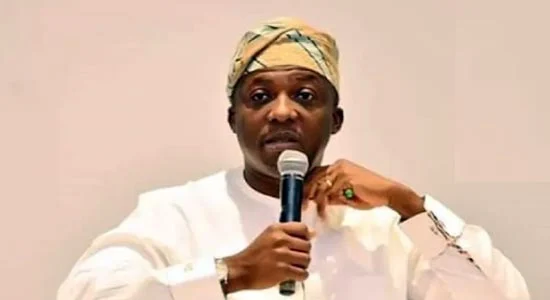
The Lagos State Commissioner for the Environment and Water Resources, Tokunbo Wahab, and the 2027 Lagos governorship candidate of the African Democratic Congress, Gbadebo Rhodes-Vivour, have expressed differing views on the state's waste management and flooding. Rhodes-Vivour recently appeared on Channels Television's Politics Today, raising concerns about waste management and flooding in Lagos, describing the state as "stinking."
Commissioner Wahab responded to Rhodes-Vivour's concerns, stating that while some of his concerns were legitimate, it was misleading to suggest that the Lagos State Government had no plan beyond clearing refuse after it accumulated. Wahab mentioned that Lagos generates an estimated 13,000 to 15,000 tonnes of municipal waste daily.
The Lagos Waste Management Authority and private sector participation operators evacuated approximately 418,500 tonnes of waste in May 2026 alone, representing an average of about 13,200 tonnes daily. Wahab acknowledged collection failures, underperforming PSP operators, and operational bottlenecks but emphasized that waste management is an interconnected system.
Wahab explained that delays at disposal facilities could affect truck turnaround, disrupt collection schedules, and eventually lead to refuse accumulation in neighborhoods. He mentioned that the rehabilitation of Road E and additional disposal platforms at the Olusosun landfill had improved operational efficiency, with truck movements rising to 1,866 in the week following the intervention.
The commissioner stated that the state is investing in Modern Transfer Loading Stations, Material Recovery Facilities, recycling, composting, and the Epe waste-to-energy project, aiming to transition from decades of pick-and-dump practices to a sustainable system. He emphasized the importance of data collection, strengthening property enumeration, geocoded service locations, GPS tracking, weighbridge measurements, collection records, and recovery data.
Rhodes-Vivour responded to Wahab's statement, criticizing it for containing "lengthy explanations, with little by way of solutions." He argued that accumulated refuse is a major contributor to flooding, as waste can be washed into drainage channels during rainfall. Rhodes-Vivour emphasized that citizens do not have to deliberately dump refuse in drains for it to cause problems.
Wahab also addressed flooding, stating that Rhodes-Vivour's criticism must be considered against Lagos' coastal geography, tidal locks, and the growing impact of climate change. He mentioned that the state has invested in drainage infrastructure, pump stations, and flood abatement operations, which have reportedly reduced flooding incidents by between 75 and 80 percent statewide.
Key points
- The Lagos State Government has invested in waste management infrastructure, including Modern Transfer Loading Stations and Material Recovery Facilities.
- The state has made efforts to reduce flooding incidents, with a reported decrease of 75-80 percent statewide.
- There is a disagreement between Commissioner Tokunbo Wahab and Gbadebo Rhodes-Vivour over the effectiveness of the state's waste management and flooding mitigation strategies.