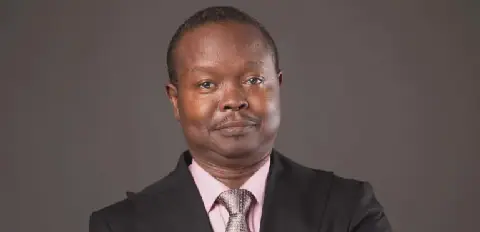
The Kenya Union of Post-Primary Education Teachers (Kuppet) has rejected President William Ruto's proposed comprehensive school model, citing concerns over its feasibility and legality. Kuppet Secretary-General Akelo Misori argued that the proposed structure fails to address the deep-seated challenges facing institutions. He emphasized that the push for a comprehensive school model is designed to appease certain individuals rather than address core educational challenges.
Kuppet and junior school teachers have consistently pushed for the complete administrative autonomy of Grades 7, 8, and 9, arguing that post-primary educators cannot be supervised by primary school headteachers. However, both the state and the Kenya National Union of Teachers (Knut) have defended the domiciling of junior school within existing primary school compounds. Misori questioned the feasibility of the arrangement, warning that it amounts to mere trial and error without a constitutional amendment.
Misori emphasized that junior school implements a secondary-level curriculum, making it a fundamental leadership disconnect to place it under a primary school headteacher. He noted that co-location within the same compound should not preclude independent management, citing Kenyatta University Primary School as an example of independent management within a shared physical space. Kuppet's opposition comes directly on the heels of President Ruto's directive to formalize the comprehensive school structure.
President Ruto directed the Ministry of Education to work with the Kenya Comprehensive Schools Heads Association (Kecsha) to develop proposals to amend the Basic Education Act and provide a firm legal framework for comprehensive schools. The President gave the ministry and the association 90 days to present the legislative proposals, stating that the changes must comprehensively address the governance, staffing, and financing of the institutions.
Kecsha is specifically asking the Teachers Service Commission (TSC) to review and harmonize promotion structures for heads of institutions to reflect their heightened leadership and administrative burdens. The association urged the government to establish a new career progression structure that recognises their expanded mandate under the comprehensive school system.
Kuppet National Chairman Omboko Milemba revealed that the union's top leadership recently engaged the National Assembly Departmental Committee on Education to push for independent governance. The union presented its position on the need for a clear legal framework, distinct governance structure, adequate staffing, and proper resource allocation to strengthen junior secondary schools.
As the 90-day window set by President Ruto counts down, the clash between Kuppet and the government is set to intensify. Kuppet's rejection of the comprehensive school plan has sparked a fresh dispute between the government and teachers' unions over the management and governance of basic education. The union's stance has raised concerns over the potential impact on the education sector.
Key points
- Kuppet rejects President Ruto's comprehensive school plan citing concerns over feasibility and legality.
- The union pushes for independent governance and administrative autonomy for junior schools.
- President Ruto directs the Ministry of Education to develop proposals to amend the Basic Education Act within 90 days.
Reporting sources
- Why Kuppet has rejected Ruto’s comprehensive school plan · https://rwandatoday.africa/