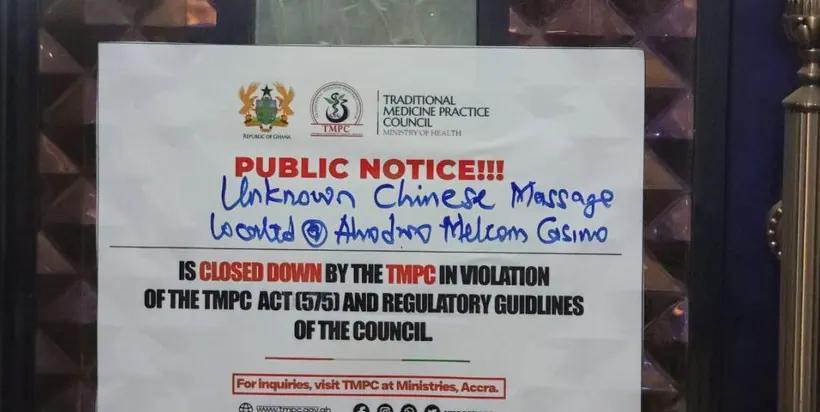
The Traditional Medicine Practice Council (TMPC) in Ghana has closed down three massage spas operated by Chinese nationals in the Kumasi Metropolis. The spas, located in the Ahodwo and Daban areas of Kumasi, were shut down for failing to obtain the required licences to operate. According to Divine Azraku, the Ashanti Regional Regulation Officer of the TMPC, the operators had set up shop without first securing the Council's mandatory licence.
The enforcement exercise by the TMPC in the Ashanti Region revealed a widespread problem, with almost every facility inspected lacking the required licence. Azraku noted that most of those running the affected facilities were Chinese nationals operating as foreigners in the sector. They are required to acquire the TMPC licence before beginning business. The Council is responsible for regulating traditional and complementary medicine practice in Ghana, including massage therapy and spa operations.
To operate a spa or massage facility in Ghana, operators must first obtain a business operating permit, an association card or proof of proficiency, and documentation showing relevant experience in the profession. The licensing process is designed to verify an operator's competence and documentation before they are allowed to treat members of the public. This ensures that practitioners meet the Council's standards for hygiene, training, or safe practice.
The closures point to a wider gap in oversight of wellness businesses run by foreign nationals in the Ashanti Region. The enforcement exercise targeted massage therapy, spa, and related operations more broadly. For Ghanaian consumers, unlicensed facilities mean there is no guarantee that practitioners meet the Council's standards. This highlights the importance of the TMPC's role in regulating the industry and protecting public health.
The sources do not say whether the operators of the closed spas will face further sanctions beyond the closures and caution notices. It is also unclear whether they can reapply for licences to reopen. No timeline has been given for further phases of the enforcement exercise across the Ashanti Region. Additionally, it remains unclear how many other facilities beyond the three named spas may still be operating without TMPC approval.
The TMPC's enforcement exercise is a significant step towards ensuring that massage spas and other wellness businesses operate within the law. The Council's efforts aim to protect the public from unqualified practitioners and ensure that facilities meet the required standards. The shutdown of the three Chinese-operated massage spas serves as a warning to other unlicensed operators in the region.
The incident highlights the need for foreign nationals operating businesses in Ghana to comply with local regulations. The TMPC's role in regulating traditional and complementary medicine practice is crucial in maintaining public trust and ensuring that practitioners meet the required standards. The Council's continued efforts to enforce regulations will help to maintain a safe and healthy environment for consumers.
Key points
- The Traditional Medicine Practice Council closed three Chinese-operated massage spas in Kumasi for lacking licences.
- Almost every facility inspected during the enforcement exercise lacked the required licence.
- The closures highlight a wider gap in oversight of wellness businesses run by foreign nationals in the Ashanti Region.