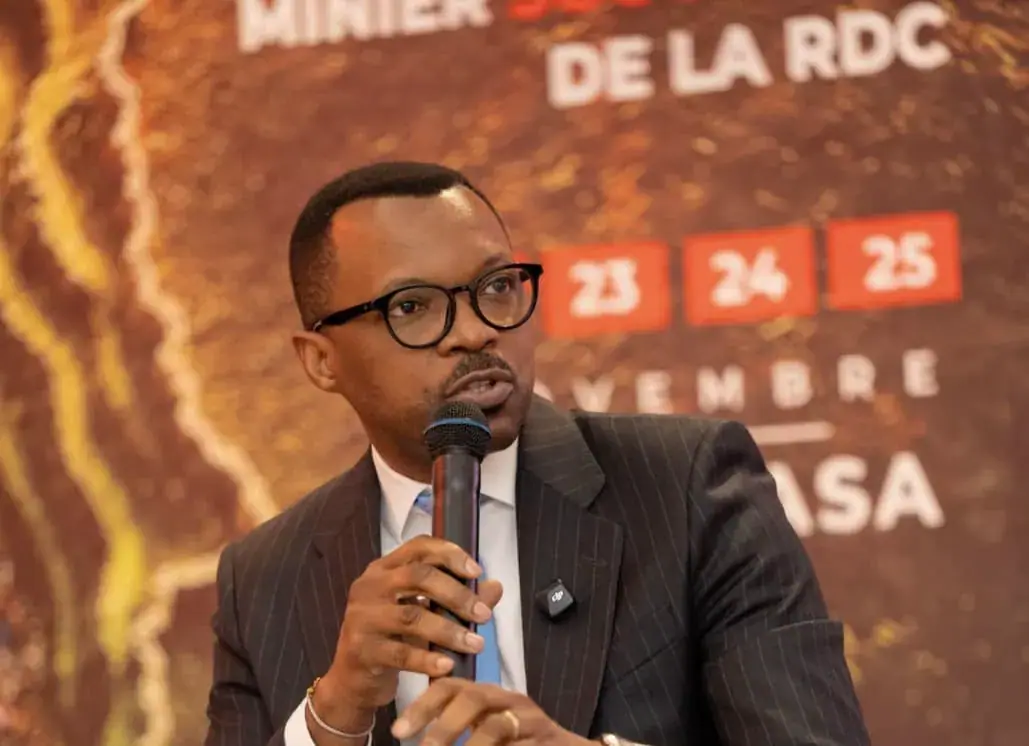
The Makutano Mining Forum in Kinshasa recently discussed the crucial role of human capital in the Democratic Republic of Congo's (DRC) industrial transition. National MP Thierry Mulumba, author of the 'Mpandanjila' draft bill on local mineral processing, emphasized the importance of developing local skills to create jobs and stimulate industrial growth. According to Mulumba, the DRC is currently exporting its wealth, industrial capacity, and jobs, underscoring the need for a shift in strategy.
President Félix-Antoine Tshisekedi also highlighted the priority of developing local skills during the forum's opening on November 23rd. Mulumba's draft bill proposes three key measures to address this issue: mandatory agreements between industrial operators and educational institutions, incentives for technology transfer, and allocating 2% of local processing companies' profits to fund training, innovation, and research. These measures aim to develop local skills and promote industrial growth in the DRC.
The 'Mpandanjila' bill's first proposed measure involves conditional authorization for local processing, contingent upon an agreement between a company or industrial operator and a university or educational institution. This agreement would facilitate the development of local skills. The second measure suggests offering tax, quasi-tax, customs, and administrative benefits to industrial operators that facilitate technology transfer to Congolese citizens.
The third measure proposed in the 'Mpandanjila' bill involves allocating 2% of the profits of companies engaged in local mineral processing to educational institutions for training, innovation, and research. Additionally, the bill includes an accountability mechanism, the performance contract, which allows the State to withdraw benefits granted to investors if they breach their commitments.
The Makutano Mining conference, where this issue was discussed, concluded on November 25th, 2026, in Kinshasa. The 'Mpandanjila' bill, submitted to the National Assembly on October 29th, 2025, was declared admissible on October 12th, 2026. The bill aims to promote local processing and development of mineral value chains in the DRC.
Mulumba, representing Demba in Kasaï-Central, initiated the 'Mpandanjila' draft bill to address the need for local skills development and industrial growth in the DRC. The bill's passage through parliament continues, with discussions focusing on its potential impact on the country's industrial transition.
The emphasis on human capital development and local skills growth is a crucial aspect of the DRC's industrial transition. The 'Mpandanjila' bill's proposals aim to create a more sustainable and equitable industrial growth model, prioritizing the needs of the Congolese people and economy.
Key points
- The 'Mpandanjila' bill proposes allocating 2% of local processing companies' profits to fund training, innovation, and research.
- The bill aims to promote local processing and development of mineral value chains in the DRC.
- President Félix-Antoine Tshisekedi highlighted the priority of developing local skills during the forum's opening on November 23rd.
Reporting sources
- Kinshasa: the role of human capital in industrial transition explained at the Makutano Mining Forum · Congolese press agency