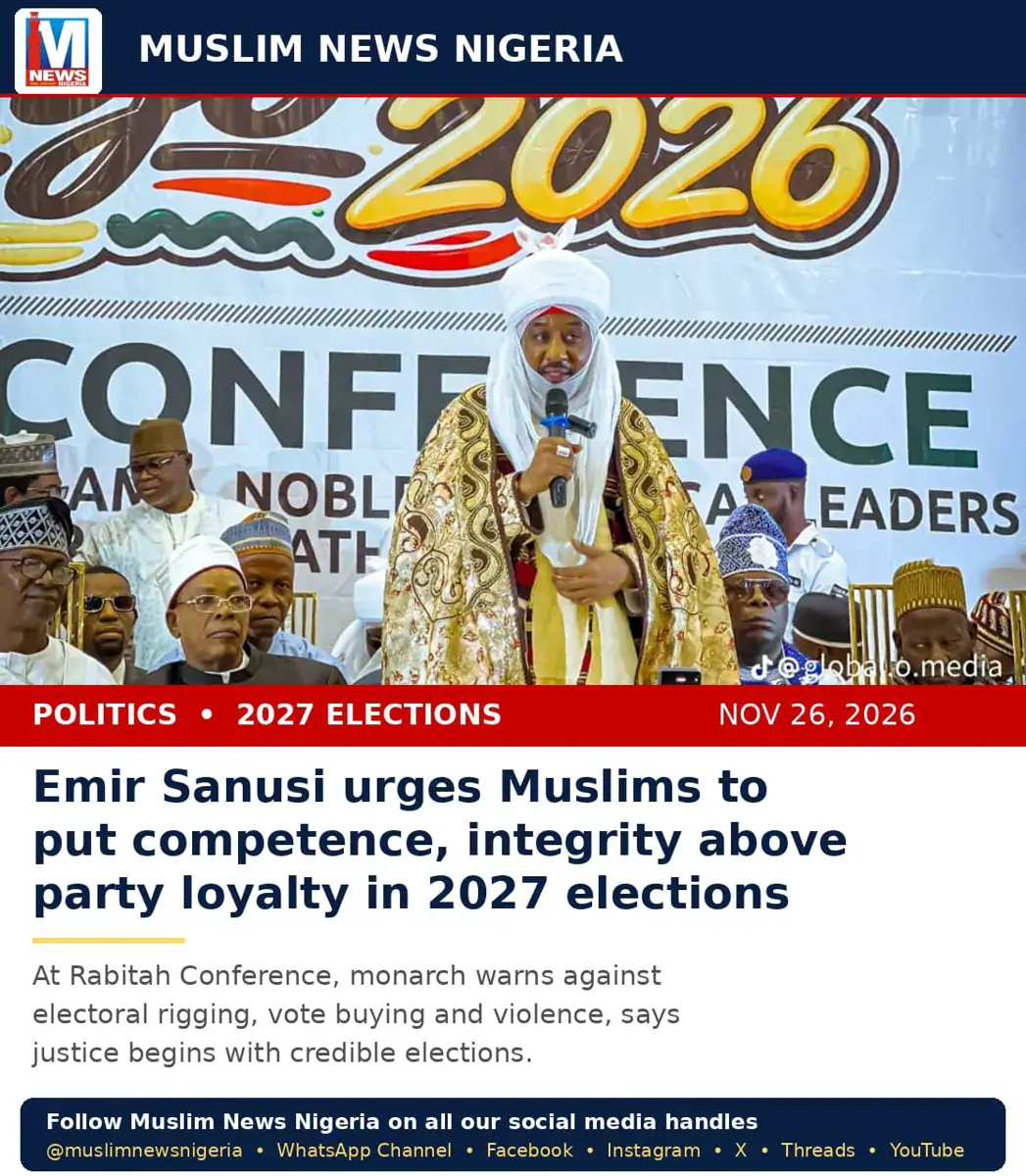
The Emir of Kano, Muhammadu Sanusi II, has called on Nigerian Muslims to prioritize competence, integrity, and accountability when selecting political leaders in the 2027 general elections. Speaking at the 2026 Rabitah Conference in Ibadan, Oyo State, Sanusi emphasized the importance of choosing leaders based on their qualifications and character rather than party loyalty or religious sentiments. He also warned politicians against electoral malpractice, including vote buying, rigging, and violence.
Sanusi delivered the keynote address on the theme, “The Responsibilities of Politicians and Electorate During and After Electoral Process,” at the conference held from November 14 to 16. He cited a verse from Surah Al-Hadid (57:25) of the Qur’an, explaining that government and political authority are necessary for establishing justice in society. According to Sanusi, government possesses the authority and strength to check injustice while providing benefits to humanity.
The Emir cautioned politicians that justice must begin with the electoral process, warning that anyone who rigs elections, steals votes, or deploys violence to secure political office cannot be expected to govern justly. He urged political actors to respect the Constitution and electoral laws enacted by the National Assembly, arguing that credible, peaceful, and transparent elections would reduce electoral disputes, violence, and prolonged court cases.
Sanusi also turned to the electorate, urging Nigerians to recognize the long-term implications of their votes and cautioning against exchanging their political choices for money, food items, and other temporary benefits. He explained that while a bag of rice distributed during an election could be consumed within weeks, the consequences of electing an unsuitable leader could affect citizens throughout a four-year tenure.
The Emir emphasized that the two major qualities required in anyone entrusted with public responsibility are strength and trustworthiness. He explained that strength refers to the competence, capacity, and expertise required to perform a particular responsibility, while trustworthiness encompasses integrity, piety, and good character. Sanusi urged voters to examine the ability of individuals seeking elective positions rather than relying solely on their public display of religious identity.
Sanusi cautioned Muslims against being swayed by politicians who adopt religious appearances during election campaigns to win public support. He observed that some political aspirants grow beards, wear jalabiyas or turbans, recite Qur’anic verses, and make promises to build mosques during election periods but may lack the capacity to deliver effective governance. He warned that electing incompetent leaders could negatively affect education, healthcare, infrastructure, and the economy.
The Emir urged Muslim voters to be discerning and collectively examine the qualifications, character, and records of candidates before making their electoral choices. He also advised Nigerians against excessive attachment to political parties, describing them largely as platforms through which politicians seek elective offices. Sanusi argued that politicians frequently move between parties in pursuit of political opportunities, making it necessary for voters to focus on individual candidates rather than party identities.
Key points
- Sanusi emphasizes the importance of choosing leaders based on competence, integrity, and accountability.
- The Emir warns against electoral malpractice, including vote buying, rigging, and violence.
- Sanusi cautions Muslims against being swayed by politicians who adopt religious appearances during election campaigns.