Mauritania has recorded notable improvements in its public finances and monetary framework, thanks to programs supported by the International Monetary Fund. However, the country's economic growth model, heavily reliant on extractive industries, continues to face structural challenges that limit economic diversification and job creation. This is according to a recent study by the French Development Agency.
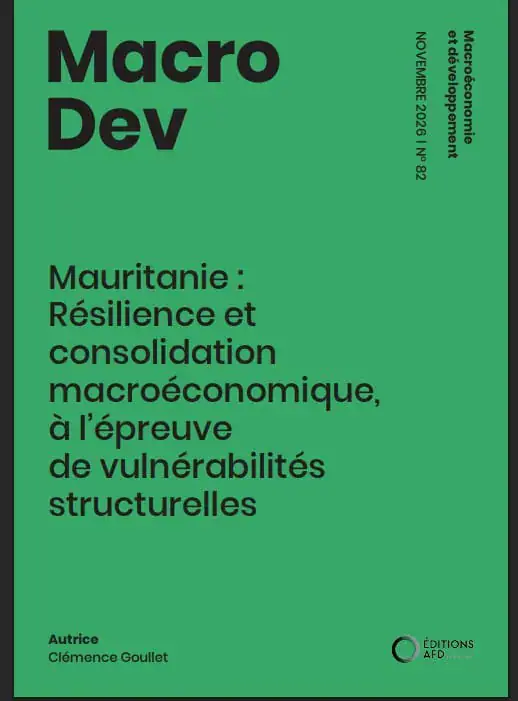
The study, titled "Mauritania: Resilience and Macroeconomic Strengthening in the Face of Structural Fragility," highlights that the political stability following President Mohamed Ould Ghazouani's re-election in June 2024 and the appointment of Moukhtar Ould Aja as Prime Minister in August 2024, has been accompanied by an economic reform agenda. Nevertheless, administrative and institutional challenges persist, including rapid turnover of officials and concentrated economic and banking influence.
The banking sector in Mauritania comprises 17 banks characterized by centralization and family fragmentation, with the top three banks holding 47% of assets. Non-performing loans stood at 19.2% as of mid-2025. The country's budget deficit decreased from 3.1% of GDP in 2022 to 0.3% in 2025. The International Monetary Fund has revised its assessment of Mauritania's public debt risk from "high" to "medium," standing at 39.2% of GDP in 2025.
A new 42-month mixed program worth $88.2 million was launched after the completion of the fifth review in January 2026. The program aims to support Mauritania's economic reforms and growth. The country's economic growth slowed down to 4.0% in 2025, from 6.3% in 2024, largely due to the construction of the Grand Tortue Ahmeyim (GTA) gas project.
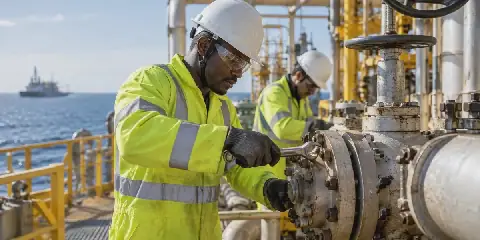
The extractive sector dominates Mauritania's exports, with over 70% of exports consisting of minerals, fish products, and gas. However, this sector does not generate significant employment opportunities. The International Monetary Fund has adjusted its growth forecast for 2026 from 5.0% to 4.7%, citing rising oil import costs due to tensions in the Middle East.
The Central Bank of Mauritania has updated its monetary policy framework and reformed the foreign exchange market. In May 2026, the bank raised its main interest rate by 50 basis points to 6.5% following an annual inflation rate of 6.7%. The country's financial inclusion has expanded, with digital banking services reaching around 50% of the population in 2025.
Despite these improvements, Mauritania still faces significant challenges, including limited access to credit for the private sector, high unemployment, and environmental and climate risks. The country's economic diversification and job creation efforts are hindered by these structural obstacles, which require sustained attention and reform efforts.
Key points
- Mauritania's economic growth model is heavily reliant on extractive industries, which limits economic diversification and job creation.
- The country's banking sector is characterized by centralization and family fragmentation, with non-performing loans standing at 19.2% as of mid-2025.
- The International Monetary Fund has revised its assessment of Mauritania's public debt risk from "high" to "medium," standing at 39.2% of GDP in 2025.