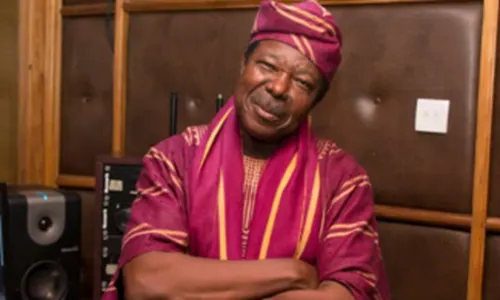
King Sunny Ade, born Sunday Adeniyi Adegeye on September 22, 1946, is celebrating his 80th birthday. With a career spanning over 60 years, he has been the soundtrack to Yoruba and Nigerian high-society celebrations. As a master guitarist, bandleader, and cultural ambassador, Ade has revolutionised traditional Juju music and earned global recognition. His music has filled concert halls from Lagos to London and Seattle, making him a legendary figure in the music industry.
King Sunny Ade's impact on music extends beyond his signature sound, which features the electric pedal steel guitar, percussive thud of the ‘gangan’ talking drum, and interlocking guitars. Industry historians argue that today's Afrobeats explosion rests on foundations laid by Ade. In 1982, he became one of the first African acts to sign to a major Western label, Island Records, paving the way for future generations of Nigerian musicians.
Ade's influence on performance is also significant. Drawing on his background as a dancer, he introduced synchronised choreography across a 20-man band, a sharp departure from the static bandleaders of his era. This model remains visible in the large-scale live productions of Burna Boy, Davido, and Wizkid today. His music has also been sampled by various artists, including Adekunle Gold, Flavour, and American rapper Petey Pablo.
Among his vast discography, four records stand out: ‘Ja Funmi’ (1982), his Island Records breakthrough; ‘Synchro System’ (1983), the Grammy-nominated title track; ‘Ma Jaiye Oni’ (1982), the mid-tempo anthem; and ‘Ariya’ (1976), an early masterpiece that became the definitive sound for Nigerian celebrations. These classics have cemented Ade's status as a Juju music icon.
At 80, Ade's longevity prompts a wider question about the future of Juju music. Unlike Afrobeats' three-minute, digitally produced, streaming-driven model, classic Juju demands large orchestras, extended improvisations, and deep mastery of Yoruba praise poetry, a costly proposition in today's industry. Most younger artists have pivoted to hybrid electronic fusions, leaving Ade as one of the few remaining traditional Juju musicians.
Despite the challenges facing Juju music, Ade's influence is undisputed. For over half a century, he has remained Nigeria's Juju King, and his music is timeless. His legacy continues to inspire new generations of musicians and fans alike. As he celebrates his 80th birthday, Ade's contributions to Nigerian music are being recognised and celebrated by fans and industry leaders.
President Tinubu has hailed King Sunny Ade on his birthday, saying the Juju legend has raised the bar for governance in Nigeria. The Ooni of Ife and other notable figures have also praised Ade's contributions to music and Nigerian culture. As Ade looks back on his six decades of music, his impact on the industry will continue to be felt for years to come.
Key points
- King Sunny Ade has been a pioneer in Nigerian music, revolutionising traditional Juju music and paving the way for future generations of musicians.
- His music has had a lasting impact on the industry, with many artists sampling his work and citing him as an inspiration.
- Ade's legacy continues to inspire new generations of musicians and fans alike, cementing his status as a Juju music icon.