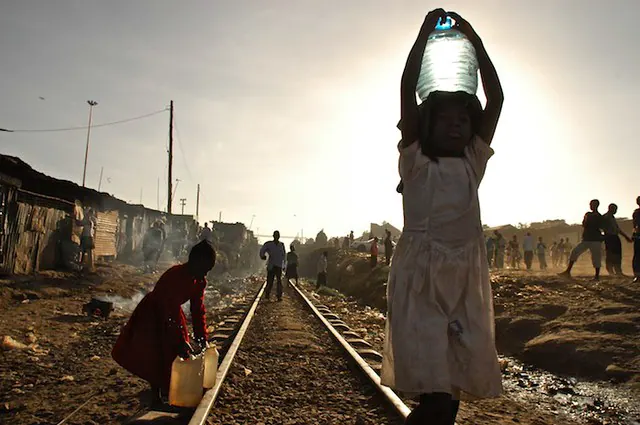
A recent study by the National Crime Research Centre has identified Kiambu County as a principal destination for trafficked children in Kenya. The report, titled "Child Trafficking in Kenya," highlights Ruiru, Wangige, and Tigoni sub-counties as major destinations for children brought in for various forms of exploitation. The study notes a surge in child trafficking cases, with children from Kenya and neighboring countries being brought to Kiambu for informal activities such as hawking and begging.
The National Crime Research Centre's report places Kiambu among eight counties identified as major destinations for trafficked children, alongside Nairobi, Narok, Kilifi, Kwale, Migori, Kajiado, and Nakuru. Focus-group participants reported that children from Rwanda and Burundi are being employed on farms, in factories, and informal enterprises within Kiambu. The study also notes a rise in Burundian children selling food and mobile accessories in the county.
The demand for trafficked children in Kiambu is driven by labor needs in agriculture, manufacturing, domestic work, small businesses, and sexual exploitation linked to tourism and urban economies. Respondents reported allegations of newborn male infants being trafficked for illegal adoption, with some cases involving collusion between mothers, intermediaries, and adoptive parents. In some instances, infants are stolen from health facilities.
According to Kenya National Bureau of Statistics data, reported child-trafficking cases rose from 1,947 in 2022 to 2,322 in 2025. The State Department for Children Services recorded a 44% increase from 911 cases in 2024 to 1,314 in 2025. Girls continue to bear the brunt of trafficking, accounting for about 73% of cases in 2024 and 75% in 2025, primarily for sexual exploitation, domestic labor, and forced marriage.
Perpetrators of child trafficking in Kiambu are often known to their victims, with parents, relatives, neighbors, boda-boda riders, and local business owners being the most common individual traffickers. Some institutional actors, such as unregistered children's homes and certain officials, are also implicated in the report. The National Crime Research Centre urges a shift from siloed interventions to a coordinated, systems-based response to combat child trafficking.
The National Crime Research Centre recommends the establishment of child and gender desks at sub-county police stations, public awareness campaigns, border mapping, state-run rescue centers, and real-time data sharing among law-enforcement agencies. Authorities remind the public that suspected trafficking can be reported to police, the nearest Children's Officer, or Childline Kenya via the 116 helpline.
The report's findings and recommendations are expected to inform policy and interventions aimed at combating child trafficking in Kenya. By highlighting key hubs for child trafficking, such as Kiambu County, the National Crime Research Centre's study aims to facilitate a more targeted and effective response to this complex issue.
Key points
- Kiambu County has been identified as a major destination for trafficked children in Kenya.
- The demand for trafficked children in Kiambu is driven by labor needs in various sectors.
- Perpetrators of child trafficking in Kiambu are often known to their victims.