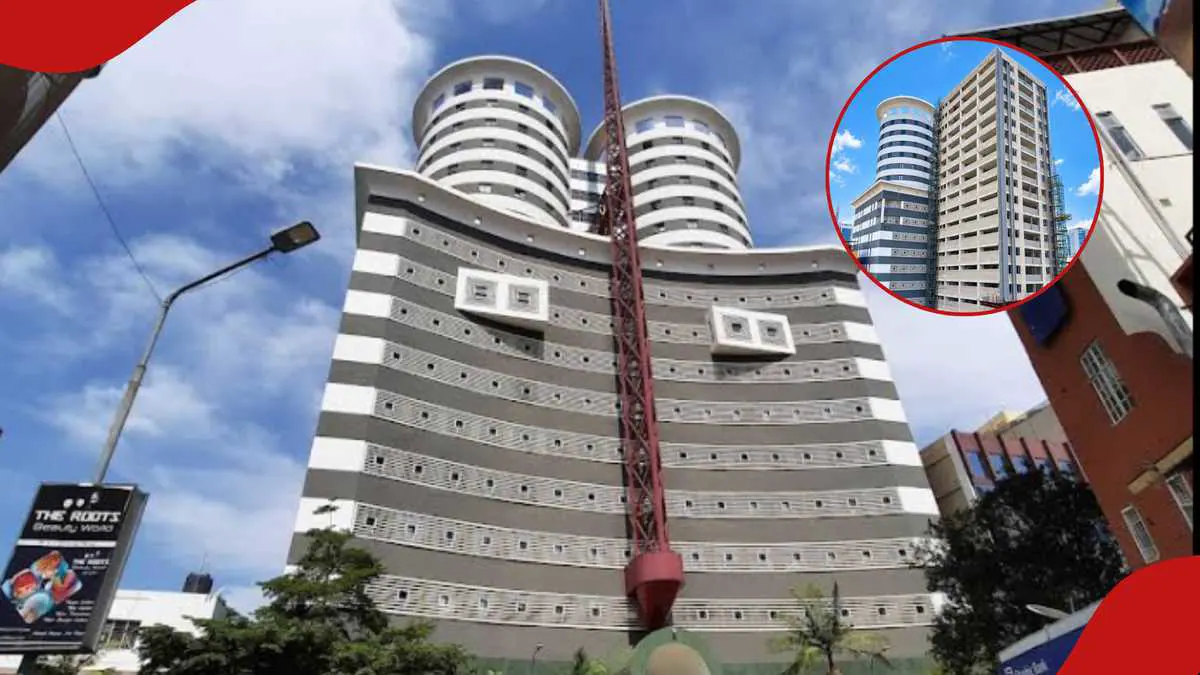
A building under construction along Kimathi Street in Nairobi's Central Business District has triggered widespread criticism for partially obscuring the view of the iconic Nation Centre. Social media users have voiced their frustration, questioning the design and approval process of the new structure. Many have described the building as an eyesore, with some comparing it to a silo for wheat storage. The controversy has reignited debate about Nairobi's building regulations and the need for architectural harmony in the CBD.
The Nation Centre, completed in 1997, is a 17-storey twin-tower building designed by Danish firm Henning Larsen Tegnestue in collaboration with Kenyan firm Planning Systems Services Ltd. It was commissioned by the Aga Khan's Industrial Promotion Building Ltd. The building has become an iconic landmark in Nairobi and holds a special place in the hearts of many Kenyans. Social media users have shared their memories of visiting the building when it first opened, recalling its significance in the city's skyline.
The new building has sparked concerns about regulatory oversight, with many questioning who approved the project. Some have raised structural concerns, asking if there should be more space between the two buildings. However, others have defended the development, arguing that the owner has the right to build on their plot of land. The debate has highlighted the need for policies protecting the views of private property and the importance of architectural harmony in the CBD.
The controversy sits within a broader context of rapid vertical development in Nairobi, which has outpaced the city's regulatory framework. The Nairobi City County Development Control policy has proposed permitting buildings of up to 75 floors in key commercial zones, a dramatic increase from earlier limits. A Court of Appeal ruling in September 2025 sought to address these gaps by establishing mandatory requirements for high-rise developments.
Veteran journalist Mutuma Mathiu has described the new building as "terrible" and an "ugly box" that is a "wart on the face of Nation Centre". Many Kenyans have expressed similar sentiments, calling for architectural harmony approval to be put in place. The skyline of Nairobi's CBD has been described as an eyesore, with many buildings and developments taking place without a consistent, visible long-term urban plan.
Kenya's building code, widely described as a derivative of British colonial regulations, was not conceived for the complexity of modern high-rise construction. The code has raised concerns about infrastructure strain, and there is a need for updated regulations to address the challenges of rapid urban development. The debate has highlighted the importance of balancing development with aesthetic considerations.
In other news, La Tour F in Abidjan, Côte d'Ivoire, has become Africa's tallest building, rising 421 metres across 75 floors. Egypt's Iconic Tower, which previously held the title, has dropped to second place at 394 metres. Kenya's Britam Tower in Nairobi ranked eighth at 200.1 metres and 31 floors, having been completed in 2017.
Key points
- The new building in Nairobi's CBD has sparked criticism for obstructing views of the iconic Nation Centre.
- The controversy has reignited debate about Nairobi's building regulations and the need for architectural harmony in the CBD.
- Kenya's building code has raised concerns about infrastructure strain, and there is a need for updated regulations to address the challenges of rapid urban development.