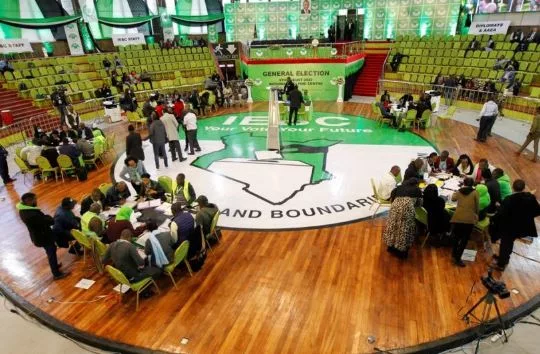
The High Court of Kenya has upheld the national tallying of presidential election results, dismissing a petition by Busia Senator Okiya Omtatah. Justice Gregory Mutai ruled that the Independent Electoral and Boundaries Commission (IEBC) is constitutionally required to tally and verify presidential results at the national level. This process, however, cannot be used to alter figures already declared and certified at the constituency level.
Senator Omtatah and other petitioners had argued that the constituency is the final point for tallying, verification, and declaration of presidential results. They challenged Section 39 of the Elections Act, which provides for the transmission and tallying of presidential election results at different levels. The petitioners claimed that this provision could undermine the finality of constituency results.
The IEBC opposed the challenge, maintaining that the national process is provided for in law and is intended to verify the accuracy of results and establish whether a presidential candidate has met the constitutional threshold. The commission submitted that national tallying does not give it power to alter constituency results but involves checking and aggregating figures received from the constituencies.
The Supreme Court has previously held that the power to verify and tally presidential results at the national tallying centre belongs to the IEBC as a collective body, rather than its chairperson alone. Justice Mutai declined to invalidate Section 39(1)(cb) of the Elections Act and Regulation 83(2), finding that the national tallying and verification framework is constitutional.
The judge described tallying as the arithmetic aggregation of constituency figures into county and national totals. Verification involves checking whether the aggregated figures correspond with those declared and certified at the constituency level. The court made clear that verification does not give IEBC authority to change individual constituency results.
The court declared that presidential results declared and certified at the constituency level are final and may only be challenged before an election court. Certified Forms 34A and 34B, or their successors, displayed at constituency tallying centres should be the primary reference documents when national results are aggregated.
The court ordered that national verification be undertaken collectively by the IEBC, with all commissioners participating and having access to the underlying data. Candidates' agents and observers should also have real-time access to the same data available to the commission during the national tallying and verification exercise.
Key points
- The Kenyan High Court has upheld the national tallying of presidential election results, ruling that the process is constitutional.
- The court made it clear that national tallying cannot be used to alter figures already declared and certified at the constituency level.
- The IEBC must undertake national verification collectively, with all commissioners participating and having access to the underlying data.