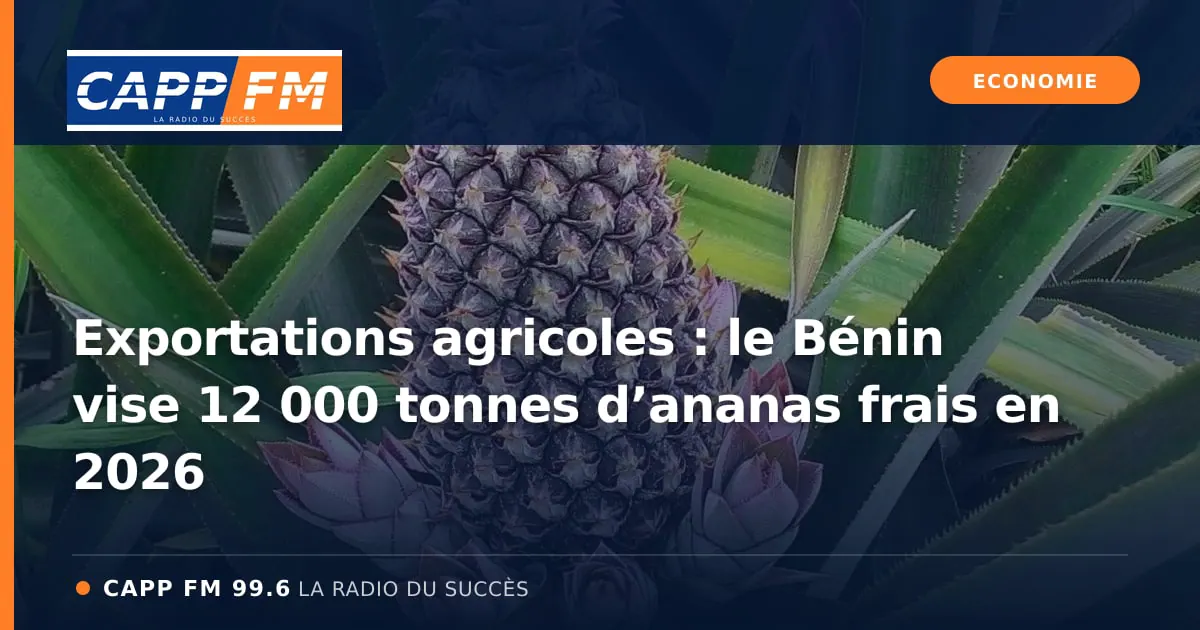
The Beninese government has set an ambitious goal to increase its fresh pineapple exports to 12,000 tonnes by 2026, according to a report by the Ministry of Agriculture and the implementation of the Project to Support Competitiveness of Agricultural Value Chains and Export Diversification (PACOFIDE). This represents a significant increase from the 2,700 tonnes exported in 2023. The strategy aims to diversify Benin's agricultural exports, which have long been dominated by cotton and cashew nuts.
The PACOFIDE project is part of Benin's efforts to boost its agricultural sector and reduce its reliance on traditional export products. The report highlights that the country's cotton exports, its main agricultural product, totaled approximately 307 billion FCFA in 2023, down from 362 billion FCFA in 2022. Meanwhile, cashew nut exports have seen a significant increase, rising from 4.92% to 14.69% of total vegetable exports over the same period.
To support this diversification drive, the PACOFIDE project has secured $150 million in funding from the World Bank, approved in June 2024. The project aims to improve the competitiveness of Benin's agricultural value chains and increase the country's export earnings. The target of 12,000 tonnes of fresh pineapple exports represents over four times the 2023 level and approximately 2.7% of Benin's estimated annual pineapple production of 450,000 tonnes.
According to the report, the expected growth in pineapple exports is attributed to the renewal of plantations, better availability of planting materials, and improved quality control measures. The report also notes that pineapple sales in the first half of 2026 have increased by 96.4%, with nearly 99.9% of products presented for export meeting international standards.
However, the report also highlights the logistical challenges associated with exporting perishable goods like pineapples to distant markets, such as China. The export process will be subject to sanitary procedures agreed upon by both countries. To address these challenges, the project plans to improve the conservation and transportation of pineapples using cold chain facilities and a fruit handling facility at Cotonou Airport.
Benin produces approximately 450,000 tonnes of pineapples annually, with the pineapple sector contributing around 1.2% to the country's GDP and 2% to its agricultural GDP. The sector provides a livelihood for thousands of producers, mainly in the communes of Allada, Zè, and Tori-Bossito in the Atlantic Department. The Pain de Sucre variety, recognized for its taste, has a protected geographical indication.
In addition to fresh pineapple exports, over 70 small and medium-sized enterprises in Benin process pineapples into juice, dried fruits, and other derived products. The government's efforts to increase pineapple exports and diversify its agricultural sector are expected to have a positive impact on the country's economy and rural communities.
Key points
- Benin aims to increase its fresh pineapple exports to 12,000 tonnes by 2026.
- The PACOFIDE project has secured $150 million in funding from the World Bank to support export diversification.
- Benin produces approximately 450,000 tonnes of pineapples annually.