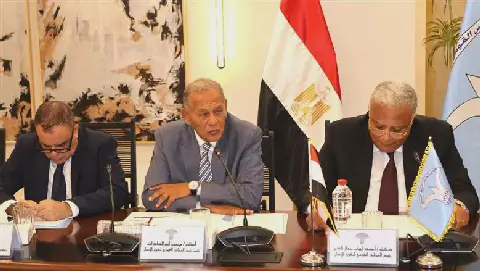
Kenya's multi-agency approach to security operations, formed in 2014, has been instrumental in containing acts of terrorism and tackling the drug trade. According to Interior CS Kipchumba Murkomen, the approach was born out of a need for coordination among security chiefs. During a security meeting attended by then President Uhuru Kenyatta and his then deputy William Ruto, security chiefs were quarrelling over responsibility. The president's decisive leadership led to the formation of the multi-agency approach.
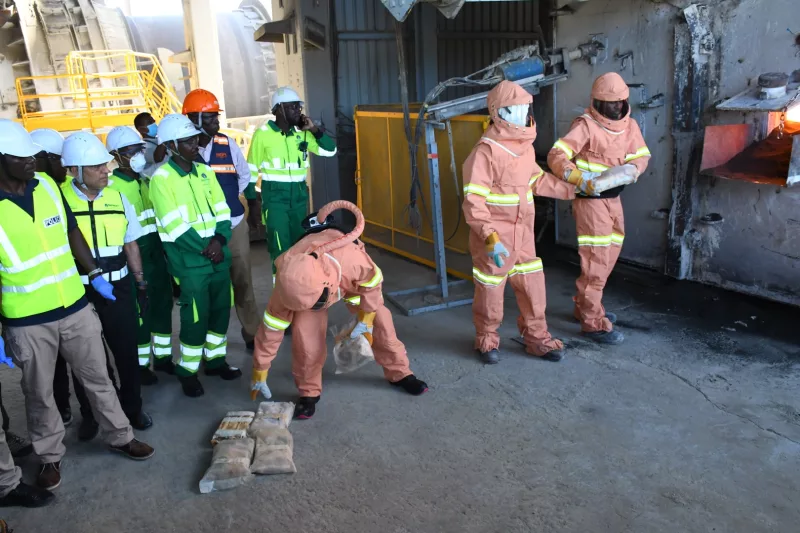
The approach has yielded significant results, including the seizure of 1,036kg of methamphetamine worth about Sh8.2 billion in the Indian Ocean high seas in October last year. The drugs were destroyed at the Bamburi Cement factory, whose industrial kilns provide extremely high temperatures capable of completely incinerating and neutralising hazardous narcotics safely. The haul was part of the evidence in a case involving six Iranian suspects charged with drug trafficking.
Murkomen attributed the successful seizure to teamwork among various agencies, including the Kenya Navy, international partners, the Directorate of Criminal Investigations, the National Police Service, and the Judiciary. He singled out the Judiciary, particularly Shanzu Law Courts Chief Magistrate Antony Mwicigi, for being steadfast and cooperative in the fight against drugs. The multi-agency approach has been key to successes in the war on drugs and security.
However, Mwicigi stressed that destroying narcotic drugs is an evidentiary and judicial process. He emphasised that the exercise should not be understood to be a determination of the guilt of the accused persons. The accused persons remain entitled to the full protection of the law and the presumption of innocence until the evidence is analysed and determined accordingly.
The government has adopted a no-nonsense and ruthless approach to tackling drugs due to the harm narcotics have caused Kenyans. According to data from the National Authority for the Campaign Against Alcohol and Drug Abuse (Nacada), one in six Kenyans aged between 15 and 65, representing more than 4.7 million people, use at least one drug or substance of abuse. The Coast region is among the hardest hit, with Mombasa county recording the highest prevalence rate in the country at 34.4 per cent.
Under the government's tougher approach, traffickers and drug barons will increasingly face the consequences of their crimes. All assets used in or acquired through drug trafficking and the illicit alcohol trade will be treated as proceeds of crime, promptly frozen and forfeited to the state. President William Ruto has directed that forfeited assets be redirected towards rehabilitation, prevention and treatment programmes.
The government has launched the first National Policy for the Prevention, Management and Control of Alcohol, Drugs and Substance Abuse to complement enforcement with prevention, treatment and rehabilitation. A nationwide assessment of 266 rehabilitation facilities has been completed, with 164 facilities accredited. The government has also transformed the Anti-Narcotics Unit into the National Anti-Narcotics Investigations Bureau, with an increased number of specialised officers and equipment for intelligence, surveillance, forensic and financial investigations.
Key points
- Kenya's multi-agency approach has yielded significant results in the war on drugs and security.
- The government has adopted a no-nonsense approach to tackling drugs, with assets used in drug trafficking to be frozen and forfeited to the state.
- The government has launched a national policy to prevent, manage and control alcohol, drugs and substance abuse.