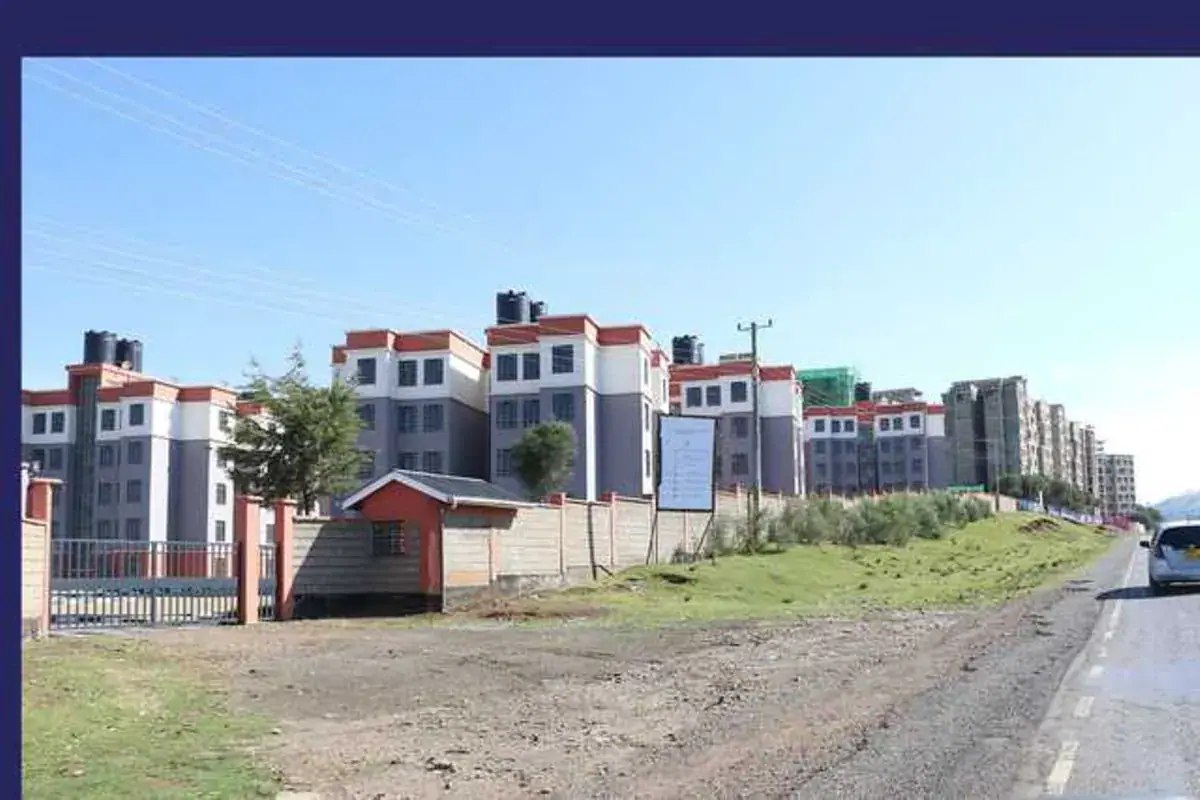
Kenya's housing deficit has increased to over 2.8 million units, driven by rapid urbanisation and population growth. A 2026 UN-Habitat report shows the deficit increased by 300,000 units between 2020 and 2023. This sustained pressure on the housing market occurs despite government efforts to boost affordable housing supply. The deficit is a significant challenge for Kenya, which needs to build millions of affordable homes to meet its housing needs and address the growth of sprawling slums.
The housing shortage is linked to an expanding urban population, driving up demand for accommodation, infrastructure, and basic services in towns and cities. Africa has the fastest-growing cities globally, with 40 percent of its people living in urban areas. However, most new homes target the middle and upper classes, as it's more profitable to sell high-end properties. In Kenya, only one in three of the 50 million population lives in cities, but the population growth is largely urban, with most Kenyans expected to live in cities by 2033.
To address the housing challenge, Kenya has established the Affordable Housing Fund, which aims to finance the construction of affordable housing for poorer Kenyans. The fund is built through a 1.5 percent collection from workers' monthly pay. The goal is to build over 200,000 affordable housing units annually and create thousands of jobs. However, rapid urbanisation is worsening the situation, with Kenya's cities growing by nearly one million people a year.
A significant problem contributing to the housing deficit is a shortage of finance. Over 10.3 million Kenyans live in informal settlements, and an estimated 55 percent of households spend more than 30 percent of their income on rent. This financial strain on families seeking decent accommodation highlights the need for affordable housing solutions. The UN report attributes the housing challenge to rapid urbanisation, rising land values, widening inequality, and intensifying climate impacts.
Kenya's housing challenge is part of a broader regional crisis, with Sub-Saharan Africa facing a shortage of 120.5 million housing units. Nigeria has the largest housing deficit at 28 million units, followed by Ethiopia at 12 million and the DR Congo at 10.9 million. Kenya's shortage of 2.8 million units is below Tanzania's four million but higher than Uganda's two million. These figures demonstrate that Kenya's housing challenge is part of a larger East African problem.
The UN report highlights that national and local governments face significant challenges in delivering adequate and affordable housing. Factors such as rapid urbanisation, rising land values, and widening inequality are outpacing the capacity of governments to address the housing deficit. The report's findings underscore the need for innovative solutions and increased investment in affordable housing to address the crisis.
The Kenyan government has shifted its spending priorities to address the housing challenge, with a focus on roads and housing ahead of the 2027 election. The government's efforts to boost affordable housing supply and address the housing deficit are crucial to mitigating the financial strain on families and addressing the growth of informal settlements. Key initiatives, such as the Affordable Housing Fund, aim to provide affordable housing solutions for poorer Kenyans.
Key points
- Kenya's housing deficit has risen to 2.8 million units, driven by rapid urbanisation and population growth.
- The housing shortage is linked to an expanding urban population, driving up demand for accommodation, infrastructure, and basic services.
- Kenya's housing challenge is part of a broader regional crisis, with Sub-Saharan Africa facing a shortage of 120.5 million housing units.
Reporting sources
- Kenya’s housing deficit rises to over 2.8 million units · Business Daily Africa