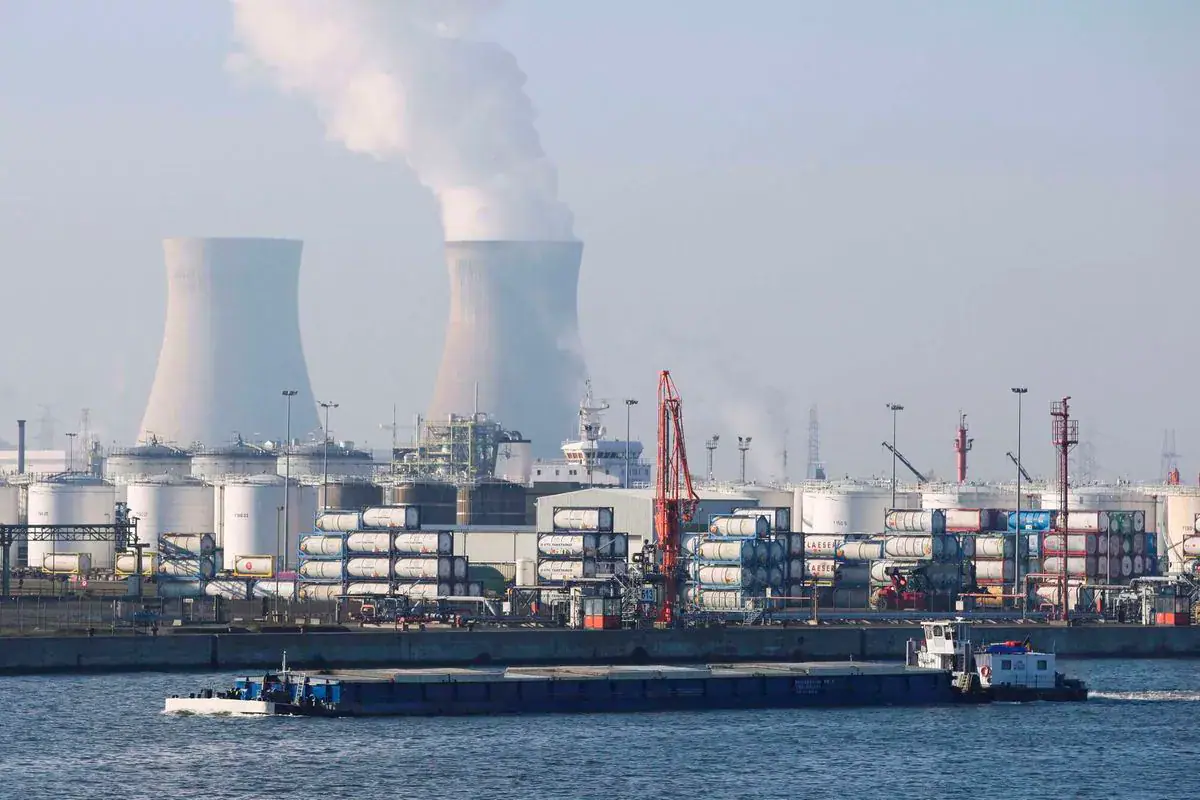
A few decades ago, South Korea faced a daunting reality: a nation with no natural energy resources, recovering from war, and poorer than Kenya today. Yet, when Korea embarked on its nuclear journey in the 1970s, it didn't let limitations obscure its long-term vision. Today, South Korea is a global nuclear powerhouse, exporting its APR-1400 technology and securing billion-dollar deals worldwide.
Recently, a Kenyan team led by Justus Wabuyabo, CEO of the Nuclear Power and Energy Agency (NuPEA), visited South Korea for strategic consultations with key nuclear institutions. The mission reaffirmed that Kenya can replicate South Korea's trajectory. As Kenya prepares to construct its first nuclear power plant in Siaya County next year, it seeks to follow the Korean model of comprehensive technology transfer, ensuring Kenya leads the adoption of civilian nuclear technology in Africa.
The Korean miracle lies in its meticulous, multi-decade planning process. When Korea initially imported nuclear technology from the US, it mandated local capacity building. Korea systematically unbundled foreign technology, driving domestic learning, engineering adaptation, and local innovation. Within a generation, Korea evolved from a technology consumer to a global creator and exporter. Kenya is replicating this philosophy through partnerships, such as with the Korea Atomic Energy Research Institute.
Nuclear power demands unique national and regional leadership due to its energy density, zero-carbon reliability, and complex regulatory requirements. Kenya is positioned to provide institutional leadership for Africa, just as the US pioneered civilian nuclear energy and South Korea refined it into an ultra-efficient system. The 10 MWth Kenya Nuclear Research Reactor at Konza Technopolis will serve as a regional hub for medical research, scientific innovation, and human capital development.
The nuclear power plant in Siaya represents an economic renaissance for local communities. Modern nuclear technology features advanced, fully passive safety systems, making it incredibly clean and one of the safest forms of electricity generation. By anchoring the grid with the baseload facility in Siaya, Kenya will catalyse local manufacturing, create high-paying jobs, and de-risk the national grid from climate-induced hydro droughts.
Kenya's nuclear energy programme is a vehicle for long-term socio-economic liberation under Vision 2030 and the Bottom-Up Economic Transformation Agenda. By choosing technology transfer over procurement, Kenya ensures that the brains operating and maintaining future reactors will be Kenyan. This strategic choice positions Kenya at the forefront of the global clean energy frontier.
With its future plans, Kenya is entering the specialised nuclear space with transparency, safety, and international alignment in mind. The country is committed to a path of absolute transparency, safety, and international cooperation as it moves forward with its nuclear energy programme, setting a strong foundation for a sustainable energy future.
Key points
- Kenya seeks to replicate South Korea's nuclear energy success through comprehensive technology transfer.
- The country aims to lead the adoption of civilian nuclear technology in Africa.
- Kenya's nuclear energy programme is a decisive vehicle for long-term socio-economic liberation under Vision 2030.