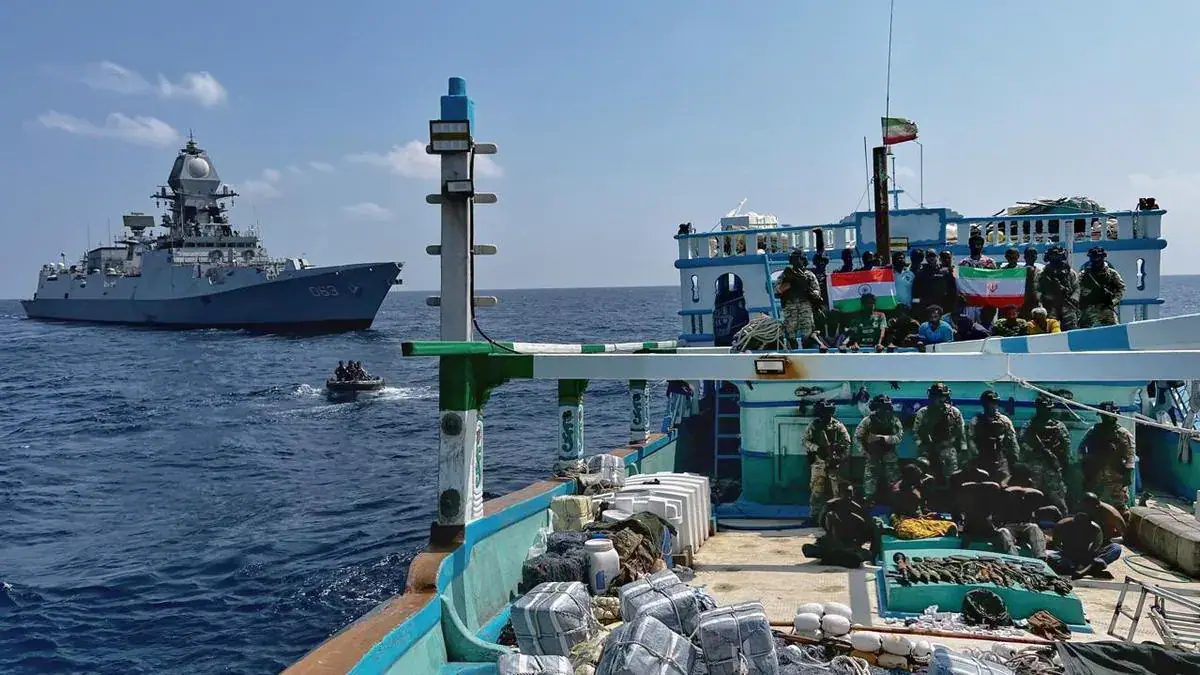
The Indian Navy successfully rescued all 20 crew members of a hijacked Iranian fishing vessel, Azini, off the coast of Somalia, following a 48-hour military operation. The operation, completed on November 2, involved the Indian Navy and the Indian Air Force. The vessel had been seized by armed pirates off Somalia's northeastern coast on October 29. The Indian Navy deployed a warship and maritime surveillance aircraft to locate and intercept the vessel.
The Indian Navy's operation involved locating and intercepting the hijacked vessel. Naval platforms maintained persistent surveillance, tracked the vessel's movements, and used calibrated non-kinetic measures to restrict its movement and prevent escape. The operation was conducted over 3,000 kilometres from Mumbai, highlighting the operational reach of India's naval forces. The incident raised concerns about the security of international shipping routes connecting the Indian Ocean, the Gulf of Aden, and the Red Sea.
Indian Marine Commandos, known as MARCOS, were deployed in a precision airdrop operation from an Indian Air Force C-17 military transport aircraft. The commandos boarded and secured the fishing vessel, overcoming the pirate threat and freeing all hostages. The rescue operation resulted in no casualties or injuries to the crew members. The Indian Navy's swift action prevented the hijacked vessel from being used as a so-called mother ship to launch further attacks on commercial vessels.
The hijacking of the Azini vessel raised concerns about a resurgence in piracy off Somalia. Armed groups have stepped up hijackings of fishing vessels and commercial ships after years of relative calm. Somali piracy peaked between 2008 and 2012, with armed groups seizing numerous vessels and holding crew members for ransom. International naval patrols and improved security measures subsequently helped reduce attacks.
However, a resurgence in piracy since late 2023 has raised fresh concerns about maritime security. The Indian Navy remains committed to protecting maritime trade and ensuring safe passage for vessels operating across the Indian Ocean region. The navy said it would continue to respond decisively to maritime threats across the region. The operation demonstrated India's commitment to protecting seafarers and securing maritime trade routes.
India's Defence Minister Rajnath Singh congratulated the navy and other personnel involved in the operation. He described the rescue as a demonstration of the country's ability to respond to maritime security threats far from its shores. Singh added that the operation showcased the Indian Navy's high operational readiness and ability to respond decisively to maritime threats.
The successful rescue operation highlights the Indian Navy's capabilities in responding to maritime security threats. The incident also underscores the need for continued international cooperation to combat piracy and ensure the security of shipping routes. The Indian Navy's actions demonstrate its commitment to maintaining stability across the Indian Ocean region.
Key points
- The Indian Navy conducted a 48-hour operation to rescue 20 crew members of a hijacked Iranian fishing vessel off Somalia's coast.
- The operation involved the deployment of a warship, maritime surveillance aircraft, and Indian Marine Commandos.
- The rescue highlights the Indian Navy's operational reach and commitment to protecting maritime trade and ensuring safe passage for vessels in the Indian Ocean region.