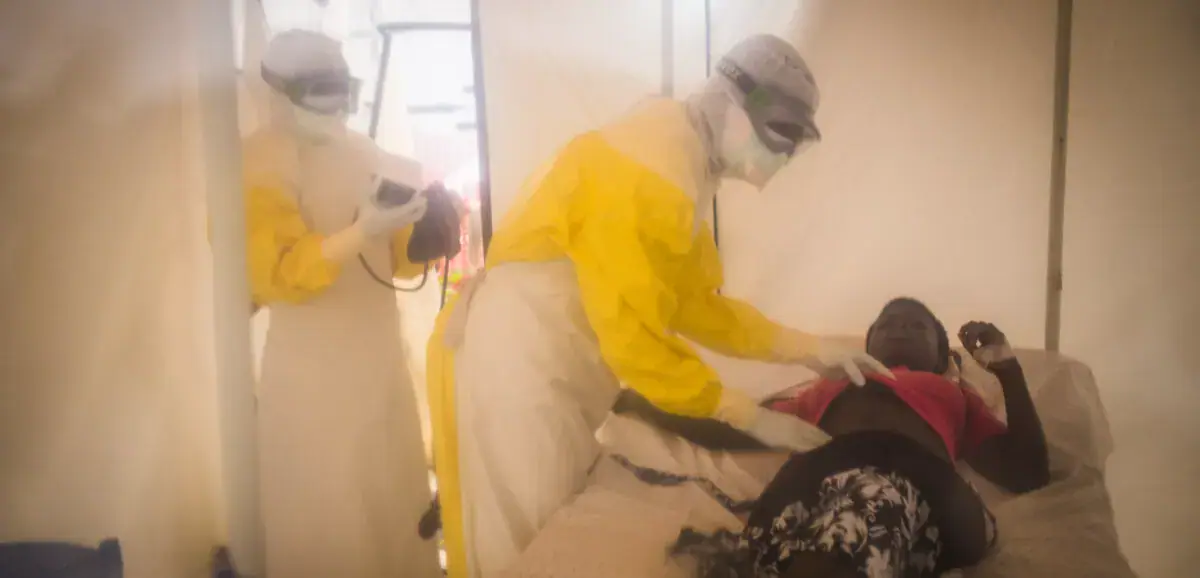
The Ebola epidemic sweeping across Africa has resulted in 5,376 deaths, with 5,372 of those fatalities occurring in the Democratic Republic of Congo (DRC), the epicenter of the outbreak. According to the Africa CDC, a total of 10,444 cases have been reported since the outbreak began. The current epidemic was officially declared in May and has been attributed to the Bundibugyo strain of the Ebola virus, for which there is currently no approved vaccine.
The epidemic has not been confined to the DRC, with cases and deaths reported in neighboring countries. In Uganda, 20 cases, including two fatalities, were recorded before the outbreak was declared over in August. The Kenyan health ministry reported nine cases, including two deaths, in October. A single case was also detected in Nigeria last month, involving a 42-year-old Swiss woman who had traveled from Uganda.
The response to the epidemic has been hindered by various challenges, including limited resources in remote areas, the presence of armed groups, and mistrust among local populations. The Africa CDC and other health organizations have emphasized the need for increased preparedness and cooperation among governments to combat the outbreak.
The Bundibugyo strain of the Ebola virus, responsible for the current epidemic, has no approved vaccine or treatment. However, doses of the Ervebo vaccine, which has shown efficacy against the Zaïre strain, have been administered to volunteers in the DRC as part of a clinical trial. The effectiveness of Ervebo against the Bundibugyo strain remains to be established.
The Africa CDC has stressed the importance of keeping borders open and investing in preparedness to prevent the spread of the virus. The organization has also called for a unified, government-led national plan to coordinate the response to the epidemic. According to Dr. Jean Kaseya, Director-General of the Africa CDC, the situation demands careful consideration and a concerted effort to mitigate the outbreak.
The epidemic has highlighted the need for enhanced surveillance and detection capabilities, as well as improved communication and collaboration among governments, health organizations, and local communities. The international community has been urged to provide support and resources to help combat the outbreak and prevent further spread of the virus.
As the situation continues to evolve, health authorities and governments are working to intensify their response to the epidemic. The development and deployment of effective vaccines and treatments, as well as sustained efforts to promote awareness and cooperation, will be crucial in bringing the outbreak under control and ultimately saving lives.
Key points
- The Ebola epidemic in Africa has resulted in over 5,300 deaths, primarily in the Democratic Republic of Congo.
- The outbreak has spread to neighboring countries, including Uganda, Kenya, and Nigeria.
- The current epidemic is caused by the Bundibugyo strain of the Ebola virus, for which there is currently no approved vaccine.