The Kenyan government has confirmed the country's first-ever case of Ebola, a viral disease that causes severe illness and death. According to Health Cabinet Secretary Aden Duale, the patient was a Kenyan citizen who had traveled by road from the Democratic Republic of Congo (DRC) to Kampala, Uganda, before flying to Nairobi aboard a Jambojet flight on Saturday last week. The patient had symptoms consistent with Ebola, including fever, chills, intense fatigue, muscle pain, and bleeding under the skin.
The patient underwent public health screening upon arrival at Jomo Kenyatta International Airport (JKIA) in Nairobi, in line with health protocols. After being picked up by a relative at JKIA, the patient was driven to Nairobi Hospital, where he was isolated before being transferred to the hospital's East Wing Isolation Facility. Doctors at Nairobi Hospital collected a sample, which tested positive for the Bundibugyo virus, a strain of Ebola.
The Ministry of Health said the patient had lived in DRC for the past seven years and fell ill about a month ago. The patient received treatment at Nairobi Hospital but unfortunately died. The patient will be buried in line with Ebola safety protocols. At least 28 people, including family members and health workers who came into contact with the deceased, have been screened, Health Cabinet Secretary Aden Duale said.
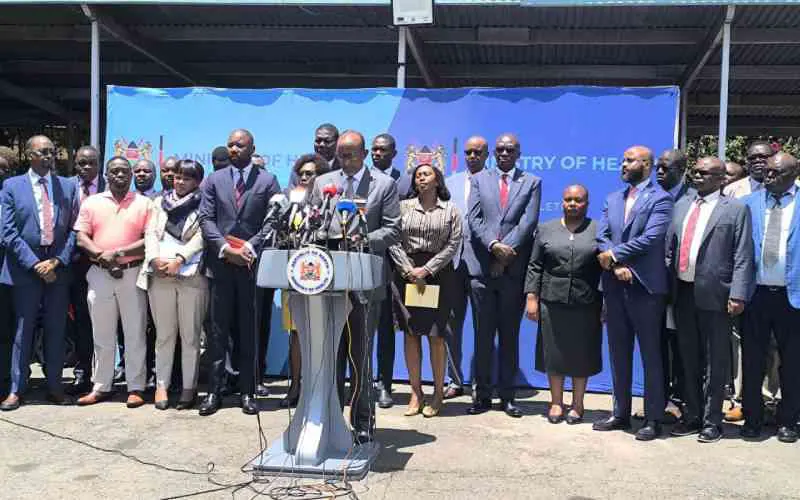
Arrangements have been made to quarantine those considered at risk. Duale has urged the public not to panic, saying measures are in place to contain the spread of the disease. The Kenyan government has tightened its response to Ebola, with public health emergency centers activated at both levels of government, and screening intensified at all border points.
The confirmation of the Ebola case comes months after public outcry over the government's decision to allow the establishment of an Ebola quarantine facility in Laikipia County, funded by the United States government. Activists and lobby groups protested the facility, arguing that it could expose Kenyans to the deadly virus. At least three protesters died during clashes with police in early June.
As of October 2026, the DRC has reported more than 8,000 confirmed Ebola cases and about 4,080 deaths since the outbreak began in May, according to the World Health Organisation. The organisation has described the outbreak as the worst ever. Health authorities in Kenya had heightened surveillance following the outbreak of the Bundibugyo strain in the DRC, which spread into neighbouring Uganda.
The Kenyan government has assured the public that it is taking all necessary measures to prevent the spread of Ebola. The Ministry of Health is working closely with international partners to ensure that the situation is brought under control. The public is being urged to remain calm and to report any suspected cases of Ebola to the authorities immediately.
Key points
- The patient, a Kenyan citizen, traveled from DRC to Uganda and then Nairobi, where the patient died after receiving treatment at Nairobi Hospital.
- The Kenyan government has tightened its response to Ebola, with public health emergency centers activated at both levels of government, and screening intensified at all border points.
- The DRC has reported more than 8,000 confirmed Ebola cases and about 4,080 deaths since the outbreak began in May, according to the World Health Organisation.