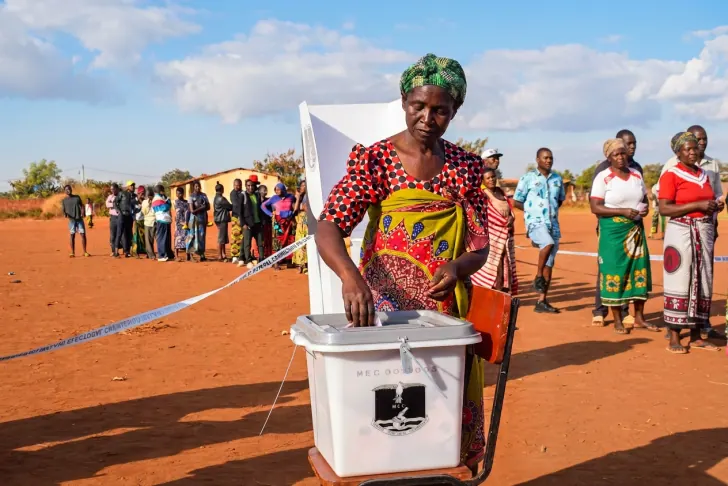
Parliamentary hopefuls and voters in Nsanje South and Mangochi East constituencies are facing a dilemma due to the uncertainty of court-sanctioned fresh elections. The Malawi Electoral Commission (MEC) had initially scheduled the elections for September 29 but failed to regain access to critical electoral materials locked in its sealed Njewa warehouse in Lilongwe. As a result, voters are without a clear timeline for choosing their representatives, and candidates have no indication of when their campaigns will end.
The MEC is currently engaging with the government to secure access to the facility, but the commission remains unable to access the warehouse. According to MEC director of media and public relations Sangwani Mwafulirwa, efforts so far have been focused on direct engagement with the government for the necessary approvals. The commission has advised candidates and political parties to continue campaigning until a revised electoral calendar is issued.
The Constitution provides that a by-election to fill a parliamentary vacancy should be held in the next quarter after the seat becomes vacant or, where circumstances do not permit, “as expeditiously as possible”. Section 63(2)(b) also bars a by-election where a vacancy occurs within 12 months of a general election. This provision has significant implications for the current situation in Nsanje South and Mangochi East.
In Nsanje South, the High Court in Blantyre nullified a corrigendum issued by MEC that declared Democratic Progressive Party (DPP) candidate Thomson Kamangira the winner. The commission had initially declared independent candidate Ramuzani Mahommed the victor. Meanwhile, in Mangochi East, the Supreme Court of Appeal nullified the September 16 parliamentary election after a challenge to the result, paving the way for another fresh poll.
Experts are weighing in on the situation, with Civil Society Elections Integrity Forum chairperson Benedicto Kondowe calling on MEC to openly acknowledge its inability to conduct the elections. Kondowe also emphasized the need for citizens to demand accountability. Mzuzu University political analyst Crispin Mphande noted that constituents in the two areas are effectively without a voice in Parliament.
Human rights law expert Chikondi Chijozi Jere said MEC holds the key to restoring representation because it is constitutionally mandated to conduct elections. The commission's inability to access the warehouse has significant implications for the country's democratic process. The situation has left many questioning the commission's ability to manage the electoral process.
The by-elections in Nsanje South and Mangochi East constituencies are crucial in ensuring that the affected areas have representation in Parliament. Key stakeholders, including MEC, the government, and civil society organizations, must work together to resolve the issue and ensure that the elections are conducted in a timely and transparent manner.
Key points
- The Malawi Electoral Commission is yet to set a new date for the by-elections.
- The commission's inability to access critical electoral materials has caused the uncertainty.
- Experts are calling for MEC to acknowledge its inability to conduct the elections and for citizens to demand accountability.