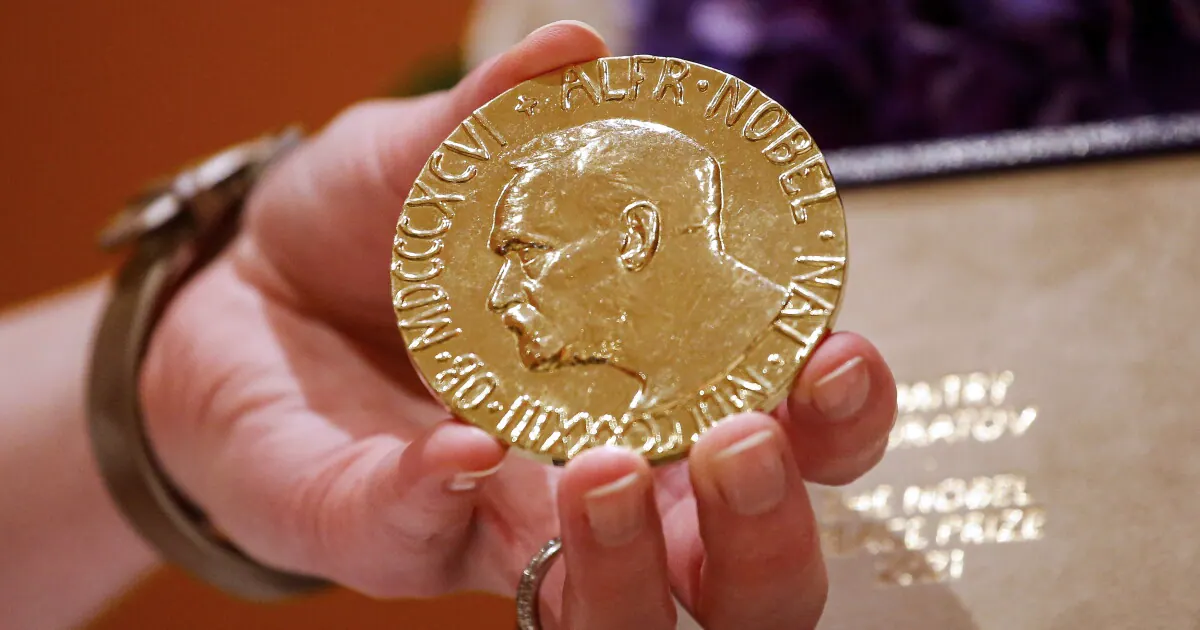
The wait is almost over for the 2026 Nobel Prize in Economics announcement, scheduled for Monday. In anticipation, economists and enthusiasts alike are engaging in a popular pastime: guessing who might receive the prestigious award. The Nobel Prize in Economics, officially known as the Sveriges Riksbank Prize in Economic Sciences in Memory of Alfred Nobel, was established by Sweden's central bank in 1968.
Several factors influence the selection of a Nobel laureate, including the candidate's age, as the committee prefers to assess the impact of their work over time. The committee also considers research that resonates with current events or technical work that provides economists with robust empirical tools. Economists often rely on markets to make predictions, as they can aggregate information and provide a single number: a price.
Prediction markets, where traders bet on specific events, have gained popularity in recent years. One such market exists for the 2026 Nobel Prize in Economics, but it has seen limited activity, with only $11,000 in trading volume recorded as of October 6. This pales in comparison to the $670 million recorded for the 2024 presidential election prediction market.
Despite the limited trading volume, the prediction market provides a starting point for exploring economic ideas and methods. Ariel Pakes, an economist at Harvard University, has emerged as a top contender, thanks to his contributions to industrial organization. His research focuses on how industries are structured and how this affects competition and consumer choices.
Pakes, along with Steven Berry and James Levinsohn, developed the BLP model in 1995, which helps economists estimate how consumers choose among competing products. This model has evolved over time and is used by antitrust regulators to assess the impact of proposed mergers on consumers.
Another top contender is Susan Athey, an economics professor at Stanford Graduate School of Business. Her research focuses on the economics of digital technology, and she has made significant contributions to economic theory, empirical economics, and econometrics. Athey was the first woman to win the John Bates Clark Medal in 2007.
Robert Barro, also an economist at Harvard University, rounds out the top three contenders. His research emphasizes the importance of expectations in economics. While the prediction market provides some insight, the ultimate decision remains a mystery, and the announcement is eagerly awaited.
Key points
- The 2026 Nobel Prize in Economics announcement is scheduled for Monday.
- Prediction markets provide a unique way to speculate on potential winners.
- Top contenders for the 2026 Nobel Prize in Economics include Ariel Pakes, Susan Athey, and Robert Barro.