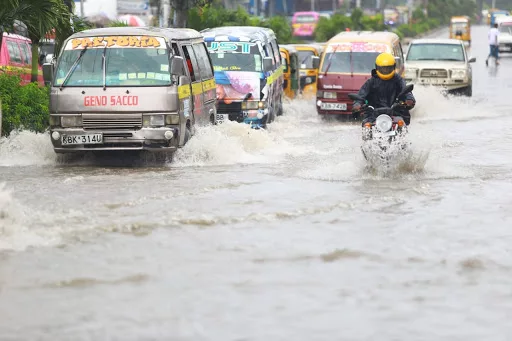
The Kenyan government has activated a national response plan in anticipation of the impending El Niño rains. As of Monday, October 5, the Ministry of Interior and National Administration has coordinated efforts through the National Disaster Operations Centre (NDOC). The plan includes placing search-and-rescue teams, evacuation centres, and emergency supplies across the country on standby. Various agencies, including the Kenya Coast Guard Service, Kenya Defence Forces, and Kenya Red Cross Society, will conduct search-and-rescue operations.
Designated evacuation and displacement centres have been established with a standardised registration system. This system aims to identify, track, and assist people displaced by floods and other rain-related hazards. The government has also prepared alternative access routes in case roads and transport infrastructure are disrupted. Air support will be mobilised through NDOC when necessary to facilitate rescue operations and provide aid.
To mitigate the risk of disease outbreaks following flooding, the government has stepped up preparations. The Public Health Emergency Operations Centre and Incident Management System have been deployed to coordinate emergency health services. Disease surveillance will be strengthened to support the prevention and control of waterborne and vector-borne diseases. Supplies of therapeutic and supplementary nutrition commodities have been secured.
Water-quality surveillance will be intensified in affected areas, alongside the distribution of water-treatment products. Sanitation facilities in affected settlements will be assessed to minimise contamination and public health risks. The government has also pre-positioned food stocks in 10 priority counties: Tana River, Garissa, Kisumu, Busia, Nakuru, Mombasa, Kilifi, Wajir, Mandera, and Turkana.
Relief stocks and emergency shelter materials have been positioned for deployment to evacuation and displacement centres. Protection monitoring mechanisms are in place to identify and respond to the needs of vulnerable groups. Farmers will receive location-specific agricultural advisories as weather conditions evolve. Animal disease surveillance will also be intensified to protect livestock and mitigate the risk of outbreaks.
In the education sector, authorities will assess the condition and functionality of learning institutions affected by the rains. Schools that may be used as displacement centres will have their learning materials safeguarded. At the county level, governors and county commissioners will coordinate preparedness, response, and recovery through County Disaster Risk Management Committees and County Emergency Operations Centres.
County governments will serve as the lead implementers within their jurisdictions, supported by technical guidance from national institutions. Humanitarian organisations have aligned their interventions with national priorities to minimise duplication and service gaps. The government will continue monitoring the situation through NDOC and county coordination structures, updating its emergency plans as risks and conditions evolve.
Key points
- The Kenyan government has activated a national response plan ahead of the expected El Niño rains.
- Search-and-rescue teams, evacuation centres, and emergency supplies have been placed on standby across the country.
- The government has pre-positioned food stocks in 10 priority counties to safeguard food security.