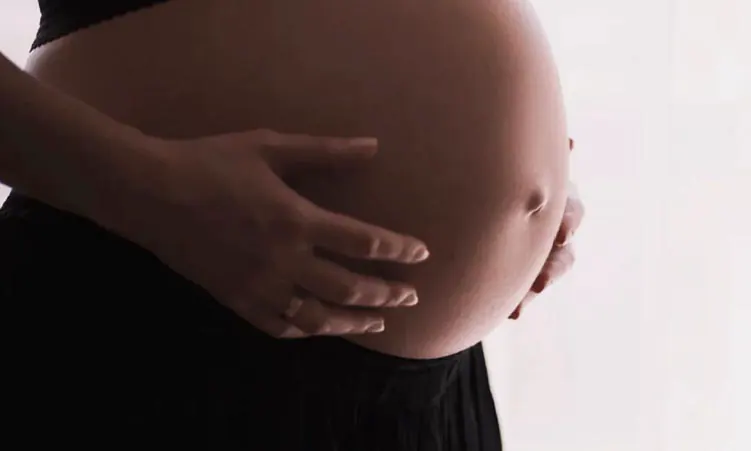
The Namibia Statistics Agency's 2023 Population and Housing Census fertility report has identified Kavango West, Ohangwena, and Omaheke as the top three regions with the highest fertility rates in the country. Women in these regions recorded an average of more than five children. Specifically, Kavango West recorded a total fertility rate of 5.450 children per woman, followed by Ohangwena with 5.197 and Omaheke with 5.183.
The report highlights that the average number of children per woman in Namibia has remained stable over the past 12 years. However, there has been a change in the timing of childbearing. The total fertility rate for Namibia stood at 3.897 children per woman in 2023, with a notable difference between rural and urban areas. Rural women recorded a rate of 5.027 children per woman, compared to 3.166 among urban women.
The regions with the highest fertility rates were followed by Zambezi at 4.696, Kunene at 4.522, Oshikoto at 4.511, Omusati at 4.465, Kavango East at 4.457, and Otjozondjupa at 4.266. On the other hand, Khomas recorded the lowest total fertility rate at 2.684 children per woman, followed by Erongo at 3.025 and ||Kharas at 3.251.
The report also notes a shift in the age at which women are having children. Women are delaying childbearing during the 15-24 age range, with a "catch-up" in the 30s and 40s. Fertility rates among women below the age of 30 have steadily declined between 2001 and 2023. The peak fertility rate remains among women aged 25 to 29, but it fell from more than 180 births per 1,000 women in 2001 to about 166 in 2023.
Teenage fertility among women aged 15 to 19 also declined from about 76 births per 1,000 women in 2001 to about 62 in 2023. The Namibia Statistics Agency suggests that higher educational attainment, labor force participation, and family planning usage may be attributed to the changing fertility pattern.
The report places Namibia's fertility rate below the African average of four children per woman but above the Southern African Development Community average of 3.5. For comparison, South Africa recorded 2.9 and Botswana 2.4. These findings come amid a recent debate over population growth, with a politician calling for Namibians of childbearing age to have more children to contribute to future economic growth.
Youth groups and marriage associations have called for government support for low-income families raising children, including proposals for childbearing or baby grants. Namibia Marriage Council executive director Paulus Hawanga emphasized that government support for childbearing women should ensure that children have access to quality education and a good quality of life.
Key points
- Kavango West has the highest fertility rate in Namibia, with an average of 5.450 children per woman.
- The total fertility rate for Namibia stood at 3.897 children per woman in 2023, with a notable difference between rural and urban areas.
- The report suggests that higher educational attainment, labor force participation, and family planning usage may be attributed to the changing fertility pattern.