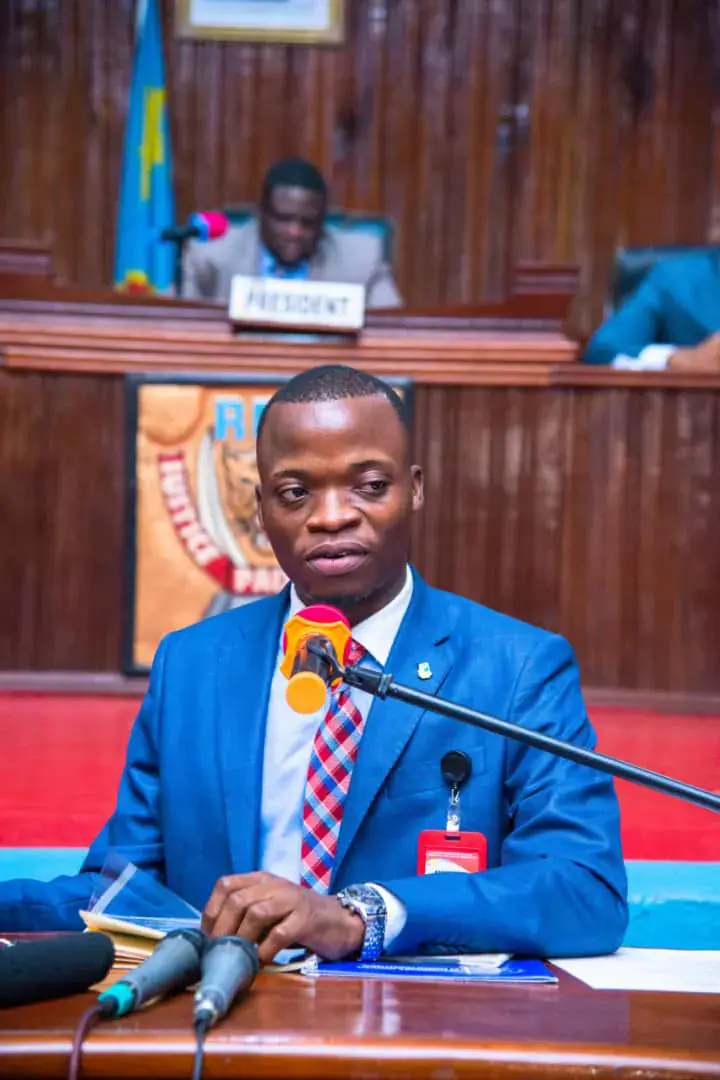
A controversy surrounding public revenue mobilization in the Democratic Republic of Congo's Kasaï Oriental province has taken a new turn. Serge Ngoyi Kamukonzu, a provincial deputy, has submitted an oral question with debate to the director general of the provincial revenue authority, DGRKOR. The query seeks clarification on the institution's performance and revenue sources. This development follows recent media statements by two DGRKOR members that presented conflicting figures on monthly revenue mobilization.
The conflicting reports stated that the province was either unable to mobilize $100,000 per month or was generating 500 million Congolese francs monthly from motorcycle driver token payments. Ngoyi Kamukonzu argues that these contradictory assertions create confusion and hinder the provincial representation from obtaining credible information on the financial regulator's actual performance. He fears that such declarations may discredit the province's primary political institution and compromise taxpayer compliance.
Ngoyi Kamukonzu's oral question focuses on five key concerns. These include a summary table of revenue mobilized from January 2025 to date, the actual contribution of motorcycle driver tokens to the current budget, and the level of revenue realization per generating act. The deputy also requests identification of revenue-generating acts that remain unexecuted and an overview of DGRKOR's communication strategies to sensitize taxpayers and meet budgetary targets.
By taking this parliamentary approach, the debate on provincial revenues shifts from media declarations to a discussion of concrete figures, transparency, and accountability. The DGRKOR director general is expected to provide precise data that will inform the public about the province's actual financial capacity, revenue sources, and mechanisms for optimizing revenue collection.
The development comes as the provincial government seeks to enhance transparency and accountability in revenue management. Ngoyi Kamukonzu's initiative aims to ensure that the provincial assembly has access to reliable information on revenue mobilization. This will enable lawmakers to make informed decisions on budgetary allocations and development projects.
The DGRKOR's response is expected to shed light on the institution's performance and provide insights into the province's financial situation. This will help to build trust and confidence in the provincial government's ability to manage public finances effectively. The probe is also seen as a step towards strengthening the provincial revenue authority and improving its efficiency.
The outcome of this investigation will be closely watched by stakeholders, including taxpayers, lawmakers, and the general public. It is hoped that the findings will contribute to improved revenue mobilization and management in the province, ultimately benefiting the local population.
Key points
- The investigation aims to clarify conflicting reports on revenue mobilization in Kasaï Oriental province.
- The probe focuses on DGRKOR's performance, revenue sources, and communication strategies.
- The outcome is expected to enhance transparency and accountability in provincial revenue management.
Reporting sources
- Kasaï Oriental : gros coup de balai à la DGRKOR autour de la mobilisation des recettes · Radio-Télévision nationale congolaise