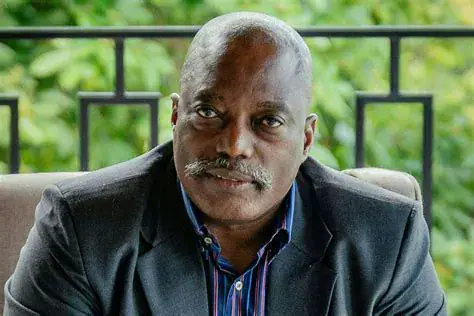
Former Democratic Republic of Congo President Joseph Kabila Kabange has explained the reasons behind forming the Front pour la Refondation de la Nation (FRN), a political and military alliance. In an interview with Bojana Coulibaly and Teddy Mazina on YouTube Conspiracy Tracker Great Lakes, Kabila expressed concerns over the country's governance, security, and future. He cited the need for a balanced and inclusive governance system, warning that the current trajectory could lead to chaos.
Kabila stated that he had previously expressed concerns about the country's direction, even before the 2019 elections that brought Félix Tshisekedi to power. He claimed that the government's decision to dissolve a key political coalition in 2019 and 2020 was a red flag, indicating a potential shift towards authoritarianism. Kabila emphasized that the coalition played a crucial role in ensuring checks and balances in governance.
The former President criticized Tshisekedi's administration, accusing it of concentrating power, disregarding the Constitution, and promoting tribalism and regionalism in governance. He warned that such tendencies could lead to the country's disintegration, citing the example of Sudan's descent into chaos. Kabila emphasized the need for a governance system that prioritizes equality, inclusivity, and the rule of law.
Kabila expressed concerns about the growing trend of labeling certain ethnic or linguistic groups as enemies of the state. He warned that such rhetoric could lead to further divisions and undermine national unity. The former President stressed that security institutions should serve all Congolese citizens, regardless of their ethnicity, language, or region of origin.
Kabila compared the current situation in DRC to the Mobutu Sese Seko era, accusing Tshisekedi's government of exhibiting similar authoritarian tendencies. He invoked the Constitution, which was designed to prevent the country from sliding into dictatorship. Article 64 of the Constitution obliges Congolese citizens to resist any attempt to seize power by unconstitutional means.
Kabila explained that he initially believed in negotiations as a means to resolve the country's political and security challenges. However, he claimed that Tshisekedi's government has closed off this avenue, leaving no choice but to resort to armed struggle. The former President stated that FRN's goal is to restore the country's democratic trajectory and promote inclusive governance.
Kabila also criticized Tshisekedi's decision to lift a moratorium on the death penalty, warning that it could be used to intimidate citizens, politicians, and military personnel. He cited examples of countries where the death penalty has been used to silence opposition and promote authoritarianism. Kabila emphasized that FRN aims to promote a culture of respect for human rights and the rule of law.
Key points
- Kabila cites concerns over governance, security, and future of DRC as reasons for forming FRN.
- Former President accuses Tshisekedi's government of authoritarian tendencies, tribalism, and regionalism.
- Kabila emphasizes need for inclusive governance, respect for human rights, and rule of law in DRC.