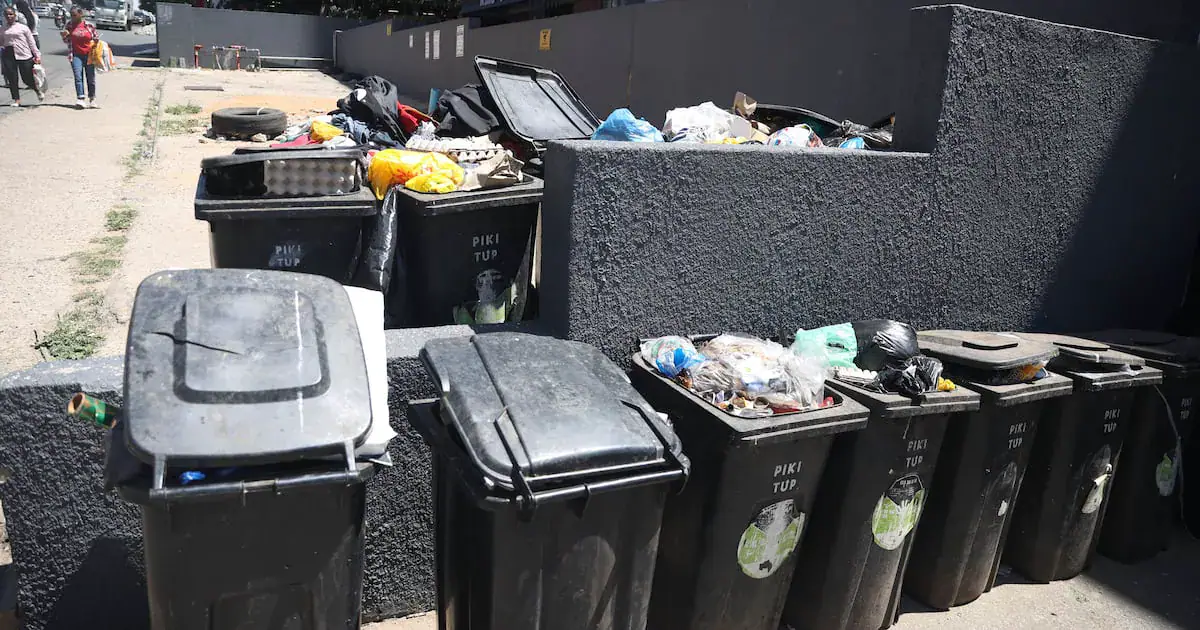
A day before South Africans head to the polls for the 2026 local government elections, the northern suburbs of Johannesburg are grappling with a severe refuse collection crisis. Overflowing bins and half-open refuse bags line the streets, attracting flies and insects, and emitting a paralyzing stench. The crisis has been attributed to various factors, including a debilitating heatwave and labor disputes. However, experts argue that the issue runs deeper, reflecting a broader governance crisis in the city.
The crisis has been linked to labor disputes between municipal workers and the city. Samwu affiliates, representing municipal workers, have staged protests and strikes over unfulfilled wage and benefit agreements, including the 2016 Politically Facilitated Agreement. The agreement aims to provide pay parity for thousands of underpaid workers. While some have criticized the agreement, it is essential to acknowledge that frontline workers have been underpaid for years and deserve modest salary increases.
The criticism of the agreement by the media and opposition parties, mainly the DA, misses the crucial point that frontline workers have been underpaid for years and rightfully deserve the modest salary increase the agreement provides. However, the municipal leadership claims that the recent strike has reduced available labor for waste collection, attributing the crisis to workers. This narrative has been disputed, with many arguing that the crisis is a result of poor governance and years of neglect.
Pikitup, the entity responsible for waste collection in Johannesburg, has reported cash balances of roughly R2.15 billion as of June 2026. However, the entity owes significant amounts to external suppliers and private contractors, totaling R1.33 billion. The entity relies heavily on external contractors for waste collection, waste and equipment management, fleet repairs, and maintenance, with about 70% of refuse loaders outsourced.
The entity also faces a high vacancy rate, with key management positions vacant or filled by acting personnel. Despite reported cash balances, service providers have gone unpaid for weeks, leading to disputes over non-payment and procurement breakdowns. These issues have stalled operations at Pikitup, contributing to the current refuse collection crisis.
The situation is further complicated by the state of Pikitup's collection trucks, with hundreds out of service and broken down. In a written reply to the City of Johannesburg council, Pikitup stated that only 82 of its 223 specialized refuse collection vehicles were operational. The entity needs 67 new specialized refuse vehicles every year to maintain a sustainable fleet replacement program but has not been acquiring them.
The refuse crisis in Johannesburg reflects a broader crisis of governance and public institutions in the city. The overreliance on private contractors has led to the hollowing out of public institutions, with billions of rand spent on services that should be done within municipalities. The crisis is a symbol of years of poor planning and disastrous financial management, with the rot that has been festering for decades now visible on the city's driveways.
Key points
- The refuse collection crisis in Johannesburg is a symptom of a deeper governance crisis, reflecting years of poor planning and financial mismanagement.
- The crisis has been linked to labor disputes, but experts argue that it is also a result of the city's overreliance on private contractors and poor governance.
- Pikitup, the entity responsible for waste collection, faces significant challenges, including a high vacancy rate, unpaid service providers, and a fleet of outdated and broken-down vehicles.