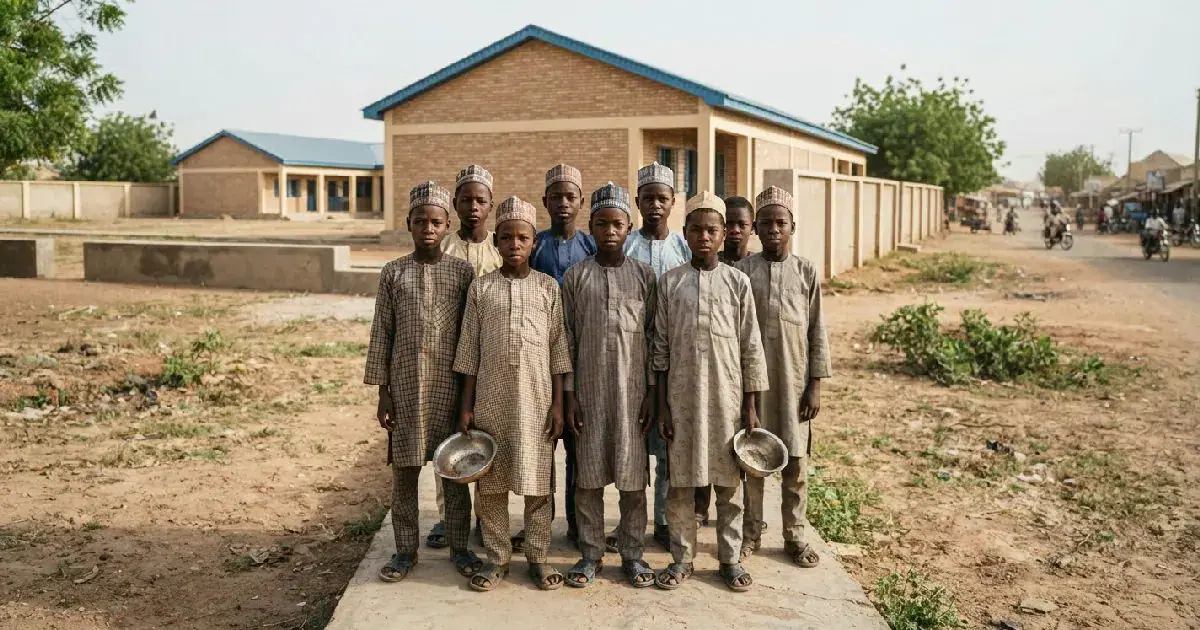
The almajiri education system, a centuries-old tradition of Islamic education, has long been a social challenge in northern Nigeria. The system, where young boys travel to live with teachers to learn Quranic knowledge, has faced immense pressures due to economic hardship and lack of structured support. This has exposed them to exploitation and denied them access to formal schooling. The sight of these children on the streets has become a symbol of Nigeria's out-of-school children crisis.
In 2012, the federal government under President Goodluck Jonathan launched a pilot project to modernize the traditional system by establishing seven model boarding Tsangaya primary schools in Jigawa State. However, the project faced significant skepticism and resistance from conservative Islamic clerics, who feared it would dilute authentic Islamic education. Despite its ambitious goals, the initiative struggled to gain widespread acceptance and was largely seen as a missed opportunity.
Jigawa State recognized the potential in the initial federal efforts and established the Jigawa State Tsangaya Education Board (JISTEB) in 2024 to spearhead structural reforms. The state significantly increased its financial allocation for these reforms, with the budget for the traditional Tsangaya school system surging from ₦1.82 billion in 2025 to ₦3.5 billion in 2026. These funds supported capital projects and recurrent programs designed for Almajiri children.
The new curriculum introduced by Jigawa State was a critical component of its integrated approach, blending Qur'anic memorization with essential academics like English, mathematics, and science. The program also introduced vital vocational skills, such as plastering, carpentry, and plumbing, providing diverse pathways for future employment. The program aimed to prepare pupils for O'Level certificates through the National Board for Arabic and Islamic Studies (NBAIS).
A flagship initiative within Jigawa's reform strategy was the "Almajiri Begging-Free Zone" Programme, which transitioned 2,000 children directly from the streets into government-owned Tsangaya schools by December 2025. The state set an ambitious target to enroll approximately 5,000 Almajiri pupils into formal learning programs, with 3,000 pupils enrolled in model Tsangaya schools and another 2,000 slated for two new mega schools.
Teacher training formed another pillar of Jigawa's comprehensive reform, with the state collaborating with the National Board for Arabic and Islamic Studies (NBAIS) to provide six months of intensive training for nearly 100 Qur'anic teachers. The 2026 budget also provided for the recruitment of 500 new Tsangaya teachers, alongside ongoing phased training programs. The government also provided support to traditional Islamic teachers through farming programs and solar-powered lighting to Tsangaya schools.
Jigawa State conducted a comprehensive non-formal education census across all 27 local government areas, identifying 10,197 non-formal centers catering to 1,116,289 learners across various programs. This data revealed stark realities about the scope of the almajiri education challenge in the state. The state's reform efforts have shown promising results, and the approach may serve as a model for other states in Nigeria.
Key points
- Jigawa State's almajiri education reform has successfully transitioned 2,000 children from streets to schools and enrolled 5,000 pupils in formal learning programs.
- The state has increased its financial allocation for the reforms, with the budget surging from ₦1.82 billion in 2025 to ₦3.5 billion in 2026.
- The new curriculum introduced by Jigawa State blends Qur'anic memorization with essential academics and vocational skills, providing diverse pathways for future employment.