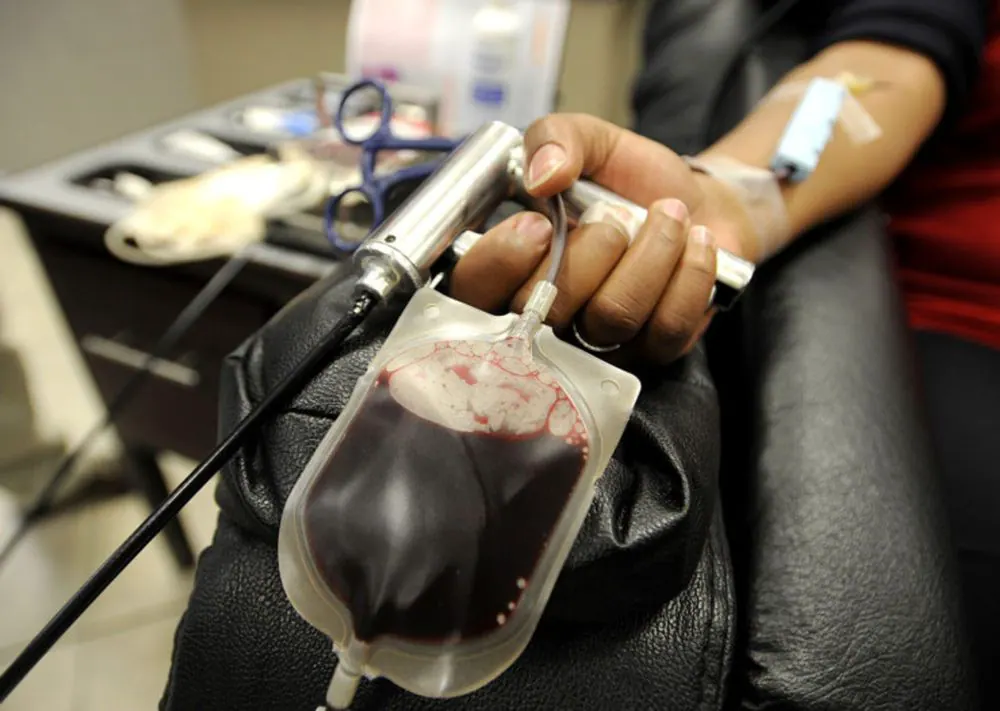
Marshnee Pillay, a mother from Port Shepstone, South Africa, recalls the difficult decision she made almost five years ago to leave Jehovah's Witnesses to save her daughter's life. Her 11-month-old daughter was diagnosed with thalassemia major and required regular red blood cell transfusions. Pillay had been taught that accepting blood was against her faith, but she chose to prioritize her daughter's life. Today, her six-year-old daughter continues to receive transfusions every three weeks.
The Jehovah's Witnesses organization recently announced that individual members can now decide whether to accept donor red blood cells, white blood cells, plasma, and platelets. However, Pillay expressed her disappointment and anger towards the organization, stating that the change came too late for her daughter. She emphasized that she had to make a difficult decision at a time when she needed her faith, and the change does not make her want to return to the organization.
According to Jehovah's Witnesses in South Africa, the organization continues to regard life and blood as sacred gifts from God. The new stance allows for individual conscience and decision-making regarding primary blood components. Clinicians are advised to consult each Witness patient directly and document their individual decisions. This change extends the principle of personal decision-making already applied to plasma-derived therapies and autologous blood management.
The Department of Health has previously approached the courts to compel parents to consent to life-saving blood transfusions for their critically ill children. However, constitutional law governing medical consent remains unchanged, according to Suhayfa Bhamjee, senior lecturer and discipline head of Public Law at the University of KwaZulu-Natal's School of Law. The change primarily affects the relationship between the individual believer and the religious organization.
Bhamjee explained that the Constitution protects freedom of religion while recognizing an individual's right to make decisions about their own body. A court cannot force a competent adult Jehovah's Witness to undergo a blood transfusion against their will. The change allows adult believers who wish to accept blood transfusions to do so without viewing themselves as defying a mandatory religious prohibition.
The South African Medical Association (SAMA) views the change as significant for patients and healthcare professionals. Doctors are encouraged to have individualized discussions with Jehovah's Witnesses patients rather than relying on assumptions about their acceptance of blood components. SAMA CEO Dr. Mzulungile Nodikida emphasized the importance of open and respectful discussions with patients to establish their wishes and support informed decisions.
The change may reduce conflict between religious beliefs and medical treatment, but it does not alter the constitutional principles governing medical consent. SAMA recognizes that decisions involving blood and blood products can be deeply personal and involve important religious and ethical considerations. These decisions must be approached with sensitivity and respect for individual autonomy.
Key points
- Jehovah's Witnesses now allow individual members to decide on blood transfusions.
- The change does not alter the constitutional law governing medical consent in South Africa.
- The South African Medical Association encourages individualized discussions between doctors and patients.