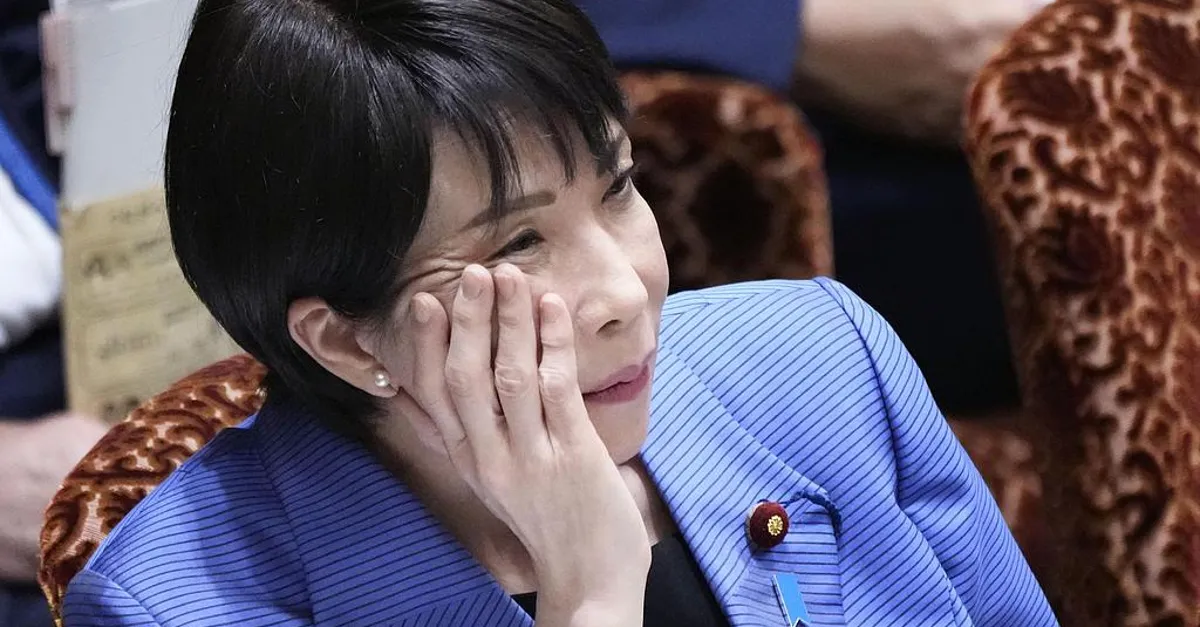
Japan's Prime Minister Sanai Takaychi is facing an increasingly demanding schedule, with barely any time for sleep. According to recent reports, Takaychi has been sleeping only 0-3 hours a day since taking office. Her daily routine includes back-to-back meetings, government documents to review, and thousands of emails to respond to. Even weekends are not spared, as she uses this time to catch up on paperwork and respond to emails.
A recent report by the NXJI Research center has proposed recommendations to reorganize the office of the Prime Minister and its interactions with parliament. The report, released on September 24, suggests that the Prime Minister may not need to attend all budget committee sessions to answer questions from lawmakers. Instead, these responses could be integrated into less frequent debates between opposition party leaders and the government.
The report highlights that the role of the Prime Minister has changed significantly, with an increased focus on national strategy, crisis management, and diplomatic leadership. The report cites the Russian-Ukrainian war and US-Iranian tensions as examples of the complexities of modern governance. As a result, decision-making has become more intertwined, placing greater pressure on the Prime Minister.
According to the NXJI Research center, there are five main sources of concern regarding the management of the Prime Minister's time. The report notes that there is no standardized system for managing the Prime Minister's office and that meetings are often organized on an ad-hoc basis. As a result, Japanese Prime Ministers participate in over 2,000 meetings annually.
A comparison of the time spent by heads of government and presidents in parliament or Congress in 2022 reveals that Japan's Prime Minister spends a significant amount of time in parliament. The data shows that the Japanese Prime Minister spends 72 days in parliament, compared to 50 days in the UK, 13 days in Germany, and just one day in the US.
The report recommends providing the Prime Minister with specialists, such as nutritionists and household staff, to alleviate some of the pressures of the role. However, the most contentious proposal is to limit the Prime Minister's appearances before parliamentary committees, particularly budget committee sessions that can be time-consuming.
The report's recommendations have garnered attention from politicians, including Hiedeki Murai, a parliamentary affairs official in the ruling Liberal Democratic Party. Murai has expressed support for giving the Prime Minister more time for diplomacy and communication with foreign leaders, rather than spending long hours in budget committee sessions.
Key points
- Japan's Prime Minister Sanai Takaychi sleeps only 0-3 hours a day due to her demanding schedule.
- The NXJI Research center has proposed recommendations to reorganize the office of the Prime Minister and its interactions with parliament.
- The report suggests that the Prime Minister may not need to attend all budget committee sessions to answer questions from lawmakers.