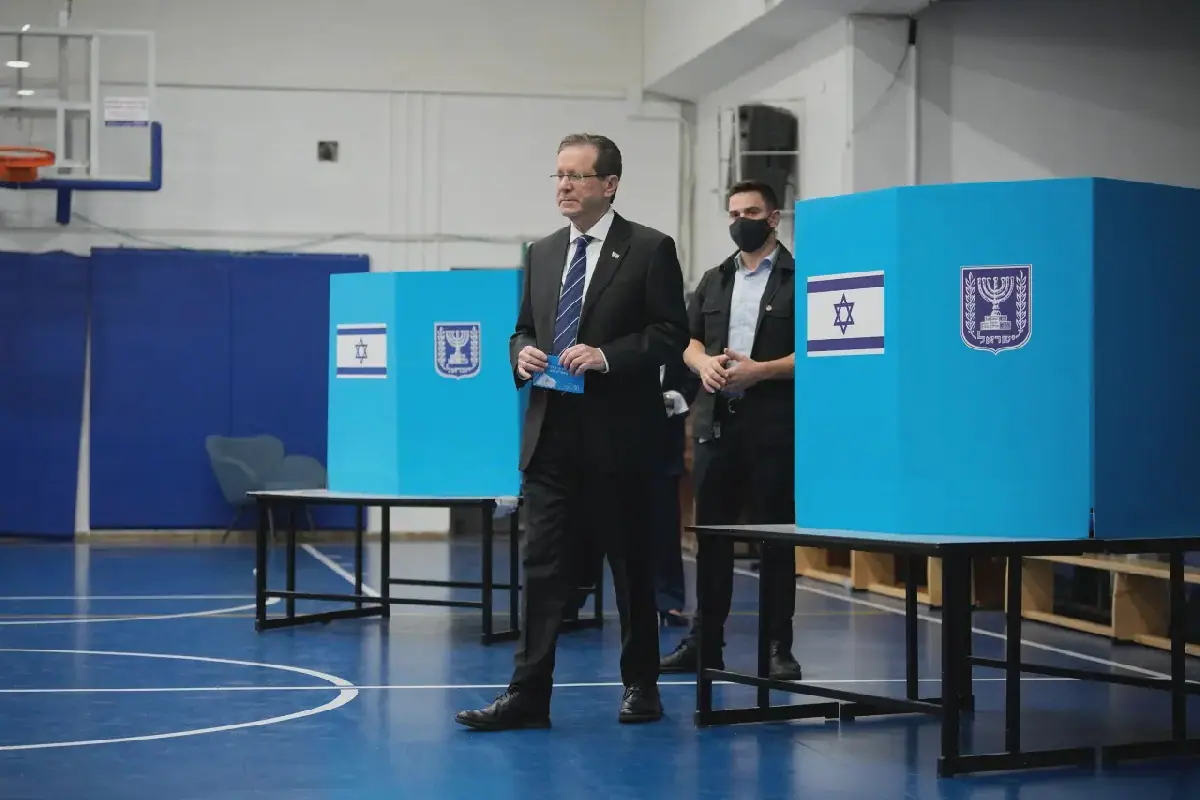
The Israeli election process does not end with the counting of votes. After the results are finalized, President Isaac Herzog will initiate consultations with all elected parties to determine their recommendations for prime minister. Based on these consultations, Herzog will assign the task of forming a government to the candidate he believes has the best chance of securing a 61-seat majority in the Knesset. This decision is crucial as it can significantly influence coalition negotiations.
The role of the Israeli president in post-election politics is pivotal, especially in situations where there is no clear winner or a deadlock. Herzog's decision on who to assign the government formation task to can be decisive for the direction of coalition negotiations. The president's choice is not necessarily the leader of the largest party but the one deemed to have a better path to forming a viable coalition. This process highlights the significant influence the president has in shaping the country's political future.
Once the candidate is chosen, they will have 28 days, with a possible 14-day extension, to negotiate with other parties over cabinet posts, budget priorities, and policy commitments. The goal is to form a stable government. If the assigned candidate fails to form a government, the mandate is passed to another candidate for another four weeks. Should this candidate also fail, the Knesset has a short window to put forward another candidate. If it cannot, the country may be headed for another round of elections.
The current election results show neither Prime Minister Benjamin Netanyahu nor his primary rival, Gadi Eisenkot, with a clear path to a majority. This situation enhances Herzog's role in the process, as his decision may steer the two largest parties towards forming a unity government. Avoiding another election seems to be a priority for Herzog, who two weeks before the election stated he would do everything in his power to establish a stable government.
The process of forming a government in Israel is complex and involves multiple steps and negotiations. The president's role is critical in this process, as their decisions can make or break the formation of a new government. With the election results showing a divided Knesset, President Herzog's actions will be closely watched by all parties involved.
Herzog's efforts to avoid another election are understandable given the country's political history. Repeated elections can lead to political instability and economic uncertainty. By engaging with all parties and seeking a viable solution, Herzog aims to ensure a smooth transition of power and the formation of a government that can effectively address the country's challenges.
As the country waits for the final election results and Herzog's decision on who will be tasked with forming a government, one thing is clear: the president's role is crucial in this process. His decisions will have a lasting impact on Israel's political landscape and the future of its government. The coming days will reveal the outcome of Herzog's consultations and the path forward for Israel.
Key points
- President Herzog to play a crucial role in forming Israel's new government
- The president's decision on who to assign the government formation task to can influence coalition negotiations
- Herzog aims to avoid another election and ensure a stable government