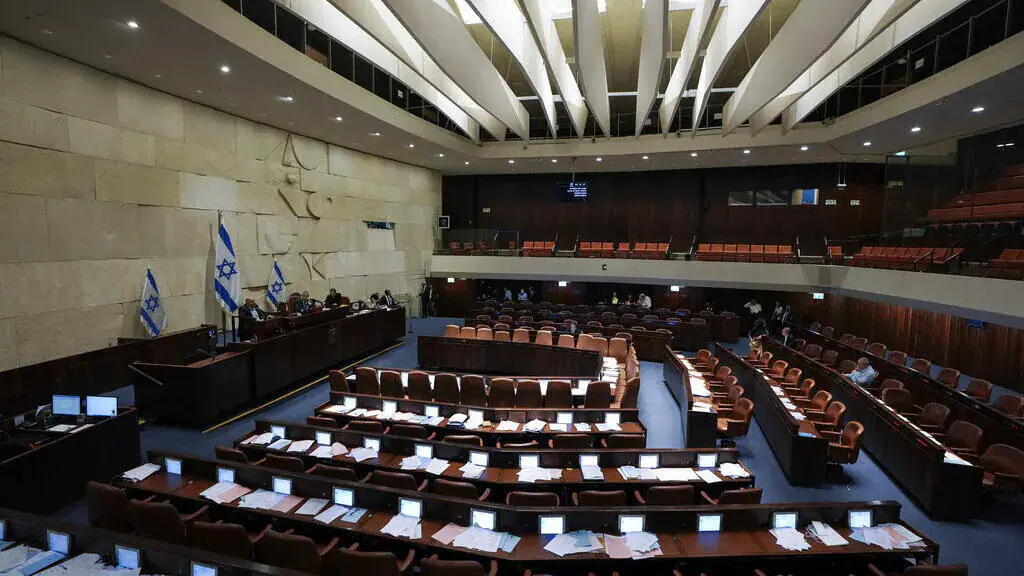
The Israeli opposition has reached an agreement to replace the current Knesset President, Amir Ohana, on the first day of the parliamentary session next month. The opposition bloc, consisting of Yashar, B'Yachad, Les Démocrates, and Yisrael Beytenu, as well as the Arab-majority parties, Unified List and Ra'am, control the majority of seats in the Knesset. This coalition will enable them to oust Ohana, a member of the Likud party, and replace him with a new president.
According to political analyst Barak Seri, an agreement to destitute Ohana has already been reached. However, the name of the candidate for the position of the next Knesset President has not been disclosed. Speculations suggest that the opposition parties are considering nominating former Prime Minister Yaïr Lapid for the role. The vote for the new Knesset President is expected to take place on the day of the parliament's swearing-in.
The 120 members of the next Knesset are scheduled to take their oath on November 10, regardless of the ongoing negotiations to form the next coalition. The opposition parties have made it clear that one of their first actions after the investiture of the Knesset will be to appoint a new president. Yair Golan, chairman of the Les Démocrates party, stated that they will also focus on appointing new chairpersons for the Knesset committees.
The opposition parties have been critical of the current government and have been working together to challenge the Likud party's dominance. The replacement of Ohana is seen as a significant move to assert their control over the Knesset. The new president will play a crucial role in shaping the agenda of the parliament and facilitating the passage of legislation.
The swearing-in of the new Knesset marks a significant development in Israeli politics, with the opposition parties seeking to make a strong statement. The replacement of Ohana is expected to be followed by the establishment of a state investigative committee into the October 7 attack. This move is seen as a key priority for the opposition parties.
The negotiations to form the next coalition are ongoing, but the opposition parties have made it clear that they will not be deterred. The replacement of Ohana is a strategic move to consolidate their power and influence in the Knesset. The new president will be tasked with maintaining order and facilitating the smooth functioning of the parliament.
The developments in the Israeli parliament have significant implications for the country's politics. The opposition parties' move to replace Ohana demonstrates their determination to assert their control and challenge the current government's dominance. The appointment of a new Knesset President marks a new chapter in Israeli politics, with the opposition parties seeking to make their mark.
Key points
- The Israeli opposition has reached an agreement to replace Knesset President Amir Ohana on November 10.
- The opposition parties control the majority of seats in the Knesset, enabling them to oust Ohana and replace him with a new president.
- The replacement of Ohana is seen as a significant move to assert the opposition parties' control over the Knesset.