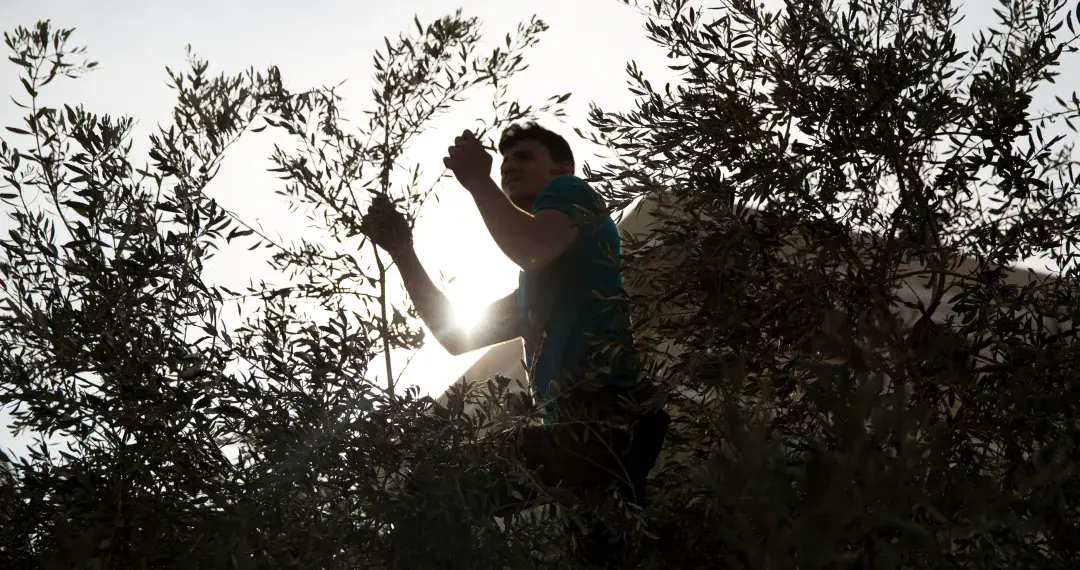
Every year, Palestinian olive farmers begin their harvest season, but Israel's war on Gaza has transformed the season into a significant loss. The war has led to the destruction of vast areas of farmland, with Israeli forces seizing control of lands and annexing them to the area behind the "Green Line". In the West Bank, farmers face attacks from settlers under the protection of the Israeli army, prompting many to harvest early for fear of their crops.
The losses in Gaza extend to olive trees, presses, and the economic system, while in the West Bank, attacks go beyond damaging crops to restricting Palestinian access to their land. Farmers and experts believe that targeting olive trees is not limited to depriving them of a primary source of income but also targets a tree that holds symbolic importance in Palestinian identity, embodying steadfastness and attachment to the land.
According to data from the Gaza Ministries of Health and Education, 32 Palestinians were killed, including 11 children, and 147 others were injured in Israeli attacks during the past week. Meanwhile, Israeli forces burned a refugee camp near the Shijaiya intersection in eastern Gaza, displacing over 200 Palestinian families. In the West Bank, Israeli forces continue their aggression against the Hebron governorate, displacing 488 families and forcing nearly 3171 citizens to leave their homes.
The olive harvest season in Gaza has been severely impacted, with 90% of olive land lost in the three years following the war. Olive production has decreased by over 85%, according to the Gaza Ministry of Agriculture's public relations and media director, Luay Rajab. Before the war, farmer Abu Yunus Al-Astal's farm produced 4-6 tons of olives annually, but these quantities are now a thing of the past.
The Israeli army's destruction of olive trees in Gaza aims to break the Palestinians' morale, as these trees hold special symbolic importance for the people of Gaza, representing their attachment to their land and ability to remain there. Olive trees have historical and symbolic value for Palestinians, with some trees dating back hundreds of years. The trees' destruction poses a significant challenge, as it takes years for new trees to grow and produce olives.
The remaining agricultural land in Gaza does not exceed 3% of the total agricultural land before the war, according to a report by the Food and Agriculture Organization of the United Nations (FAO). Gaza's olive land decreased from 50,000 dunums to 5,000 dunums, with the number of olive trees dropping from 2 million to 150,000. The production of olive oil decreased from 5,000 tons to 700 tons.
The destruction of olive trees and the decline in agricultural land have pushed the economic system to the brink of collapse, with the number of olive presses decreasing from 40 to 7 and the number of workers in the manufacturing sector dropping from 3,000 to 200. The price of olive oil has risen sharply, with a 16-kilogram tin of oil increasing from an average of 500 shekels to over 1,500 shekels.
Key points
- Israel's war on Gaza has devastated the olive harvest, causing significant losses for farmers and impacting the local economy.
- The destruction of olive trees targets not only the Palestinian source of income but also their symbolic connection to their land and identity.
- The olive harvest season has been severely impacted, with a significant decline in olive production and a rise in olive oil prices.