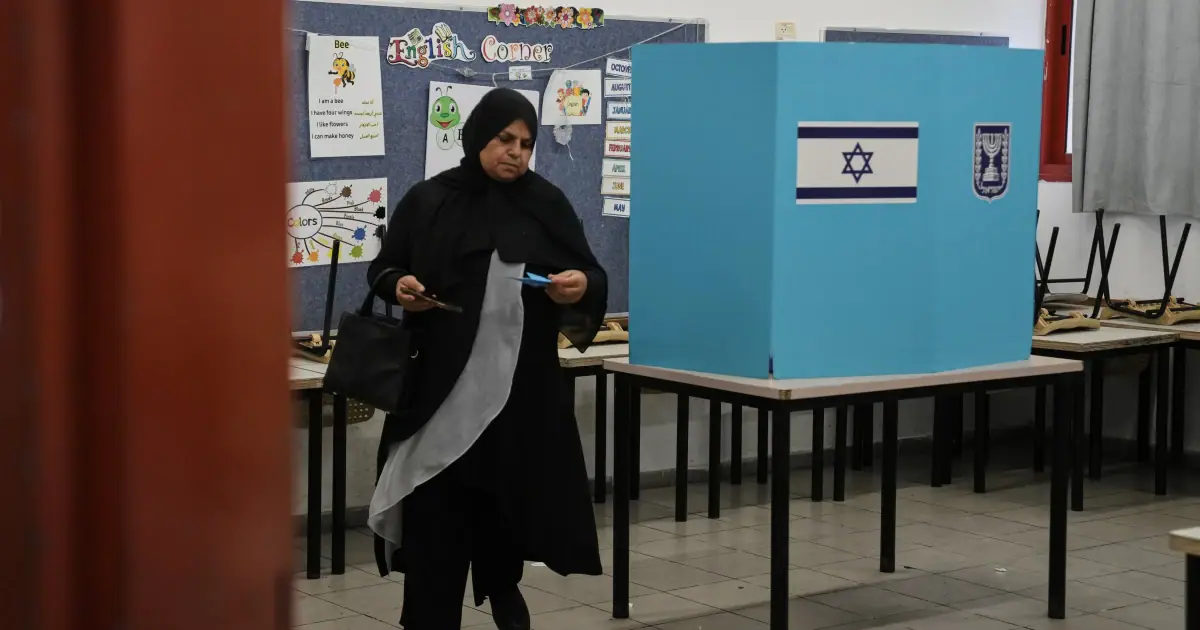
In a historic turn of events, Palestinian citizens of Israel participated in record numbers in the recent election, helping to strip Prime Minister Benjamin Netanyahu's far-right government of its majority. This surge in participation resulted in Arab-led parties winning 19 out of 120 seats, a significant increase from previous elections. According to Jamal Zahalka, chairman of the High Follow-Up Committee, the main umbrella body representing Palestinian citizens of Israel, "We blocked the government of Netanyahu from continuing. It's a historical achievement. I think our community found its strength."
The election results have significant implications for Israeli politics, as neither Netanyahu's coalition nor his main challenger, Gadi Eisenkot's center-right opposition, reached the threshold of 61 seats needed to form a government. Arab-led parties received a 64% increase in votes compared to the last elections, according to the Central Elections Committee. This increase in votes has stirred anger and fear among many on Israel's political right, who see Arab-led parties as a threat to the country's Jewish character.
The large Arab turnout was a rallying cry for Netanyahu and his allies, with Netanyahu posting a video calling it an "emergency" on election day. Itamar Ben Gvir, the far-right national security minister, also made an appeal at the entrance to Kufr Qasim, urging people to vote to keep the country "Jewish and Zionist." However, police and election officials have found no basis for claims of widespread fraud or bribery.
The head of the elections committee has asked the Shin Bet security service to investigate suspected foreign funding of efforts to boost Arab turnout, but the vote was conducted properly and the results were not compromised, according to the committee and the attorney general. The messaging by Netanyahu's bloc is widely seen as an attempt to prevent Eisenkot's center-right grouping from partnering with Arab parties.
However, an alliance with Arab parties could be politically treacherous for Eisenkot, given the sharp rise in anti-Arab sentiment since the October 7, 2023 attacks. Eisenkot is not a natural ally for Arab parties either, having served as an observer in Netanyahu's war cabinet and formulating the "Dahiyeh doctrine," which involves using "disproportionate force" against villages from which militants fire on Israel.
As a result, Arab parties are divided on how to use the power they gained in this election. Ra'am, a socially conservative Islamist party, campaigned on joining a governing coalition, while the Joint List alliance that won 11 of the 19 Arab-led party seats has said it could back Eisenkot's government from the outside but won't join it, citing Israel's ongoing war in Gaza and its occupation of the West Bank.
President Isaac Herzog has been consulting with parties over who they would support to try to form a coalition. The outcome of these negotiations will determine who governs Israel at a critical moment in the country's history, with many questions about how Israel defines itself and the role of Palestinian Arabs in its society. The story is far from over, as one speaker said at a commemoration event in Kufr Qasim: "And today we stand here, 70 years later... And the story still isn't over."
Key points
- Arab-led parties won 19 seats, giving them a critical role in negotiations to form a government.
- The large Arab turnout was a rallying cry for Netanyahu and his allies, who claimed the election was "stolen" through bribery and threats.
- Arab parties are divided on how to use their newfound power, with some open to joining a governing coalition and others refusing to partner with potential allies.