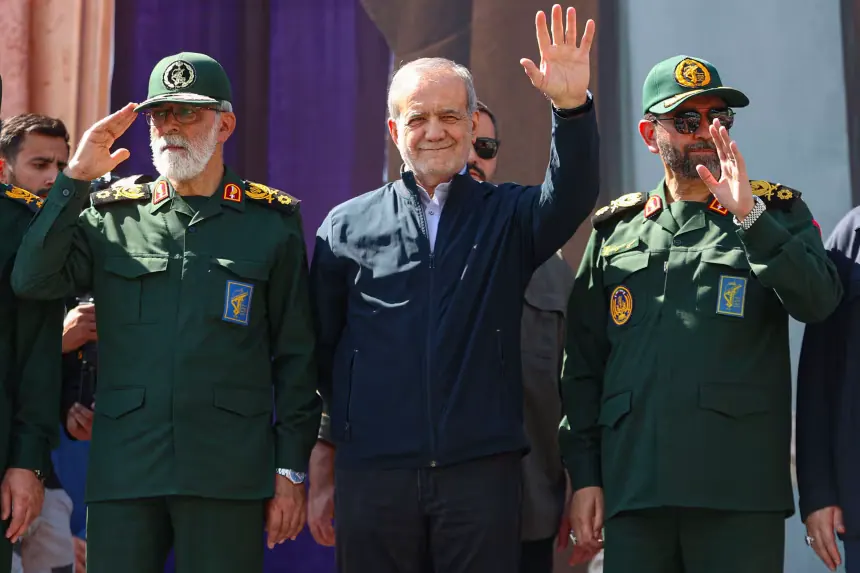
A slimmed-down Iranian delegation is set to arrive in New York for the United Nations General Assembly, as President Donald Trump hints at possible developments in the ongoing conflict between the US and Iran. The Iranian delegation, led by President Masoud Pezeshkian, will attend the assembly despite the tensions between the two nations. Iran has been a founding member of the UN and has maintained a presence at the global diplomatic event for decades.
The Trump administration has announced that it will allow Iran's "core delegation" to attend the UN General Assembly, which will include Pezeshkian. However, the delegation will be smaller than in previous years, and Iranian officials will face travel restrictions and prohibitions on purchasing luxury goods. The US has imposed sanctions on Iran, and the State Department spokesperson confirmed that these restrictions will remain in place.
Iranian Foreign Minister Abbas Araghchi arrived in New York on Monday, while Pezeshkian is expected to travel to the US on Tuesday. The exact makeup of Iran's wider delegation is not yet known. According to the UN Headquarters Agreement, US authorities cannot impose impediments on UN officials or representatives of member states traveling to or from the New York headquarters.
Despite a lull in US strikes on Iran, Trump indicated that major decisions on Iran may be approaching, which could aggravate tensions between the two nations. Iran has warned that any new US attack would trigger sustained strikes on US bases and interests across the region. The Iranian central military command reportedly received information that the US, with the backing of some regional countries, is preparing to resume actions against Iran.
Iran has a history of attending the General Assembly, even during turbulent times. Ayatollah Ali Khamenei addressed the assembly in 1987 when he was president, and in 2015, Iran's then-president, Hassan Rouhani, spoke of the Iran nuclear deal as a "victory over war" that should bring peace to the Middle East. However, the peace that Rouhani spoke of feels increasingly distant, with no sign of resumed negotiations between Washington and Tehran.
The Iranian president's security will be provided by the US Secret Service during the UN General Assembly, while other Iranian representatives will be protected by the State Department's Diplomatic Security Service. The federal security services will be backed up by members of the New York Police Department's Intelligence Bureau. Iranian delegates will be restricted to UN-related business only and must seek approval in advance for any travel outside the vicinity of the UN headquarters.
The US has put restrictions on the Iranian delegation's movements in the past, including blocking Iranian diplomats from accessing wholesale club stores and purchasing luxury goods. Palestinian Authority President Mahmoud Abbas, who was set to address the assembly, will instead address the chamber via video, as the Trump administration refused to issue him a visa.
Key points
- The Iranian delegation will face travel restrictions and prohibitions on purchasing luxury goods during their stay in New York.
- The US and Iran remain at odds, with no sign of resumed negotiations between the two nations.
- The Iranian president's security will be provided by the US Secret Service during the UN General Assembly.