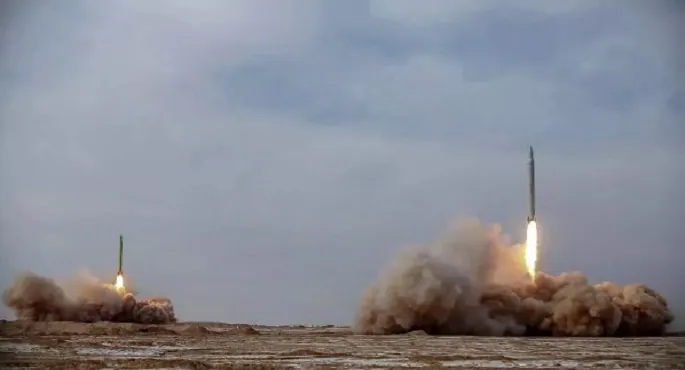
The spokesperson for Iran's Revolutionary Guard, Brigadier General Hossein Khehbi, stated on Saturday that Iran will not cease "punishing" the US until its seven demands are fulfilled. Khebi emphasized that Iran's missiles are capable of destroying the US's multi-layered defense systems. He also noted that the Iranian people have gained courage and national security through the sacrifices of "martyrs."
According to Khebi, the US expected Iran to surrender after mobilizing its forces in the Gulf region, but instead, Tehran showed strong resistance. Iran, he said, has emerged victorious in the war and is now working to convert this victory into a permanent strategic deterrent. The Revolutionary Guard's stance was reported by the Iranian news agency Tasnim.
Khebi also commented on maritime navigation, stating that the US failed to guarantee security in the region despite having the largest naval power in the world. He claimed that during the recent war, the US was unable to keep the Strait of Hormuz open for even a few hours. The spokesperson asserted that control of the strait lies with the Iranian naval forces.
Prior to the war, over 100 ships traversed the Strait of Hormuz daily, but currently, only oil tankers from Iran's trading partners are allowed to pass through, and only with Tehran's permission. Khebi argued that the US claims to keep the strait open to prevent a rise in oil prices, but in reality, it is Iran that controls the waterway.
The spokesperson for the Revolutionary Guard also highlighted that the US had touted its technological superiority in military equipment, but its advanced air, sea, and land systems were targeted by Iranian forces during the recent war. Khebi's statements reflect Iran's firm stance in its ongoing conflict with the US.
Among Iran's seven demands are an end to the war in all fronts, including Lebanon, the lifting of the maritime blockade imposed on Iran, the release of frozen Iranian funds, and the removal of US economic sanctions. The conflict between the US and Iran escalated in February 2026, with both sides exchanging attacks, and despite a temporary lull, tensions persist.
The ongoing conflict has had significant global implications, including the disruption of navigation in the Strait of Hormuz, a critical passage for oil and gas supplies from the Gulf. This has led to increased fuel and commodity prices worldwide. The situation remains unresolved, with the US currently relying on economic pressure against Iran.
Key points
- Iran's Revolutionary Guard will continue to punish the US until its seven demands are met.
- The conflict between the US and Iran has disrupted global oil and gas supplies, leading to increased prices.
- Iran's missiles are capable of destroying the US's multi-layered defense systems.