Iranian Foreign Minister Abbas Araghchi stated on Sunday that there is no military solution to the conflict with the United States, and that only negotiations based on justice and fairness can bring an end to the war. Araghchi made these comments at a gathering of foreign ambassadors, where he emphasized that Iran will defend itself with even more force if the US chooses to pursue military confrontation again. The conflict between the US and Iran began in late February, with a campaign of heavy bombardment that failed to bring a decisive close to the war.
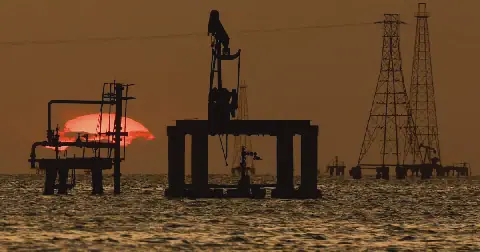
The main point of contention in the conflict remains Iran's attempt to blockade the Strait of Hormuz, a vital conduit for Gulf oil and gas. On Sunday, the British maritime security agency UKMTO reported that another tanker was struck by an unknown projectile in the Hormuz, causing damage to the engine room. The crew was reported safe, and no environmental impact was recorded. The incident occurred despite a memorandum of understanding agreed upon by the US and Iran in June, which spelled out a framework for a permanent resolution.
Iranian attacks on vessels in the Hormuz prompted a return to US military operations, and the US has imposed its own counterblockade of Iranian ports. The US has also struck vessels it accuses of violating its blockade. Iran has sought to impose its control over the vital shipping lane since the start of the war, striking vessels that attempt to transit without its authorization. The conflict has had significant economic impacts, including growing queues at petrol stations in Iran.
The economic impacts of the conflict were further underscored by the resignation of Iran's oil minister, Mohsen Paknejad, on Sunday. Hamid Bovard, the chief executive of the National Iranian Oil Company, was appointed as acting Minister of Oil by a decree from the president. The US and Iran have held indirect talks on the sidelines of the UN General Assembly, with Tehran presenting seven conditions for reopening the Strait of Hormuz.
Iran's conditions for reopening the Strait of Hormuz include a ceasefire across the Middle East, the unfreezing of its assets abroad, the lifting of sanctions on its oil sector, and an end to the US naval blockade. However, US President Trump rejected the proposal, while leaving the door open to further talks or renewed military operations. Iranian Deputy Foreign Minister Kazem Gharibabadi stated on Sunday that the US had expressed its views on the proposal, and that they were being reviewed.
Iranian foreign ministry spokesman Esmaeil Baqaei characterized the latest US counterproposal as being "in line with their previous proposals concerning nuclear issues". Baqaei emphasized that Iran is focusing on the issue of the Strait of Hormuz, and that reopening the waterway requires "an end to the disruptions to Iranian commercial maritime traffic and the lifting of sanctions". The US and Israel have stated that the war is necessary to prevent Iran from acquiring nuclear weapons, a goal that Iran has long denied pursuing.
The conflict between the US and Iran has had significant regional implications, including the ongoing conflict in Yemen, where the Tehran-backed Houthis have been fighting government forces and attacking Saudi Arabia. Top Trump cabinet members met on Friday to discuss the war in Iran, as well as the conflict in Yemen. The US has not struck Iran since September 1, but it has recently pursued a fresh military buildup in the region.
Key points
- Iran's Foreign Minister says no military solution to conflict with US.
- US and Iran have held indirect talks on the sidelines of the UN General Assembly.
- Conflict has significant economic impacts, including growing queues at petrol stations in Iran.