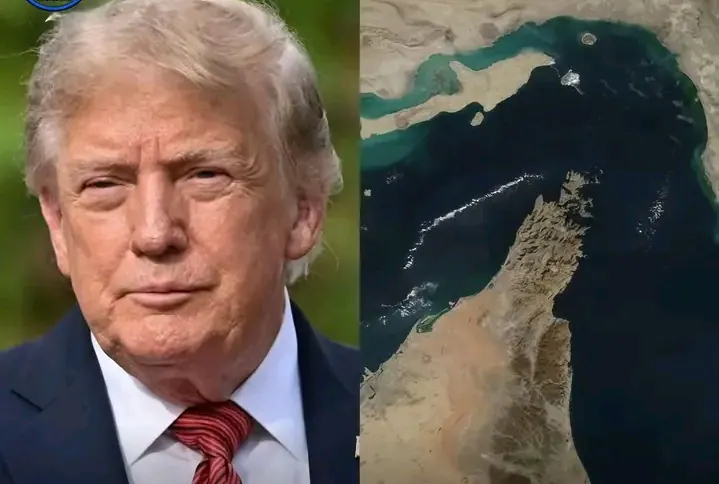
Iran has stated that the Strait of Hormuz will remain closed until U.S. President Donald Trump and Israeli Prime Minister Benjamin Netanyahu are removed from power. This assertion was made by Mohammad Bagher Zolghadr, a political adviser to Iran's Supreme Leader Mojtaba Khamenei, on September 17. According to Zolghadr, Tehran will not reopen the strategic waterway while Trump and Netanyahu remain in power. This development adds a new political condition to the ongoing dispute over one of the world's most critical shipping routes.
The Strait of Hormuz, a major route for global oil and liquefied natural gas shipments, has been heavily restricted since the conflict began. Reuters reported that only three commercial vessels crossed the waterway on September 17, significantly down from a 10-day average of 17 vessels. The data might not account for ships that have switched off their tracking systems. Prolonged disruption could continue to pressure international energy markets and shipping. The waterway previously carried about one-fifth of the world's oil and LNG supplies.
Iran has previously tied the reopening of the Strait of Hormuz to demands involving the United States, including the lifting of sanctions and the removal of what Tehran describes as a maritime blockade. The latest statement underscores how closely the future of the Strait of Hormuz has become connected to the wider conflict in the Middle East. Diplomatic efforts surrounding the Strait of Hormuz remain uncertain, with Iran and the United States indicating at different points that negotiations could take place.
Major disagreements remain over sanctions, military activity, and the conditions for reopening the waterway. Whether the Strait of Hormuz will reopen and under what conditions remains uncertain as regional tensions continue. The situation is being closely watched by global markets and diplomatic circles. The conflict has significant implications for global trade and energy security.
The Strait of Hormuz's importance cannot be overstated, given its role in global oil and LNG supplies. Any prolonged closure could have far-reaching consequences for the global economy. The international community is keenly interested in the developments surrounding the Strait of Hormuz and the potential for a resolution to the conflict.
Iran's demand involving Trump and Netanyahu highlights the complex interplay between regional politics and global economic interests. The situation remains fluid, with various stakeholders closely monitoring developments. The international community is working to find a peaceful resolution to the conflict, but a clear path forward remains elusive.
The closure of the Strait of Hormuz has significant implications for global trade, energy markets, and regional stability. As the situation continues to unfold, stakeholders will be watching closely for any signs of progress or further escalation. The international community's response to the crisis will be critical in determining the outcome.
Key points
- Iran will keep the Strait of Hormuz closed until US President Donald Trump and Israeli Prime Minister Benjamin Netanyahu leave power.
- The closure of the Strait of Hormuz has significant implications for global oil and LNG supplies.
- Diplomatic efforts to resolve the conflict remain uncertain due to major disagreements over sanctions and military activity.