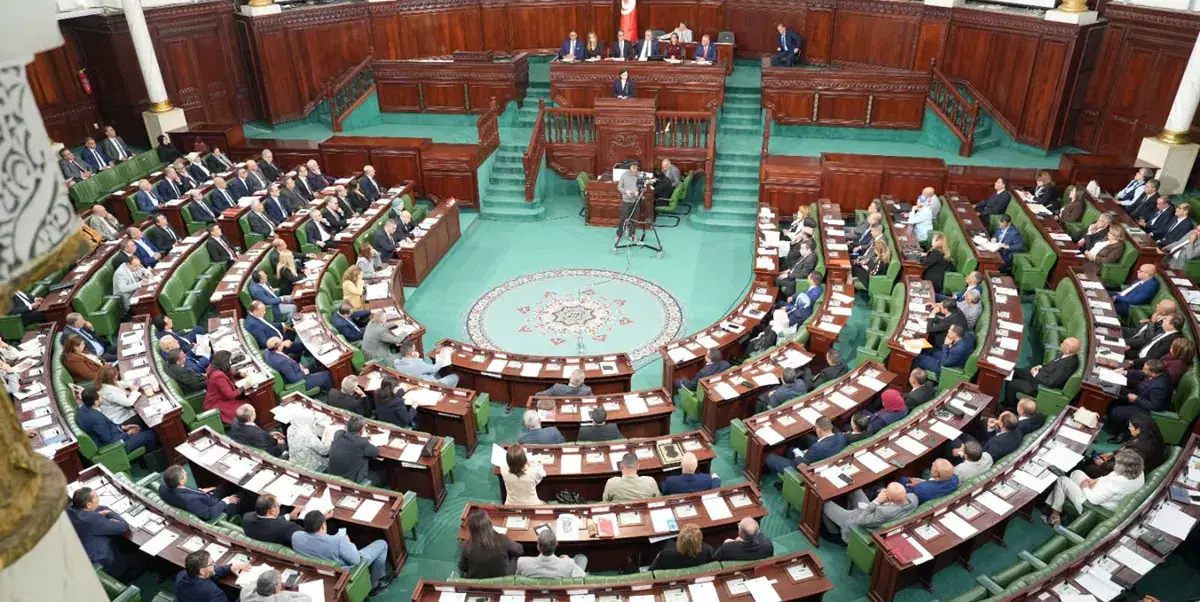
The Tunisian parliament recently examined the 2027 state budget, with lawmakers highlighting key issues such as the establishment of the Constitutional Court, acceleration of penal conciliation cases, and reactivation of constitutional institutions. During a joint plenary session of the Assembly of People's Representatives and the National Council of Regions and Districts, held on November 9, deputies also discussed administrative reform, social dialogue, and the implementation of the 2026 finance law.
Several lawmakers called for the swift examination of penal conciliation cases and amendments to certain legislative texts. They also stressed the need to establish the Constitutional Court and reactivate the role of constitutional institutions. The issue of governance was another major topic of discussion, with deputies denouncing bureaucratic hurdles hindering investment and business climate improvement.
To enhance the efficiency and performance of public enterprises, lawmakers suggested restructuring them. They also emphasized the importance of social dialogue and national reconciliation, with some deputies advocating for an amnesty as part of this process. However, this amnesty would exclude crimes such as terrorism, espionage, and serious human rights abuses.
Some lawmakers linked national sovereignty to social emancipation, focusing on job creation for unemployed university graduates, modernizing the administration, and improving public services. The deputy Thabet El Abed highlighted the significance of judicial independence, access to information, and freedom of expression in strengthening economic confidence.
El Abed also criticized the relationship between the government and parliament, arguing that the legislative institution should not be limited to simply adopting laws and budgets. Instead, it should fully exercise its legislative and oversight missions. He drew attention to the functioning of various institutions, including the High Independent Authority for Audiovisual Communication and the Instance of Access to Information.
A significant aspect of the discussions was the need for institutional reforms, including the establishment of the Constitutional Court, which has yet to be set up. Deputies emphasized that this institution is crucial for ensuring the rule of law and the proper functioning of the judicial system.
The debates reflect the complexities and challenges facing Tunisia as it navigates its democratic transition. The 2027 budget and related reforms are critical in addressing these challenges and shaping the country's future. Key issues such as judicial independence, penal conciliation, and institutional reforms will likely continue to be at the forefront of parliamentary discussions.
Key points
- Establishment of the Constitutional Court
- Acceleration of penal conciliation cases
- Institutional reforms and governance improvements