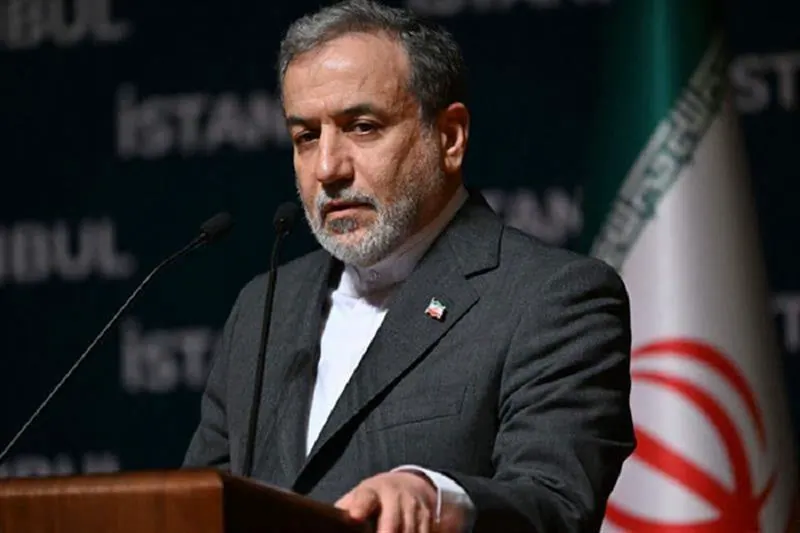
Iranian Foreign Minister Abbas Araghchi departed Tehran on Sunday evening bound for New York to attend the United Nations General Assembly. He will make a brief stop in Doha, Qatar, to hold consultations on the latest developments in the region. This visit comes as Iran and the US are locked in a stalemate, months into a conflict that began with US-Israeli strikes on Iran in late February.
The conflict between Iran and the US has led to Tehran maintaining a stranglehold on the Strait of Hormuz, a vital shipping route for the world's oil and gas. Washington is pushing its own campaign to choke the Islamic republic's ports and economy. Iranian parliament speaker Mohammad Bagher Ghalibaf stated that Tehran had conveyed its conditions for ending the blockade of the Strait of Hormuz to Washington through mediators.
According to Ghalibaf, Iran's conditions for ending the blockade include an end to the war on all fronts, the release of frozen Iranian funds, and an end to the naval blockade. He emphasized that as long as these conditions are not met and US commitments are not honored, it will be impossible to return to the situation before the negotiations and to an open strait.
Mohsen Rezaei, head of Iran's supreme national security council, revealed that Iran had conveyed its conditions to the US via mediator Qatar. He warned that the US would face a better-prepared Iran if the conflict escalates. Rezaei stated that Iran has increased the speed of its hypersonic missiles and improved its air defenses and electronic warfare systems.
Rezaei also warned that US ships in the Indian Ocean would be subject to attack if they do not withdraw. Iranian authorities have said that Pakistan's Interior Minister Mohsin Naqvi will travel to Tehran for talks. Meanwhile, Iran's Khatam al-Anbiya central military command issued a threat against the US, warning that if the US makes a mistake in dealing with Iran, all US bases and interests in the region will become targets for attacks.
The Iranian security chief emphasized that Iran is prepared for a decisive war. The developments in the region come as the UN General Assembly is set to take place in New York. Araghchi's visit to Qatar and subsequent attendance at the UN General Assembly may provide insight into Iran's stance on the ongoing conflict.
The situation remains tense, with both sides maintaining their positions. The international community is closely watching the developments, hoping for a peaceful resolution to the conflict. Key issues, including the blockade of the Strait of Hormuz and the release of frozen Iranian funds, remain at the forefront of negotiations.
Key points
- Iranian Foreign Minister Abbas Araghchi to hold talks in Qatar before attending the UN General Assembly in New York.
- Iran's conditions for ending the blockade of the Strait of Hormuz include an end to the war on all fronts, the release of frozen Iranian funds, and an end to the naval blockade.
- Iran has increased the speed of its hypersonic missiles and improved its air defenses and electronic warfare systems.