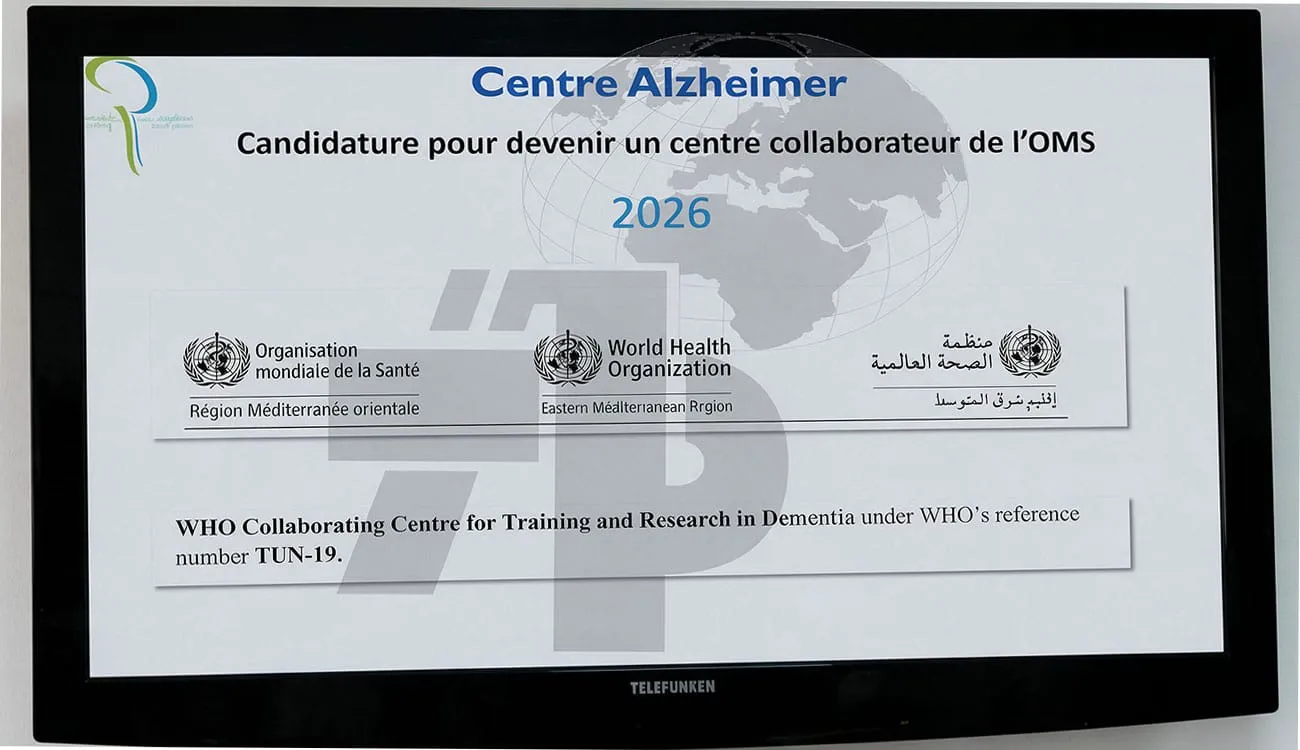
The Alzheimer Center at Tunisia's Razi Hospital has officially received accreditation from the World Health Organization (WHO) as a regional collaborator for the Eastern Mediterranean. This recognition enables the center to specialize in training and research on neurocognitive diseases, including dementia and Alzheimer's. The accreditation was announced on September 21, 2026, and marks a significant milestone for the center and Tunisia's healthcare sector.
The Minister of Health, Mustapha Ferjani, expressed pride in this achievement, highlighting its importance for Tunisia. The center, part of Razi Hospital's neurology department, will work under a joint program with WHO to enhance the capacities of national and regional institutions. This will improve patient care and contribute to the development of expertise in neurocognitive diseases.
This accreditation is the result of several years of cooperation between the Alzheimer Center and WHO in areas such as scientific research, training, digital tools, and disease prevention. With this recognition, the center will strengthen its research efforts, focusing on the genetic characteristics of Alzheimer's in the region and early detection mechanisms.
The Alzheimer Center will also participate in clinical trials for new treatments and contribute to the creation of regional databases. According to Riadh Gouider, head of the neurology department, estimates suggest that between 50,000 to 70,000 people in Tunisia suffer from Alzheimer's, although precise national statistics are lacking.
Gouider emphasized the need for an epidemiological study to determine the exact number of patients. The Alzheimer Center, which opened in September 2010, provides consultations, day care, and training and research activities. Since its inception, nearly 9,000 patients have benefited from its services.
The center's accreditation is expected to enhance its role in addressing Alzheimer's and other neurocognitive diseases in Tunisia and the broader region. By collaborating with WHO, the center will contribute to improving healthcare outcomes and advancing research in this critical area.
The achievement underscores Tunisia's commitment to enhancing its healthcare capabilities and addressing the challenges posed by neurocognitive diseases. The Alzheimer Center at Razi Hospital is poised to play a pivotal role in this effort, both nationally and regionally.
Key points
- The Alzheimer Center at Razi Hospital obtained WHO accreditation as a regional collaborator for the Eastern Mediterranean.
- The center will focus on research, training, and improving patient care for neurocognitive diseases.
- Estimates suggest 50,000 to 70,000 people in Tunisia suffer from Alzheimer's, though precise statistics are lacking.