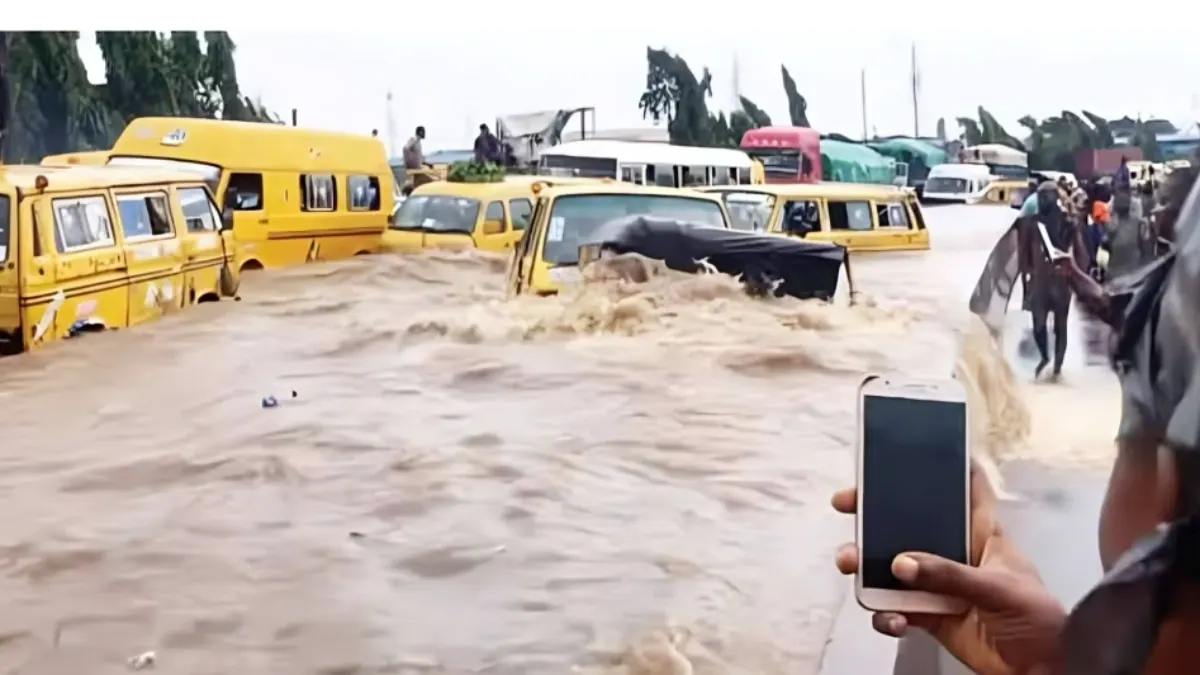
The Lagos State Government has issued a directive to residents living in flood-prone, riverine, and low-lying communities to relocate to higher ground immediately. This decision comes after the Nigerian Hydrological Services Agency (NiHSA) issued a seven-day flood alert covering September 19 to 25, 2026. The alert lists Lagos among 15 states considered vulnerable to flooding during this period. The state government is intensifying its preparedness measures and urging residents to take early action to avoid waiting for floodwaters to rise.
The Commissioner for the Environment and Water Resources, Tokunbo Wahab, provided the directive in a statement. He urged residents, particularly those living close to rivers, lagoons, wetlands, drainage channels, and other waterways, to treat the warning as a serious safety advisory. Several vulnerable locations were identified, including Eti-Osa, Lagos Island, Oke-Ira Nla in Ajah, Kirikiri, Ilaje Waterfront, and communities along the Ogun River. Authorities warned that heavy rainfall upstream and rising water levels in connected river systems could worsen downstream flooding and threaten homes, schools, markets, healthcare facilities, and other critical infrastructure.
Commissioner Wahab specifically warned communities located along the Ogun River and other major waterways. He stated that heavy rainfall upstream and rising water levels in connected river systems could worsen flooding in downstream areas of Lagos. The state government is working with relevant federal agencies to monitor river levels, rainfall patterns, and other hydrological developments in vulnerable areas to provide early warnings and support timely intervention.
According to the NiHSA alert, rising river levels could trigger flooding in vulnerable communities and disrupt critical infrastructure and public facilities. These include schools, healthcare centers, markets, farms, and places of worship. The State Government urged residents and community leaders to pay close attention to official forecasts and emergency alerts, particularly in areas where previous flooding has exposed communities and infrastructure to the risk of inundation.
Commissioner Wahab called on local government authorities, emergency management agencies, traditional and community leaders, and residents to activate their early-warning and emergency-response mechanisms. He advised households in vulnerable locations to make arrangements for the temporary relocation of people, livestock, and valuables to safer areas whenever an imminent flood threat is announced. Residents were also advised to continuously monitor official weather and flood forecasts and comply with evacuation directives issued by the authorities.
The Commissioner cautioned residents against attempting to walk or drive through flooded roads, bridges, or fast-moving water, warning that such actions could expose them to avoidable danger. He urged residents to make temporary relocation arrangements once there are clear indications of an imminent flood, stressing that early evacuation remains safer than attempting to escape after floodwaters have risen. The state government assured that it would continue drainage maintenance, river-level monitoring, and other flood mitigation measures across vulnerable parts of Lagos.
Commissioner Wahab appealed to residents to complement government efforts by keeping drainage channels and waterways free of refuse. He warned against indiscriminate dumping of waste into drains, canals, and waterways, noting that blocked drainage infrastructure could worsen the impact of heavy rainfall and flooding. The Commissioner stressed that the protection of lives and property remained the priority of the state government, urging residents to regard flood forecasts as critical safety information requiring prompt action.
Key points
- The Lagos State Government has directed residents in flood-prone areas to relocate to higher ground following a seven-day flood alert issued by NiHSA.
- The alert covers September 19 to 25, 2026, and lists Lagos among 15 states considered vulnerable to flooding.
- Authorities have identified several vulnerable locations, including Eti-Osa, Lagos Island, and communities along the Ogun River.